

The Enhanced Games are finally here – causing dismay and intrigue
On the neon-lit Strip in Las Vegas, a city synonymous with pushing boundaries in entertainment and commerce, a highly controversial sports event is set to commence.
Featuring athletes who have openly used performance-enhancing drugs (PEDs) banned in mainstream competitions, the inaugural Enhanced Games will proceed this weekend, stirring both consternation and fascination.
Critics argue that ‘Sin City’ is a fitting locale for what they consider a disturbing spectacle, one that normalizes doping, jeopardizes the fight against cheating, and endangers the health of participating athletes.
Proponents of the ‘Steroid Olympics’ contend that the event will recognize athletic achievement, promote scientific advancement, and explore the limits of human potential.
What are the underlying motivations for the Enhanced Games? Is this a harbinger of things to come? And what critical questions does it pose for the sports world and society at large?
Reece Prescod, former Great Britain sprinter, is curious to discover “how fast I can run with the additional help,” as seen at the Enhanced Games’ training camp in Abu Dhabi.
Three months prior, a group of roughly 40 Enhanced Games athletes, specializing in sprinting, swimming, and weightlifting, convened in Abu Dhabi for a training camp. The athletes were enticed by lucrative appearance fees and the allure of a $1 million prize for breaking a world record in their respective discipline, presenting an opportunity to prolong or revitalize their careers.
And then there were the drugs.
At a hospital on the city’s outskirts, the athletes received personalized ‘enhancement protocols’ – substances prohibited by the World Anti-Doping Agency (Wada) but permitted there.
Enhanced Games officials have not disclosed which specific PEDs each athlete used, but they have revealed the following:
91% of athletes used testosterone or testosterone esters
79% used human growth hormone
62% used stimulants
50% used metabolic modulators
41% used erythropoietin (EPO)
29% used an anabolic steroid agent
5% used hormonal support therapies
While BBC Sport was not granted access to the hospital during its visit to the training camp in February, organizers have stated that these substances were FDA-approved and administered as part of a clinical trial under medical supervision. Enhanced claims that four athletes are competing naturally.
However, the project has faced condemnation from sports bodies and anti-doping authorities since its inception.
The International Olympic Committee (IOC) and Wada jointly denounced it as “immoral” and “a dangerous and irresponsible concept.” World Athletics president Lord Coe called participants “moronic”, and World Aquatics banned anyone involved from its events.
Enhanced Games – a sporting revolution or dangerous doping?
For decades, sport has fought against doping to protect competition’s integrity.
Now, this event challenges the principles of clean sport and may encourage cheating.
The Enhanced Games defends its concept:
The current system fails to adequately reward athletes whose talents and hard work provide entertainment. The IOC says it redistributes 90% of its revenue, and UK Sport says it provides as much financial support as it can. But the Enhanced Games athletes say money was their main motivation. The World Players Association has stated, external that “athletes finish a distant last when it comes to sharing in the immense wealth they generate’, and research shows 46% of elite athletes earn under $15,000 per year.
The fight against doping has been futile, expensive and inconsistent. Enhanced Games organizers insist freedom, choice and openness is preferable. Some athletes claim they have lost faith in the anti-doping system. Last year David Howman, who chairs the Athletics Integrity Unit (AIU) and previously led Wada, admitted the anti-doping system had “stalled”. But surveys, external have shown that the majority still believe protecting fair sport is crucial.
The Enhanced Games will showcase self-optimization and the use of science to push biological boundaries. In March the company behind the Enhanced Games launched a “personalized medicine and supplement platform”.
German venture capitalist Christan Angermayer believes consumers will apply these enhancements to their own lives.
Other backers include tech billionaire Peter Thiel and 1789 Capital, an investment fund in which Donald Trump Jr is a partner.
Angermayer’s comments suggest the event is a marketing tool for human enhancement and consumer biotech.
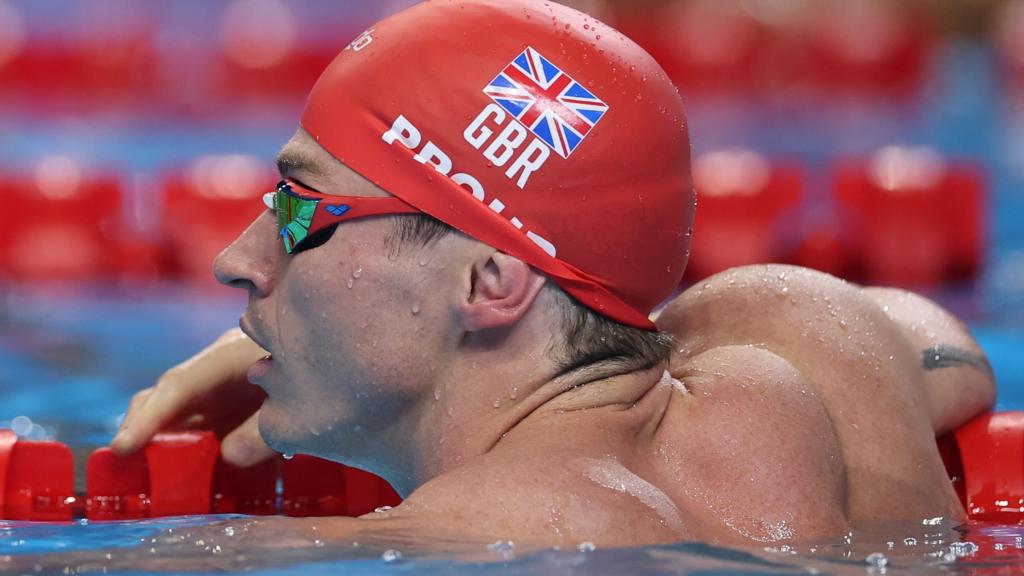
British Olympic swimmer Ben Proud says the Enhanced Games are giving him “a new opportunity” and are not undermining clean sport
The Games coincide with rising concerns about the medicalization of Western society, with social media fueling demand for enhancements.
According to UK Anti-Doping (Ukad), young people are being exposed to social media adverts for “life-threatening” performance-enhancing substances regularly.
In the US, the FDA may ease restrictions on peptide injections after Health Secretary Robert F Kennedy Jr pushed for deregulation.
The move was welcomed by Enhanced, which is “planning to offer access to additional peptides”.
Synthetic peptides have historically been injected by weightlifters and bodybuilders to enhance performance, but critics warn they can present a variety of health issues.
Ukad chief executive Jane Rumble says the Enhanced Games “sends a dangerous message about PEDs” and the health risks are significant.
Prof Ian Boardley of Birmingham University says competitors risk heart attacks and psychiatric issues and that medical supervision assurances were “incorrect and misleading”, external.
BBC Sport asked Enhanced’s Australian swimmer James Magnussen, whose bulked physique went viral, if he had any concerns.
The three-time Olympic medallist said there haven’t been any side effects so far.
“As professional athletes, we take risks with our health innately by what we do.”
Australian James Magnussen came out of retirement to compete in the Enhanced Games
Some think the former world champion has a point.
Byron Hyde, an honorary research associate at Bangor University, says, external critics “overlook the fact that the Enhanced Games is making obvious what society has always quietly accepted – that most people are willing to watch athletes risk harm when the entertainment is good enough.
“That’s something that all sporting bodies should spend more time considering.
“If brain trauma is the potential price of boxing entertainment, why the outrage about pharmaceutical enhancement risks?
“The Enhanced Games just moves the risk threshold further along a spectrum society has already accepted.”
UK Sport director Kate Baker disagrees.
She says they are committed to winning well and are against the Enhanced Games.
“If you’re high potential in our system, you will be supported to achieve your potential, and you will do it in a way which is healthy and not damaging to you.
Athletes may be in breach of policy if they engage with these events and would not be eligible for UK Sport funding.
Enhanced games: ‘Exploring human potential’ or disturbing spectacle?
As the debate continues, an arena in Las Vegas prepares to host an event streamed live to a curious audience.
According to Angermayer, the event is optimized for social media consumption and could become one of the most valuable new sports franchises.
Whether such confidence is justified remains to be seen.
Last year a Ukad survey, external found that 66% of parents would not watch the event. UK Culture Secretary Lisa Nandy sees it as “a bit of a sideshow… and I’m really not interested in that sort of sport.”
It remains to be seen if the participants can break the unofficial world record that Enhanced Games’ Greek swimmer Kristian Gkolomeev achieved last year, with the help of PEDs and a swimsuit that is banned. That time has since been surpassed by a swimmer competing clean.
The world of sport is being challenged by disruptors seeking new audiences and revenue.
The Enhanced Games has sparked controversy and raised questions.
Proponents claim it’s here to stay and could expand.
The question is: at what cost?
‘Enhanced Games prize money worth 13 world titles’
‘I’m not against it’ – Prescod on taking drugs for Enhanced Games
Illustration by Klawe Rzeczy