

Not long ago, the Reserve Bank of India (RBI), the nation’s central bank, characterized India’s environment of high growth and low inflation as a “Goldilocks” moment.
However, this optimism has proven fleeting as the ongoing conflict in the Middle East, coupled with the resulting instability in oil markets, delivers an unexpected blow to India’s previously unmatched growth narrative.
The impact is most evident in the Indian currency, which has plummeted to record lows, depreciating nearly 10% against the US dollar over the past year.
While central bank intervention has provided some respite from the rupee’s decline by curbing speculation, this is likely a temporary fix. Many experts anticipate further declines, contingent on the duration of the conflict.
Bernstein, a global equity research firm, projects a potentially “catastrophic” scenario for the rupee if the conflict persists throughout 2026, potentially causing it to plunge beyond 110 against the dollar. However, even with a quicker resolution, further economic strain is anticipated.
Sustained currency weakness can have broad repercussions, leading to higher consumer prices, reduced corporate margins, increased government deficits, and diminished capital inflows into the stock market.
India’s benchmark equity indices have already fallen by approximately 12% since the start of the year due to foreign capital outflows, diminishing the wealth effect—the behavioral tendency to increase spending as asset values rise—which had previously fueled consumption among affluent individuals.
The global tensions are also beginning to negatively affect the country’s inflation and growth forecasts.
The Indian finance ministry stated in its latest monthly review that higher import and logistics costs, along with a possible decrease in remittances from the 10 million Indians residing in the Gulf, could have a “significant” impact on key economic indicators. The ministry added that recent shocks are being transmitted through “supply constraints and pressures across sectors, with early indications of some moderation in economic activity.”
Previously, gross domestic product (GDP) was projected to grow at 7% in the 2026-27 financial year. However, various brokerages suggest that the crisis in the Gulf could reduce growth by as much as 1%.
Considering this follows recent downgrades to India’s GDP (due to changes in the statistical base year), India’s ambition to surpass Japan as the world’s fourth-largest economy will likely face further delays.
Regarding inflation, food costs have begun to increase, but the conflict has not yet caused a rise in fuel prices, as the government is absorbing the price shock. India has reduced excise duties on petrol and diesel to protect consumers ahead of crucial state elections and has also imposed windfall taxes on exports.
However, the energy shock is multifaceted.
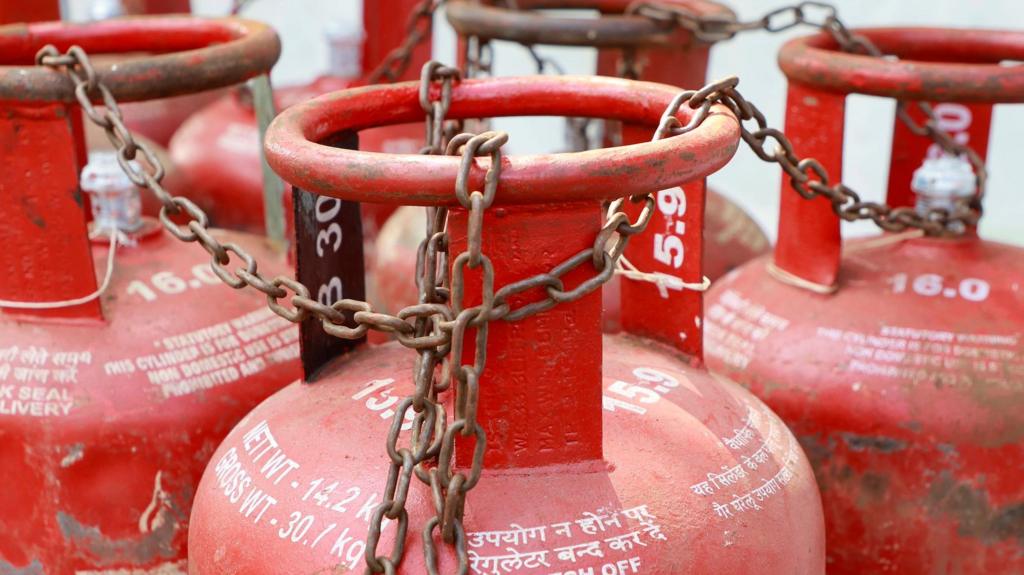
India is the world’s third-largest importer of crude oil, but it also sources 60% of its natural gas and over 90% of its LPG imports (as the world’s second-largest consumer) from the Middle East, making this crisis potentially severe for Delhi.
According to Care Edge Ratings, a quarter of its fertilizer imports also come from Middle Eastern countries, and supply disruptions could create challenges for its vast agricultural economy, especially during the upcoming sowing season amidst the rising probability of the El Niño weather phenomenon.
Shilan Shah and Mark Williams of Capital Economics stated, “The bigger concern for India’s economy is outright shortage,” noting that shortages have already triggered partial or full closures of restaurants and hotels and are reportedly also affecting food processing factories, the ceramics industry, and even funeral services.”
Arvind Subramanian, India’s former chief economic advisor, told India Today TV channel that the result could be a “stagflationary shock of pretty large magnitude,” where inflation increases and growth stagnates.
Subramanian stated, “The ‘stag’ part of the stagflation is already being felt in terms of restaurants closing down and households having less natural gas.”
There are also early indications of a potentially worse scenario. Reminiscent of Covid-era lockdowns, the LPG supply issues seem to be prompting a return of some migrant workers from major cities such as Mumbai.
Economists are concerned that this could trigger supply-side problems for the economy if labor becomes scarce and wages begin to rise.
The government has responded to the crisis by proposing a $6.2 billion “economic stabilization fund” and seeking approvals for additional spending on food and fertilizer subsidies.
Bernstein notes that while the resources have been freed up by rationalizing expenditure, potentially affecting allocations for roads and railways infrastructure, the funds are “modest relative to the scale of the challenge.”
Given the uncertainty surrounding the conflict’s duration and its potential impact, the central bank is expected to maintain stable interest rates when it announces its decision later this week.
Care Edge Ratings stated that “the ‘wait and watch’ strategy will enable the RBI to preserve flexibility to gauge the emerging risks to growth and inflation dynamics and take a calibrated call on future rate actions.”
Despite these challenges, there is reason for optimism.
Experts suggest that a weaker rupee could enhance India’s export competitiveness, and compared to past crises, Delhi’s substantial foreign exchange reserves provide an adequate buffer to navigate the situation.
Subramanian argues that, similar to how Trump’s tariffs prompted trade reform, this situation serves as a wake-up call for India to develop an immediate-to-long-term strategy to address its energy sector vulnerabilities.
This includes expanding stockpiles, diversifying reserves, and, in the long term, accelerating the transition to renewable energy sources.
Follow BBC News India on Instagram, YouTube, X and Facebook.
The US president is in a delicate political position as the final hours to Tuesday’s deadline for Iran to open the Strait of Hormuz tick down.
The US president wants Tehran to reopen the Strait of Hormuz, a critical global energy route, before his Tuesday deadline.
The operation to extract him from the ground in hostile territory was hugely complex and involved multiple US government agencies.
The father and son died in jail after being arrested on suspicion of breaching Covid lockdown rules in 2020.
Brent crude rose above $110 then eased as the US and Iran traded plans for a potential ceasefire.