

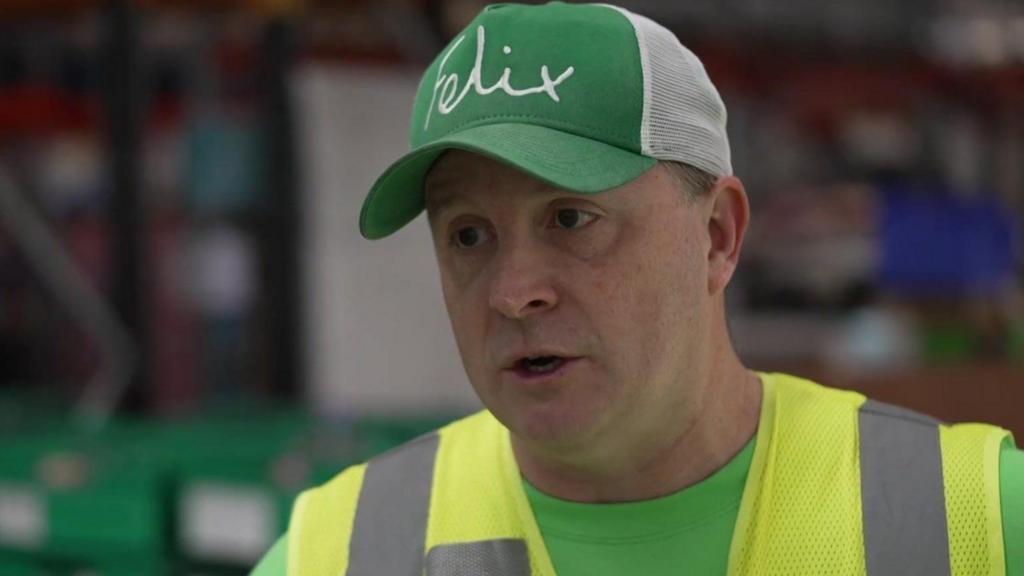
“We rely on substantial chilling infrastructure to maintain our chilled and frozen food supplies across the city, and we anticipate increased costs. This will inevitably impact both our operations and the support we provide to our charity partners,” stated Shane Dorsett, chief operating officer at The Felix Project, highlighting the effects of escalating energy and fuel prices stemming from the Middle East conflict on the food redistribution charity.
The price of oil has surged following the effective blockade of the Strait of Hormuz, a critical waterway through which approximately 20% of the world’s oil trade transits.
Across the UK, average petrol prices have climbed to approximately £1.52 per litre, marking an increase of roughly 20p since the onset of the conflict. Diesel prices have risen to just over £1.82.
Consequently, filling a standard family car now costs approximately £10 more for petrol and upwards of £21 extra for diesel.
Last year, The Felix Project successfully rescued 18,000 tonnes of surplus food from over 200 suppliers, distributing it to approximately 1,200 community organizations throughout London.
Dorsett added, “With a fleet of 60 vans operating daily, we are naturally concerned about these rising costs.”
Fitbakes, a Paddington-based bakery whose products are available in over 2,000 supermarkets, reports that increasing costs are presenting significant challenges.
Founder Ella Rauen-Prestes stated that after years of consistent growth, the company’s primary focus has shifted to “simply survival.”
“I am witnessing numerous businesses similar to ours, startups that began alongside us, facing closure, with approximately 90% of them folding,” she stated.
“We have had to identify alternative strategies to navigate these difficulties.”
Businesses and charities, including The Felix Project, are appealing for government support as the situation in the Middle East remains unresolved.
On Wednesday, Prime Minister Sir Keir Starmer acknowledged that addressing the economic repercussions of the Iran war would “not be easy.”
To date, the Labour government has announced additional financial assistance for individuals who rely on heating oil.
A spokesperson for the Department for Energy Security and Net Zero stated: “Families and businesses are understandably concerned about the potential impact of the conflict in the Middle East on the domestic front. The government is committed to advocating for the interests of the people.
“We have implemented measures to prevent exploitative practices such as price-gouging and to ensure that businesses are treated fairly regarding their utility bills.
“Our priority is to resolve this conflict as swiftly as possible, but regardless, we will undertake the necessary actions to address the affordability crisis.”
Sir Keir previously affirmed the government’s intention to “intervene” if fuel companies attempt to “exploit consumers.”
According to government sources, the UK’s oil supply remains stable despite the ongoing conflict, and there is no justification for panic buying.
Listen to the best of BBC Radio London on Sounds and follow BBC London on Facebook, X and Instagram. Send your story ideas to [email protected]
The US president wants Tehran to reopen the Strait of Hormuz, a critical global energy route, before his Tuesday deadline.
The operation to extract him from the ground in hostile territory was hugely complex and involved multiple US government agencies.
Brent crude rose above $110 then eased as the US and Iran traded plans for a potential ceasefire.
Four men arrested after one man died and two more are left in a critical condition in hospital.
Ordinary Iranians respond to the US president’s threat to destroy Iran’s power plants and bridges unless it opens the Strait of Hormuz.