

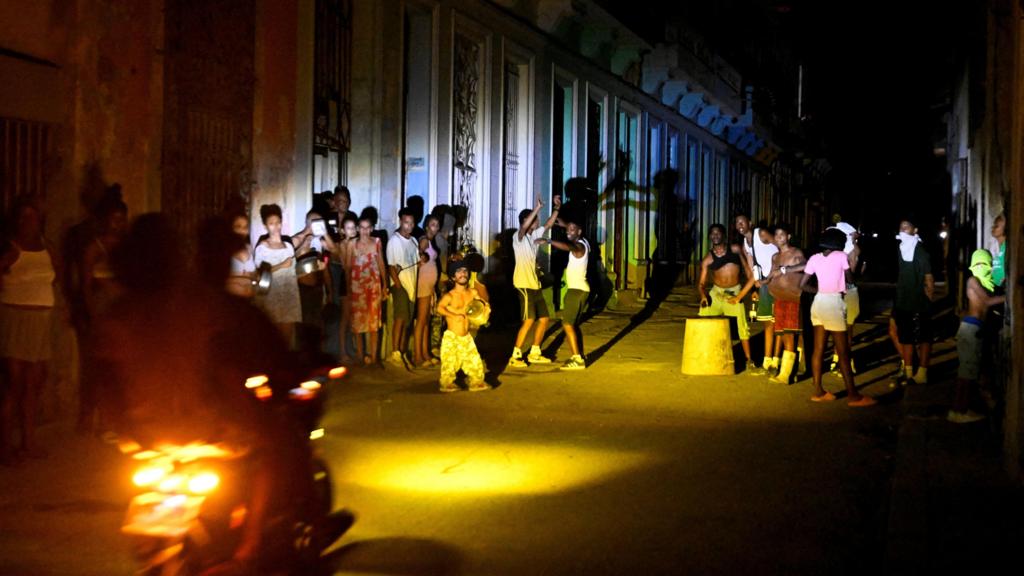
Over 10 million people in Cuba have experienced power outages after the country’s national electrical grid suffered a second collapse within a week.
In a statement released on social media, Cuba’s energy ministry announced “a total disconnection of the National Electrical System has occurred.” The ministry added, “Protocols for restoration are already beginning to be implemented.”
According to the grid operator, UNE, electricity is being gradually restored, with priority given to “vital” facilities, including hospitals and water systems.
The Caribbean nation has faced three major blackouts this month, attributed in part to a U.S. fuel blockade that has curtailed foreign oil imports necessary for power station operations.
Cuba’s electricity infrastructure is aging, and the country has a history of fuel shortages.
Recently, a coalition of international socialist groups arrived in Havana to demonstrate support for the Cuban government, delivering aid in the form of solar panels, basic food provisions, and medical supplies.
The “Nuestra America” aid convoy, originating from Mexico, faced delays due to adverse sea conditions but is expected to reach Havana’s port on Monday.
Public displays of dissent, triggered by the recent crisis and power cuts, included residents in central Havana banging pots and pans on Monday. In Morón, central Cuba, protesters reportedly attacked and set fire to the Communist Party headquarters on the same day.
In Cuba, unauthorized demonstrations are against the law, with participants facing potential imprisonment.
Since the reported capture of former Venezuelan President Nicolás Maduro on January 3, President Donald Trump has faced recurring questions regarding similar plans for Cuba.
Reports indicate President Trump seeks the removal of Cuba’s President Miguel Díaz-Canel, a regional ally of Venezuela, as a precondition for lifting the fuel embargo.
Last week, President Trump alluded to a potential “friendly takeover” of Cuba, later stating that it would be an “honour.”
Speaking to humanitarian aid workers over the weekend, President Díaz-Canel affirmed the island’s “preparation plan to raise our people’s readiness for defence” against potential U.S. military aggression.
President Díaz-Canel has confirmed initial bilateral discussions between the American and Cuban governments aimed at resolving the crisis, although the progress of these talks remains unclear.
According to Reuters, Cuban Deputy Foreign Minister Carlos Fernandez de Cossio stated on Friday that “the political system of Cuba is not up for negotiation, and of course neither the president nor the position of any official in Cuba is subject to negotiation with the United States.”
Former FBI Director Robert Mueller headed the investigation into alleged Russian interference in the 2016 U.S. election.
Statements from President Trump suggesting the war is nearing its end do not align with the realities observed on the ground.
The president indicated ICE would “do security” as airport security personnel have gone unpaid for several weeks amid a partial government shutdown.
Since the U.S. and Israel initiated strikes on Iran on February 28, conflict has intensified across the Middle East.
However, troop and warship deployments to the region are increasing, and the White House is seeking additional funding for the ongoing conflict.