

“`html
Waymo, the American autonomous vehicle company, has announced its ambition to launch a robotaxi service in London as early as September of this year.
While the UK government has indicated plans to amend regulations in the latter half of 2026 to accommodate driverless taxis, a precise commencement date has not been specified.
Waymo has outlined a pilot service slated to begin in April. Local Transport Minister Lilian Greenwood stated, “We’re supporting Waymo and other operators through our passenger pilots, and pro-innovation regulations to make self-driving cars a reality on British roads.”
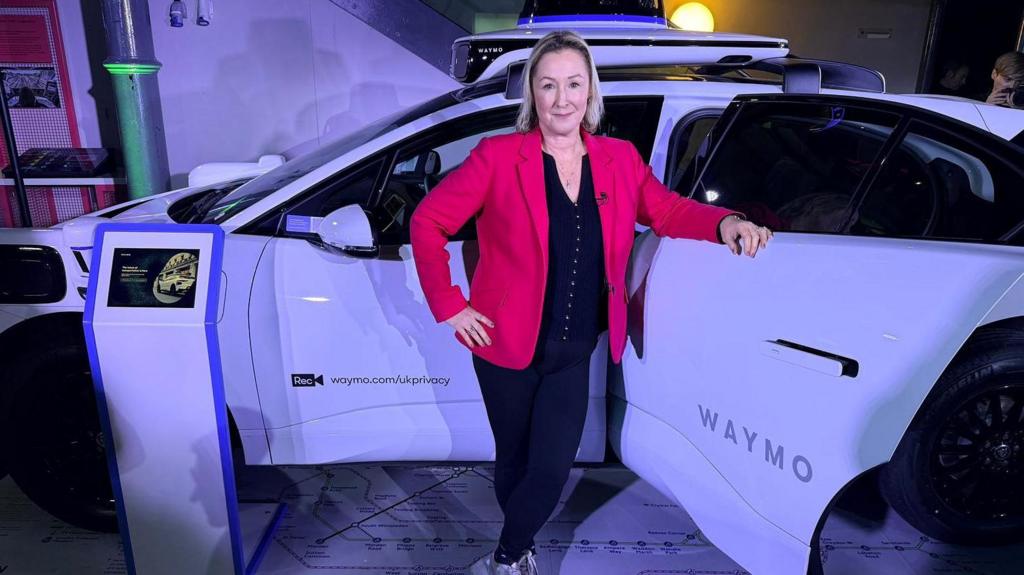
The firm, a subsidiary of Google’s parent company Alphabet, showcased a fleet of vehicles intended for UK deployment at London’s Transport Museum on Wednesday.
Currently, Waymo’s vehicles are being operated with a safety driver present, mapping the streets in preparation for autonomous operation.
Upon the launch of the paid passenger service, the vehicles will operate without a human driver at the wheel.
Greenwood, who attended the Waymo event, expressed optimism that autonomous vehicles would enhance road safety within the city.
“We know that unlike human drivers, automated vehicles don’t get tired, don’t get distracted and don’t drive under the influence,” she stated.
However, she emphasized that autonomous vehicles must adhere to stringent safety standards, “including protection from hacking and cyber threats,” before gaining approval for operation on UK roads.
Government estimates project that the autonomous vehicle industry could contribute £42 billion to the UK economy by 2035, generating nearly 40,000 new jobs.
Passengers will be able to request Waymo robotaxis via a dedicated application once regulatory clearances are obtained.
Initially, the service will not include airport drop-offs.
The Waymo vehicle employs four sensor systems – lidar, vision, radar, and microphones – to capture comprehensive environmental data.
The company asserts that these sensors provide a 360-degree awareness of the surroundings, extending up to three football fields in distance, even in adverse weather conditions.
A high-performance computer located in the vehicle’s trunk processes this data, enabling real-time decision-making for the car’s actions and reactions.
A Waymo spokesperson indicated that pricing would be “competitive” yet “premium,” with potential surges during periods of high demand.
Rival firms such as Uber and Lyft are also poised to introduce robotaxi services in the UK contingent upon regulatory changes.
Waymo utilizes Jaguar vehicles, while Lyft and Uber have established partnerships with the Chinese company Baidu.
Waymo reports that its vehicles have accumulated a total of 173 million miles driven autonomously, primarily in the United States, operating a fleet of 1,000 robotaxis in San Francisco and 700 in Los Angeles.
However, some reports have emerged regarding vehicle malfunctions, resulting in passengers being temporarily stranded.
Elon Musk has stated that Tesla’s automated software will permit passengers to engage in texting under certain conditions.
Waymo initially suspended all service in the Bay Area following a widespread outage, but has since resumed operations.
Baidu’s Apollo Go robotaxis have already completed millions of driverless rides in cities around the world.
Earnings reports from Meta, Alphabet, and Microsoft confirm that these tech giants are increasing their investments in artificial intelligence, seeking to capitalize on the growing AI sector.
OpenAI aims to disrupt the browser market, currently dominated by Google Chrome, but its success depends on attracting paid users.
“`