

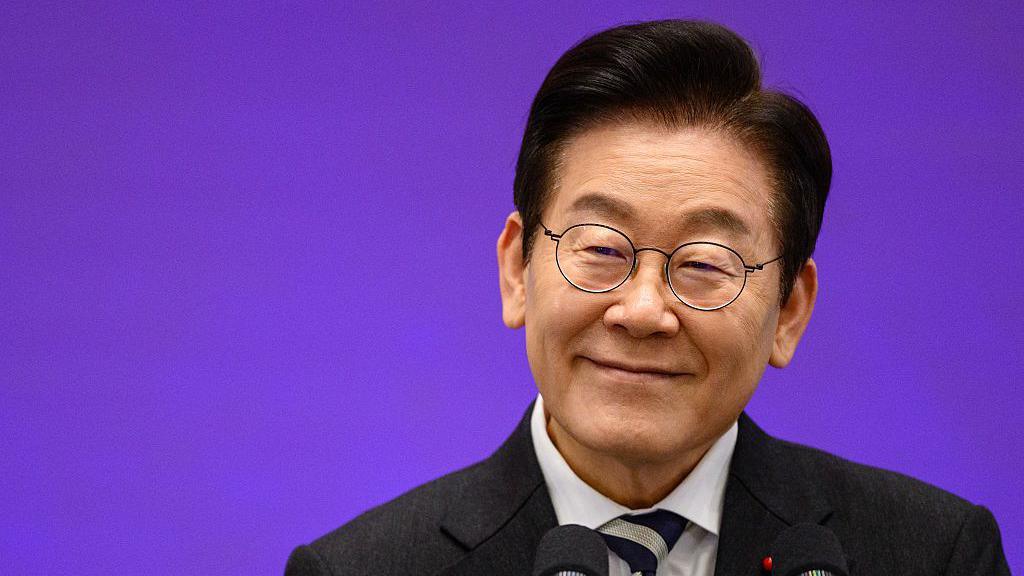
South Korea’s President is embarking on a mission to support the nation’s residents experiencing hair loss.
His focus: the national health insurance scheme, which he proposes should cover the costs of hair loss treatments.
President Lee Jae Myung raised the suggestion with officials this week, asserting that medical treatments for hair loss, once considered “cosmetic,” are now viewed as “a matter of survival.”
Currently, South Korea’s national health insurance covers treatments for hair loss stemming from medical conditions. However, it excludes individuals with hereditary hair loss, as Minister of Health Jeong Eun-kyeong explained at the meeting, because it doesn’t pose a threat to one’s life.
Lee responded by questioning, “Is it merely a matter of defining hereditary disease as a disease?”
Lee’s proposal has garnered praise among social media users, with one even calling him the “best president in history.”
However, not everyone is as enthusiastic, including some who could benefit from subsidized hair loss treatment.
Song Ji-hoon, a 32-year-old Seoul resident who takes hair loss medication, describes the move as “a bit like a vote-grabbing policy.”
“Saving money sounds nice, but honestly it costs less than 300,000 won ($200) a year, so… is it even necessary?” he questioned.
In South Korea, a nation known for its stringent beauty standards, baldness carries a stigma that can be particularly challenging for young individuals.
According to authorities, of the 240,000 people in the country who sought medical attention for hair loss last year, 40% were in their 20s or 30s.
“My fringe keeps receding and won’t stay up, so I can’t get a perm or use wax properly,” says Lee Won-woo, 33, who resides in North Chungcheong province.
“Because I can’t style my hair the way I want, I end up thinking I look unkempt and unattractive, and that has seriously eroded my confidence.”
Mr. Lee acknowledges that he would be “thankful” for subsidized hair-loss drugs but notes that “the national health insurance system is already running a deficit and struggling financially.”
“This is not a situation where money can just be handed out,” he stated.
He further contends that balding is a “cosmetic issue.”
“It’s a natural part of ageing, not an illness or a disease,” he said. “I understand the emotional pain, but that doesn’t change the reality.”
South Korea’s national health insurance scheme, which faced a record deficit of 11.4 trillion Korean won ($7.7bn; £5.8bn) last year, is expected to be further strained by its ageing population.
To address the financial burden hair loss treatments would impose on the system, President Lee stated on Tuesday that authorities could establish coverage limits.
However, some critics argue that priority should be given to assisting more vulnerable members of society.
The Korean Medical Association said in a statement on Wednesday that government funds should be allocated to more serious diseases before hair loss. Similarly, social media users are pointing to larger social issues, such as South Korea’s high suicide rate and misogyny faced by women.
“In a country where people bristle and react hysterically when there are calls to cover sanitary pads … or breast cancer medication under national health insurance, announcing that hair-loss drugs will be covered would honestly feel like a bad joke,” one person wrote on X.
“If hair loss truly becomes something that determines survival in a society, then changing that society should be the role of politics,” wrote another.
While it may seem like an unlikely crusade for the president, the proposal to insure hair loss treatment was a rallying cry in Lee’s unsuccessful 2022 presidential campaign.
During that time, Lee and his team gathered feedback from individuals struggling with hair loss and even starred in a viral parody of a hair loss commercial – a move that resonated with some voters.
However, critics accused Lee of employing gimmicks to attract young male voters, who were largely supporting his conservative opponent amid a rising tide of anti-feminism.
Lee lost the 2022 election. He ran again and won this year, but his messages regarding hair loss treatment were omitted from the campaign.
“There is no reason he needs to be bound by the promise this time,” says Don S Lee, an associate professor of political science at Korea University, though he added that the president may be trying to “expand his base of supporters” for the upcoming local elections in mid-2026.
Since assuming the presidency, Lee has placed a clear emphasis on the country’s youth, many of whom face intense competition and challenging economic prospects.
On Tuesday, Lee also suggested including obesity drugs in the national health insurance scheme, arguing that young people felt “increasingly ostracised” from the scheme because its benefits were not tailored to their needs.
Dr. Lee, the politics professor, remains skeptical about the president’s genuine commitment to bringing hair loss treatment under national health insurance coverage.
“Personally, I doubt President Lee will carry on this issue and take further action,” he said.
“It’s just a very strategic gesture targeting young male voters, signalling that ‘I am also caring about you’.”
The government said the deal was an extension of its current tariff-free arrangement on most goods and services traded between the countries.
Why jars of kimchi and bottles of gochujang are turning Korean food into a UK staple.
Some critics say the questions were unnecessarily complex, while others argue that’s their intended purpose.
In a matter of days, three big entertainers in South Korea have made headlines in separate scandals.
Seoul says it will “actively respond” to neighbouring countries’ activities in its air defence zone.