

“`html
The United States, renowned for its affinity for large vehicles, may be on the cusp of a significant automotive shift, spurred by an idea from former President Donald Trump.
Trump has expressed interest in introducing compact vehicles to the American market, reminiscent of those commonly seen in Japan. These include mini hatchbacks and vans, some half the size of a Ford F-150 pickup truck.
Known as Kei cars – derived from *kei-jidōsha*, meaning “light vehicle” – these vehicles gained popularity in Japan post-World War II as a practical and economical mode of transport in densely populated urban areas. Their popularity has since expanded across Asia.
Despite Trump’s advocacy for these micro-cars, importers and drivers within the United States remain skeptical about their viability in a country characterized by vast distances.
Key challenges include maintaining affordability, ensuring adequate safety standards, and persuading American consumers, who are accustomed to larger vehicles, to embrace downsizing.
Following a visit to Japan, Trump stated in an online post in December: “I have just approved TINY CARS to be built in America.”
“These cars of the very near future are inexpensive, safe, fuel efficient and, quite simply, AMAZING!!! START BUILDING THEM NOW!”
His proposal represents a potential reversal of longstanding regulations that have effectively restricted the domestic production of small vehicles.
While Kei cars currently exist in the US, they are uncommon and must be at least 25 years old to be legally operated on public roads.
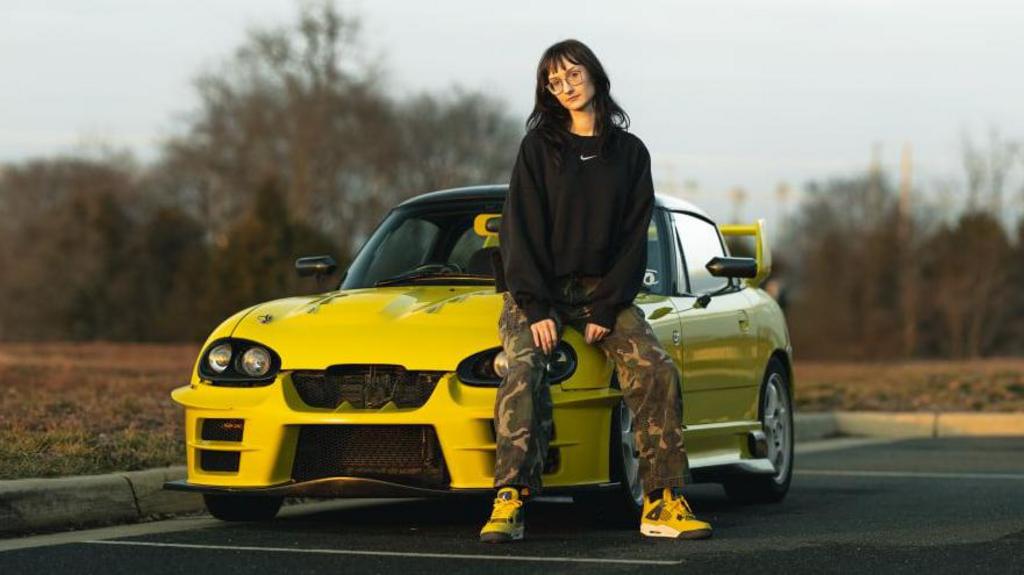
Emma Bergeron, a business accounts manager, acquired her turbocharged yellow 1997 Suzuki Cappuccino three years ago, inspired by the Japanese street racing manga series *Initial D*.
Reflecting the compact dimensions of most Kei cars, two Cappuccinos can fit within a standard parking space.
“I fell in love with that car and instantly knew I had to get one,” said Bergeron, a member of the Capital Kei Car Club, a local enthusiasts group based in Maryland and Washington DC.
“It’s tiny and a bit silly… definitely a conversation-starter. You get a lot of glances when you drive around the city,” she said. “I just feel so happy in it.”
However, despite her affection for the petite coupe, she does not recommend it as a primary vehicle for daily use.
“It is fun to drive but it is not exactly what I’d call safe,” Bergeron said. “On a highway next to big trucks, you definitely feel vulnerable.”
Similarly, Andrew Maxon, founder of the Capital Kei Car Club, drives his Autozam az-1 mini-coupe with heightened awareness, “like a motorbike,” anticipating that larger vehicles, particularly trucks, may not see him.
US transport secretary Sean Duffy echoed this sentiment, acknowledging that small cars would “probably not” be ideally suited for American freeways.
However, Duffy suggested on CNBC that these vehicles could be a “great solution” for urban drivers.
A central aspect of Trump’s enthusiasm for small cars is the potential for lower prices.
A spokesperson for the US transport department told the BBC that the move will help Americans afford vehicles that meet their needs, whether electric, petrol-powered or in the form of a “mini-van or micro”.
Nevertheless, it remains to be seen if American manufacturers can produce small cars at prices lower than existing sedans.
Car prices in the US have not yet returned to pre-pandemic levels, with a global shortage of computer chips being a contributing factor to increased costs.
Concurrently, American households are facing a rising cost of living.
Automakers have also cautioned that Trump’s tariff policies could further inflate prices, while the termination of subsidies for electric vehicles (EVs) will result in higher costs for some drivers.
Hyundai chair Chung Eui-sun warned in his New Year’s message that geopolitical conflicts, trade tensions and growing competition this year could cause issues “we have long worried about to become reality” in the car industry.
This year, new car sales in the US may fall below 16 million, according to research group Cox Automotive, in part due to concerns over prices as well as lower demand for EVs. In particular, lower income drivers are expected to feel the strain of “prolonged inflation” and the higher price of new and old cars, it added.
The extent to which car companies will respond to Trump’s call remains unclear.
Fiat owner Stellantis has announced plans to begin selling the Topolino, a small car with a top speed of under 30mph (48.3km/h), in the US in the coming months.
A Stellantis spokesperson stated that the company is “always looking for opportunities to adapt our product portfolio to meet our customers’ needs” and offer them a range of vehicle choices “they want at prices they can afford.”
Japan’s Nissan told the BBC it will assess its line up based on demand. Mitsubishi has indicated that it currently has no plans to introduce its Kei cars to the US market.
Major Kei carmakers like Toyota, Honda and Suzuki said they did not have information to share when contacted by the BBC.
Car industry investor Steve Greenfield expresses skepticism about the potential impact of Trump’s announcement.
He argues that modern Kei cars would not meet US safety regulations, necessitating substantial investments from carmakers to redesign them to comply with American standards. This, according to Greenfield, would “defeat their cost and efficiency advantages.”
Historically, small car manufacturers have struggled to gain traction in the American market.
Kei cars could be a solution in crowded urban areas, “but for most use cases in the US, these small cars just simply won’t be a viable option,” said Greenfield.
In 2019, Smart, owned by Germany’s Mercedes-Benz and Geely of China, withdrew from the US market due to sluggish sales as consumers favored larger vehicles.
The experience of Smart cars suggests that “there may not even be much of a demand for small vehicles” beyond a niche group of enthusiasts, Greenfield stated.
Mo Sulai, an importer at Tokyo Motors DC in Maryland, observes a similar trend among US customers who purchase Kei cars.
Imported Kei vehicles range in price from $6,500 for an older mini van to over $10,000 for a Kei fire engine or lorry.
Sulai states that nearly three-quarters of the cars imported by his family-run business are “novelty” vehicles, such as tiny coupes, which serve as statement pieces and are popular at events like enthusiast meet-ups.
Mini vans and trucks have also found favor among drivers seeking vehicles for use on golf courses or farms, Sulai added.
“[Trump’s] announcement was like a free advert for us because more people start to learn about Kei cars,” Sulai said.
“But even so, I think people in the US are so used to big cars. This will still be a niche market.”
The 45-year-old is set to be sentenced on Wednesday, but the question of what punishment he deserves has divided public opinion in Japan.
Democratic Governor Walz, Mayor Frey and the state’s attorney general are among those targeted over anti-ICE protests.
The move follows renewed tensions between the US and EU, as Donald Trump pushes to acquire Greenland.
Aidan Venison’s mother Tracy wants harsher penalties for repeat drink-driving offenders.
The US president says it is “another in a very long line of National Security reasons why Greenland has to be acquired”.
“`