

Another turn arrives with characteristic speed and fanfare in the ongoing saga of diplomacy under President Trump.
From impassioned social media posts to assertive pronouncements before the cameras, and even provocative, AI-generated imagery depicting an American-owned Greenland, the administration’s approach has been notable.
Now, many of America’s allies are breathing a collective sigh of relief.
Much like many of the recent disputes that originated on social media, this latest disagreement has also seen de-escalation through a post on the President’s Truth Social platform.
Within the UK government, there is a sense of quiet satisfaction that Britain contributed to the diplomatic efforts undertaken by European partners and others in recent days.
Sources indicate that the British diplomatic apparatus engaged at all levels, involving ministers, officials, and embassies.
The Prime Minister emphasized the value of “calm discussion,” while carefully considering how to frame his response, both publicly and privately.
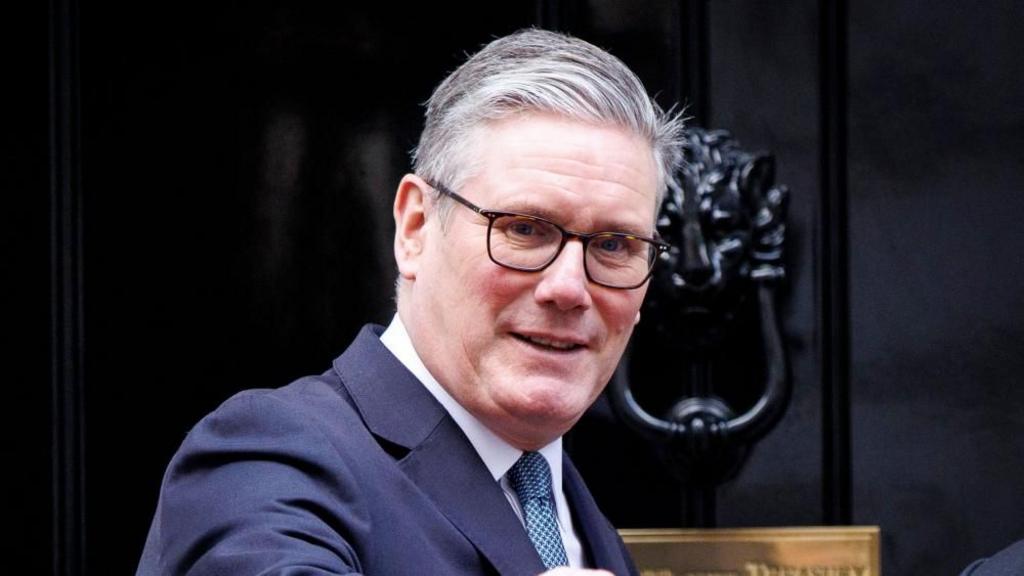
At the heart of the matter was a fundamental disagreement between Downing Street and the White House, a situation Sir Keir Starmer has generally sought to avoid.
However, he viewed the integrity of a state – with the future of Greenland to be determined by Greenlanders and Denmark – as a non-negotiable principle.
In the 48 hours following his explicit statement on Monday morning, uncertainty loomed: could the carefully nurtured relationship with President Trump be jeopardized?
By Tuesday morning, the possibility seemed real, with the President’s emphatic reaction to the government’s decision to return the Chagos Islands to Mauritius, a decision he had previously supported.
The question was, what would follow? Downing Street again paused, before opting to sharpen its critique in the Commons on Wednesday.
The Prime Minister told MPs he would “not yield” in his support for Greenland, despite the threat of tariffs. His team recognized the inherent risks.
Now, almost as abruptly as it escalated, the situation appears to have de-escalated, with President Trump seemingly applying the brakes.
An understanding has been reached, and the threat of tariffs and inflammatory rhetoric has subsided.
Indeed, this scenario is familiar.
The President proposes a provocative, even outrageous, idea, triggering a diverse range of reactions globally, and the White House seizes control of the narrative.
The world, or at least the West, reacts with a mix of shock, anxiety, and disagreement – and ultimately a solution is found, but not before a stark reminder of America’s power under a leader willing to adopt a forceful approach.
And as America’s allies and adversaries catch their breath, they can only wonder what will spark the next diplomatic surprise from the Oval Office.