

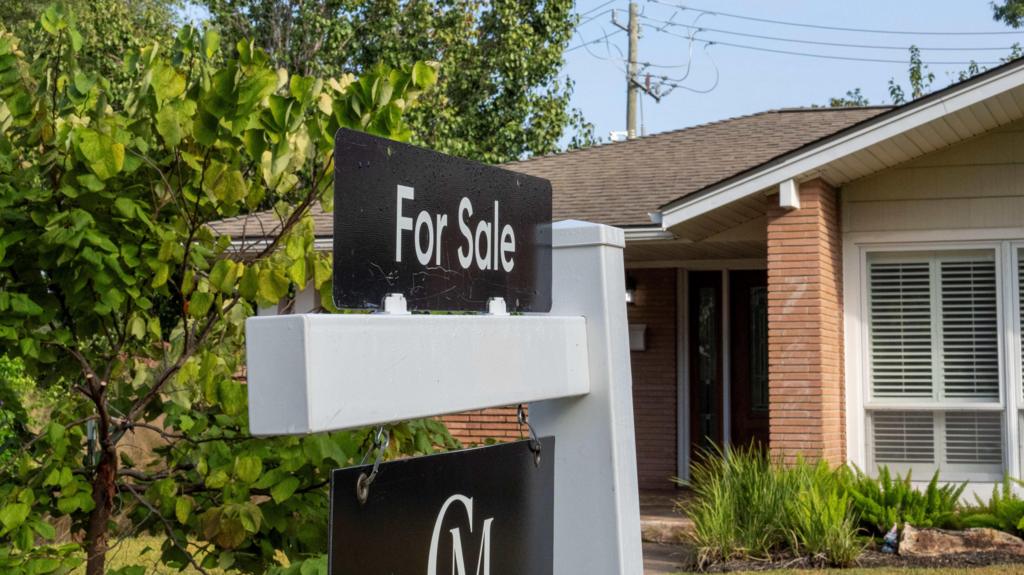
Former US President Donald Trump has announced his intention to prohibit large corporate entities from purchasing single-family homes, aiming to enhance housing affordability for American citizens.
In a social media statement released Wednesday, Trump indicated he would urge Congress to “codify” the proposed measure and plans to discuss it further at the upcoming Davos World Economic Forum later this month.
This pledge reinforces an idea that has been debated among housing advocates and lawmakers for several years, responding to Wall Street’s growing presence in the American residential housing market. However, some analysts express reservations regarding the potential impact of such a ban on housing prices.
Shares of Blackstone, a prominent private equity purchaser, experienced a decline of over 5% on Wednesday following the announcement.
“That American Dream is increasingly out of reach for far too many people, especially younger Americans,” Trump stated on social media, referencing home ownership.
“People live in homes, not corporations.”
The White House has not yet provided a response regarding the specifics of the potential ban, including whether congressional approval would be necessary.
Trump’s remarks come at a time when his administration is facing increasing public concern about his economic policies. He has recently attempted to address voter anxieties related to the cost of living in the US, with home affordability being a key concern for many Americans.
Sam Garin, a spokesperson for an advocacy group that has been vocal about the effects of private equity ownership on renters, expressed her group’s support for Trump’s proposed action.
“We eagerly await the details of what this policy will actually entail,” said Garin, representing the Private Equity Stakeholder Project, while also urging policymakers to pursue further measures.
Since the 2008 financial crisis, which led to a surge in foreclosures, Wall Street investors, including Blackstone and other private equity firms, have acquired tens of thousands of homes for rental purposes, establishing themselves as significant landlords, particularly in specific markets.
Their growing role has attracted attention from lawmakers across the political spectrum, who have accused these firms of contributing to the rise in rental and purchase costs. However, previous legislative attempts to address this issue have achieved limited success.
“Senate Democrats tried to do this last year. Republicans blocked it,” stated Senate Minority Leader Chuck Schumer, a Democrat, on social media.
On Wednesday, Ohio Republican Senator Bernie Moreno announced his intention to introduce legislation to codify Trump’s proposal.
Shares of property firms experienced declines on Wednesday following Trump’s comments. Builders FirstSource, a supplier of building products, saw a decrease of over 5%, while Invitation Homes, a single-family home owner, fell by 6%.
However, some housing industry analysts have questioned whether a ban would have a substantial impact on home prices, considering the relatively small presence of institutional investors in the overall market.
Laurie Goodman, a fellow at the Urban Institute, suggested that the effect of a ban would depend on how “large” investors are defined.
Blackstone has stated that institutions own 0.5% of all single-family homes in the US.
Goodman’s research indicates that institutional investors, defined as those owning at least 1,000 units in three or more locations, control approximately 4% of the single-family market.
She added that this percentage has remained stable in recent years, as purchases have slowed down due to high interest rates and elevated home prices.
Goodman pointed out that a proposed ban raises other questions, such as how existing properties owned by institutional investors would be managed.
She suggested that instead of an outright ban, “institutional investors should be required to provide more for their tenants”.
Daryl Fairweather, the chief economist at Redfin, cautioned that if large investors were to be banned from buying single-family homes, they would likely be replaced by mid-sized or smaller investors, rather than first-time home buyers.
The US president’s repeated demands to control Greenland could threaten the Nato military alliance.
The changes receive mixed reviews from experts, in particular over concerns some could lead to people eating more saturated fats.
Both Greenland and its owner Denmark have repeatedly stressed the island was not for sale.
The White House says it is considering a range of options to acquire the island, including deploying the military.
The BBC speaks to people in the Detroit area about their views on US removing Venezuela’s Nicolas Maduro from power.