

Sweeping revisions to train timetables have taken effect nationwide, marking some of the most significant alterations in over seven years.
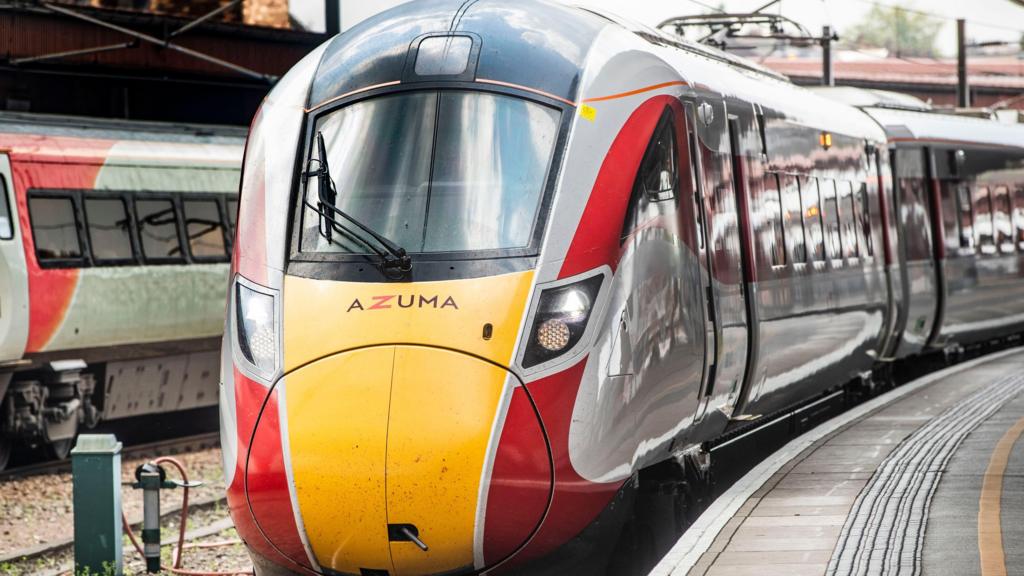
Rail operators are heralding the changes as a means to deliver increased service frequency across the network, coupled with expedited journey times on select routes, with the East Coast Main Line slated to experience the most substantial improvements.
Passengers are strongly encouraged to consult the updated timetables prior to commencing their travels.
The magnitude of these changes is unprecedented since May 2018, when a previous timetable update triggered widespread disruption and cancellations on certain lines.
Rail timetables are routinely adjusted every May and December, but rarely on such a comprehensive scale.
Network Rail is projecting faster journeys and the provision of thousands of additional seats daily, attributable to a £4 billion investment made over the past decade.
The revised schedules promise to reduce journey times between London King’s Cross and Edinburgh by 15 minutes, and between Edinburgh and York by 10 minutes.
According to Network Rail, the rail line, utilized by multiple operators, will facilitate enhanced connectivity between Scotland, North East England, Yorkshire, and London.
LNER, one of the primary operators on this line, has characterized the changes as “transformational,” anticipating the addition of 10,000 services annually.
Ellie Burrows, Eastern regional managing director for Network Rail, stated: “The industry has been preparing for many years for the new timetable.
“Our priority now is to continue working together to deliver the long-term benefits of this timetable change, the biggest in over a decade, for our passengers and the communities we serve.”
Northern will introduce a new hourly express service connecting Leeds and Sheffield as part of the broader changes.
Transport for Wales is expanding services for Chester, Wrexham, and Swansea.
Avanti, another operator, has announced an increase in train frequency between London and Liverpool.
However, some routes will experience service reductions. Avanti is decreasing the number of services between Blackpool and London from four to two.
These adjustments are the most extensive since May 2018, when a timetable overhaul led to weeks of operational difficulties on the Govia Thameslink Railway (GTR) and Northern networks.
The number of daily train cancellations by GTR and Northern peaked at 470 and 310, respectively.
The ensuing fallout prompted a thorough review and ultimately influenced the Labour government’s decision to establish Great British Railways, bringing the industry under state control.
Travel expert Simon Calder expressed “pretty confident we won’t see the complete collapse of a network, as we did when the Thameslink line had its timetable completely reconfigured in 2018 – that was an absolute shambles”.
“There has been an awful lot of thought and time that has gone into this and the whole idea is to extract the maximum possible capacity from Britain’s Victorian rail network without jeopardising reliability.”
Rail industry expert Tony Miles told the BBC’s Broadcasting House programme that the changes in May 2018 had been based on “using every available slot for a train on the network, and that was the mistake”.
“You need to have some wriggle room” for when things go wrong, he added.
However, Monday morning would be the “real challenge” for the new system, Mr Miles said.
“Obviously Sunday morning services aren’t quite as stressful for the system as a peak time on a weekday.”