

A pivotal UN report assessing the global environment has reportedly been “hijacked” by the United States and other nations, according to the co-chair, who claims these countries were resistant to accepting the report’s scientific conclusions, as reported by the BBC.
The Global Environment Outlook, culminating from six years of research, establishes connections between climate change, biodiversity loss, pollution, and the unsustainable consumption habits of individuals in affluent and developing economies.
It cautions of a “dire future” for millions unless a swift transition away from coal, oil, gas, and fossil fuel subsidies occurs.
However, during a meeting convened to secure government endorsement of the findings, the U.S. and allied nations expressed their inability to align with a summary of the report’s conclusions.
Due to the scientists’ unwillingness to dilute or alter their findings, the report has been released without the summary and without governmental support, thereby diminishing its potential impact.
Researchers suggest that the objections to this report mirror similar concerns voiced by countries during the recent COP30 talks.
The BBC has reached out to the relevant U.S. government departments for comment.
Published every six to seven years, the Global Environment Outlook is a significant scientific analysis of the most pressing threats to the planet.
Orchestrated under the auspices of the UN, the customary procedure for such studies involves securing consensus on key conclusions and recommendations from governments, culminating in the publication of a “summary for policymakers.”
These summaries are deemed critical as they demonstrate governmental endorsement of the scientific evidence and a commitment to implementing the findings.
However, this latest iteration of the Global Environment Outlook lacks such a summary, as authors and political representatives from approximately 70 countries failed to reach an agreement during a “stormy” meeting held in Nairobi in October.
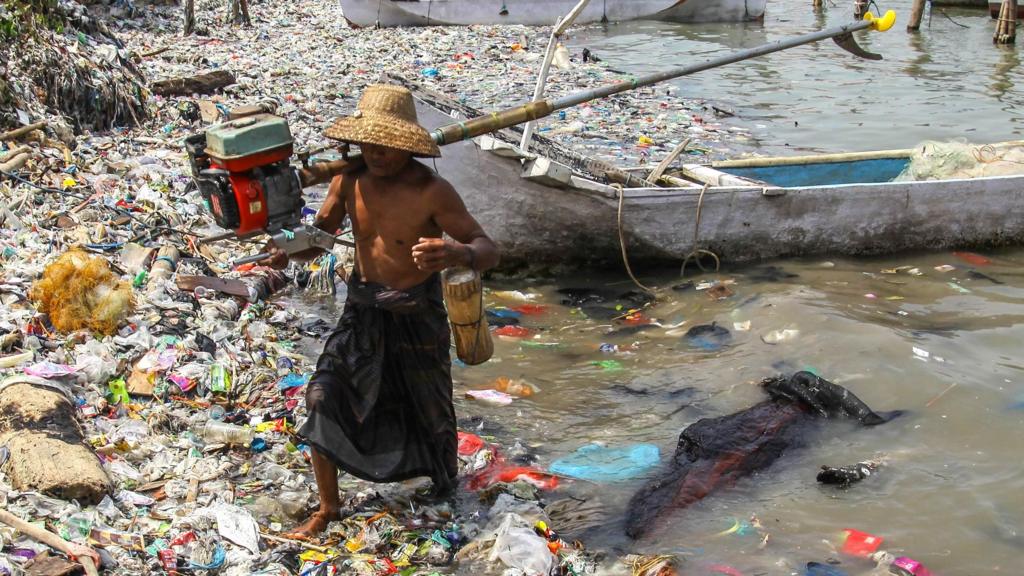
Authored by nearly 300 scientists globally, the report posits that our patterns of food consumption, clothing choices, and energy usage all contribute to unsustainable resource extraction.
To address the interconnected challenges of climate change, pollution, and the loss of nature and biodiversity, the report proposes numerous recommendations, including a rapid shift away from coal, oil, and gas, as well as a substantial reduction in subsidies for farming and fossil fuels.
The authors acknowledge that such measures may result in increased costs for consumers in the short term.
However, the report asserts that these short-term sacrifices will yield long-term economic benefits for the entire world.
These robust measures, particularly those concerning fossil fuels and plastics, proved contentious for the United States, Saudi Arabia, and Russia, among others, during the approval meeting, which typically operates by consensus.
“Frankly, a small number of countries essentially hijacked the process,” Prof Sir Robert Watson told BBC News.
“The U.S. opted not to attend the meeting in person. Towards the end, they joined via teleconference and stated that they could not agree with the majority of the report, which effectively meant they disagreed with our findings on climate change, biodiversity, fossil fuels, plastics, and subsidies.”
Sir Robert is a highly esteemed scientific authority, having previously served as chief scientist for the UK’s Department of the Environment and as chair of the Intergovernmental Panel on Climate Change (IPCC), in addition to his work with the World Bank and NASA.
However, he has clashed with the U.S. in the past, notably criticizing their decision to withdraw from the Kyoto Protocol, an earlier climate treaty, during his tenure as head of the IPCC.
He was subsequently removed from his position in 2002 following lobbying efforts by the administration of President George W. Bush.
Other attendees at the meeting concurred that the actions of the U.S. and other nations “derailed” the process.
“I believed we had progressed beyond acknowledging that burning oil produces a thick, black substance that is likely harmful, especially when inhaled,” stated Dr. David Broadstock of the Lantau Group, a lead author of the report.
“It seems quite self-evident, yet we continue to witness parties seeking to expand the production of such materials,” he told BBC News.
Since assuming office, President Trump has endeavored to stimulate fossil fuel production and reverse U.S. commitments to combat climate change, advocating for the nation to become a global energy superpower with access to inexpensive and reliable resources.
He has also sought to persuade U.S. courts to invalidate the notion that carbon dioxide poses a threat to public health. His administration has further pursued efforts to restrict or limit the activities of international organizations dedicated to addressing global warming.
This year has witnessed attempts during international plastics negotiations, at the International Maritime Organization, and during COP30 to remove language asserting that climate change is a significant issue necessitating a rapid global transition away from fossil fuels.
The dispute over the Global Environment Outlook report will likely raise concerns about future negotiations for the Intergovernmental Panel on Climate Change reports, as these studies are considered the foundation of global efforts to curb global warming.
States Assembly members backed a move to restore the budget to current levels.
Under the surface of the ocean, “constellations” of towering subsea mountains dot the Earth – and they are teeming with sharks.
Richard St Barbe Baker’s passion for trees saw him travel the world promoting reforestation.
The findings contribute to a controversial debate that pits green technology against the environment.
A volcanic eruption may have set off a chain reaction that led to Europe’s deadliest pandemic.