

The Labour Party’s general election manifesto, specifically page 117 for verification, pledges the party will act as “a defender of the international rule of law.”
This commitment is neither inherently controversial nor unexpected, considering Labour’s leader, Sir Keir Starmer, has a background as an international human rights lawyer.
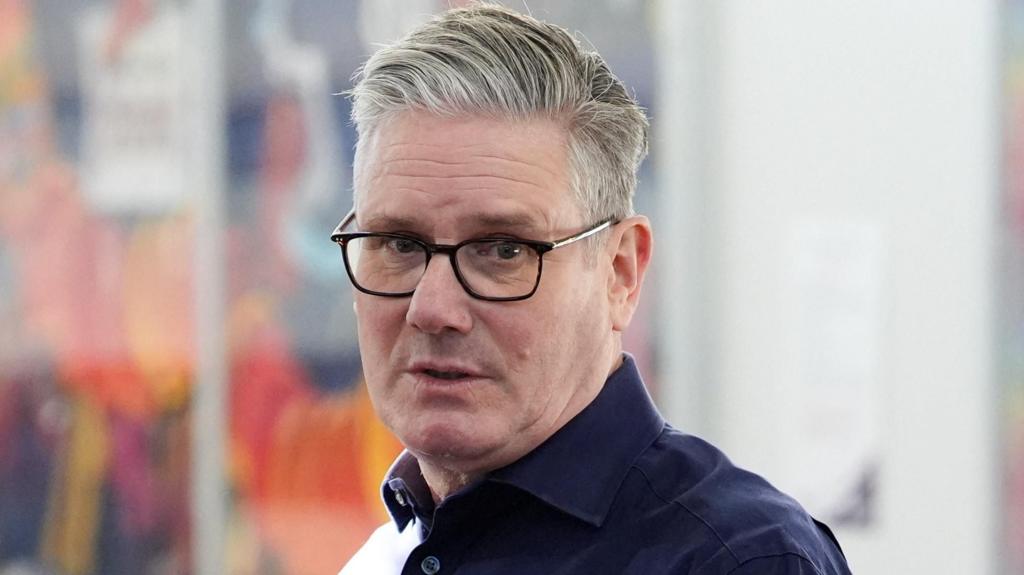
However, following the United States’ apprehension of the Venezuelan president and his wife from Caracas, the Prime Minister’s statements regarding potential breaches of international law have been notably cautious.
Sir Keir’s initial response to Washington’s actions was perceived by many as remarkably understated, given the gravity of the situation.
In a social media post, he emphasized the UK’s longstanding support for “a transition of power” in Venezuela.
Questions remain, however, regarding the manner in which this transition was pursued.
The Prime Minister’s reserved response reflects a broader strategy of carefully managing relations with the current U.S. President: avoiding direct commentary, adopting a pragmatic approach, and engaging in private discussions.
Notably, the Prime Minister has not engaged in direct communication with President Trump since the apprehension of Nicolás Maduro and Cilia Flores.
Having anticipated Donald Trump’s return to the White House, the Prime Minister made a strategic decision to avoid offering ongoing public commentary on what was expected to be a distinctive presidential term.
This approach, it was calculated, would mitigate the risk of public disputes with a leader known for his willingness to publicly sever relationships.
Instead, Sir Keir opted for a more cautious approach, recognizing the benefits of maintaining a positive relationship with the White House, which the Prime Minister views as a significant achievement.
Supporters point to instances such as the agreement secured with Washington to limit the impact of tariffs, a deal believed to have saved thousands of jobs at Jaguar Land Rover.
Public criticism of President Trump, while perhaps tempting, would be “juvenile” and detrimental to the UK’s interests, according to allies.
The government’s measured response has drawn criticism from various quarters, including within the Labour Party.
Opposition parties, including the Liberal Democrats, the Scottish National Party, and the Green Party of England and Wales, have openly condemned the Prime Minister’s reluctance to directly criticize President Trump.
Some Labour backbenchers share these concerns, taking issue with Sir Keir’s statement that “it is for the US to justify the actions it has taken.”
Critics argue this effectively allows President Trump to evaluate his own actions without independent scrutiny.
Conversely, the Conservative leadership and some backbenchers have generally supported the government’s position, arguing that public criticism of the White House is unlikely to serve the UK’s interests.
Within the Labour Party, while there is discernible unease, both publicly and privately expressed, there is currently no widespread, vocal opposition to Downing Street’s handling of the situation.
One MP stated, “I feel sure that the response needs to be much stronger and the parliamentary Labour Party will be saying so. It’s been a bit half-hearted at the moment.”
Another Labour MP noted that even in private discussions, criticism is primarily directed at President Trump, rather than the Prime Minister’s response.
“I suspect it’s because we recognize that Trump is a massive loose cannon and Starmer is having to go very canny right now,” one MP commented.
The BBC’s political editor analyzes two recent instances highlighting Europe’s efforts to integrate the US into its future.
Chris Mason examines the three key elements the Labour Party will be missing without its former chair.
One year after the election, the government needs to demonstrate tangible results to regain public support.
The government’s diplomatic achievement in securing this agreement before others offers a reprieve for car manufacturers.
Labour acknowledges the “tangible benefits” of the deal, while the government faces domestic scrutiny.