

“`html
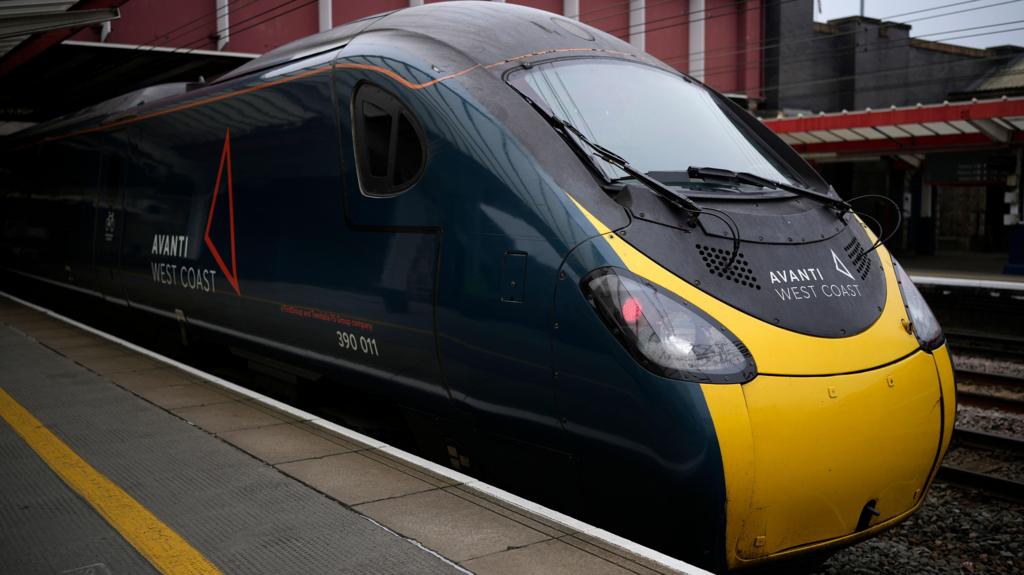
The Office of Rail and Road (ORR), the industry regulator, has conceded it “did not have all the facts” when initially deciding to prohibit passengers from traveling on a peak-time train service between Manchester and London.
The ORR acknowledged that “critical points” were missing from its assessment, which led to a decision that would have effectively created a ‘ghost train’ operating daily for several months.
ORR Chief Executive John Larkinson stated that the organization was unaware the train would be “fully crewed,” would depart from Manchester Piccadilly instead of a depot, and needed to arrive at Euston to operate as the 09:30 GMT service to Glasgow.
“The information that later became available to us meant that our assumption turned out to be incorrect,” Larkinson explained.
The admission follows a backlash in November regarding the ORR’s initial determination to allow the popular 07:00 train to run exclusively with staff.
The decision, slated to take effect in mid-December, was swiftly reversed amid widespread criticism.
The ORR had previously justified its stance by asserting that the service needed to run empty to serve as a “firebreak,” a planned gap in the schedule designed to mitigate delays.
However, in a letter to Ruth Cadbury, chair of Parliament’s Transport Committee, Larkinson indicated that the subsequently revealed information rendered the slot ineffective as a firebreak.
Larkinson noted that the ORR team responsible for evaluating the application did not request further details from Avanti, which would have clarified the aforementioned points.
He suggested that had the ORR team engaged with Avanti, their decision “may have been different, but they were stretched and trying to close out multiple interacting decisions.”
He further explained that the ORR was concurrently managing 82 “complex and competing” applications for track access.
Even after the train operating company raised concerns in early November, the issues they highlighted were not “escalated appropriately,” according to Larkinson’s letter.
Larkinson characterized the situation as “an unusual case, but nevertheless one we will learn from.”
He added: “I take full responsibility for what happened and we are strengthening our processes to reflect the lessons we have learned.”
In response, Cadbury, the Labour MP for Brentford and Isleworth, stated: “The public was understandably baffled by the ORR’s decision not to allow the 7am fast service from Manchester to London to carry passengers when a fully crewed train was running anyway.”
“On the face of it, this was a strange decision – especially when the train was popular and profitable – and one that the Transport Committee had a number of questions about.”
“Now we have some answers, a detailed explanation for why this happened and a welcome recognition of responsibility.”
She affirmed that the committee will explore measures to prevent similar occurrences as the government establishes Great British Railways.
The ORR maintains that it has “a good track record” of achieving an appropriate balance.
A spokesperson stated: “In this instance we were given new information after our decision was made which we did not properly consider, although we should have done and as a result, we missed the opportunity to re-visit our decision.”
“When all the facts were made clear, we moved quickly to maintain the service for passengers.”
A full service is expected on the Brockenhurst-Lymington line from Thursday.
A petition of nearly 2,000 signatures calls on Wokingham Borough Council to address the issue.
Authorities say the twisted train wreckage makes it difficult to recover people trapped inside.
A guide to what causes landslides and how it can affect travellers on Britain’s railway services in the South of England.
The disruption is expected until end of the day, Network Rail says.
“`