

“`html
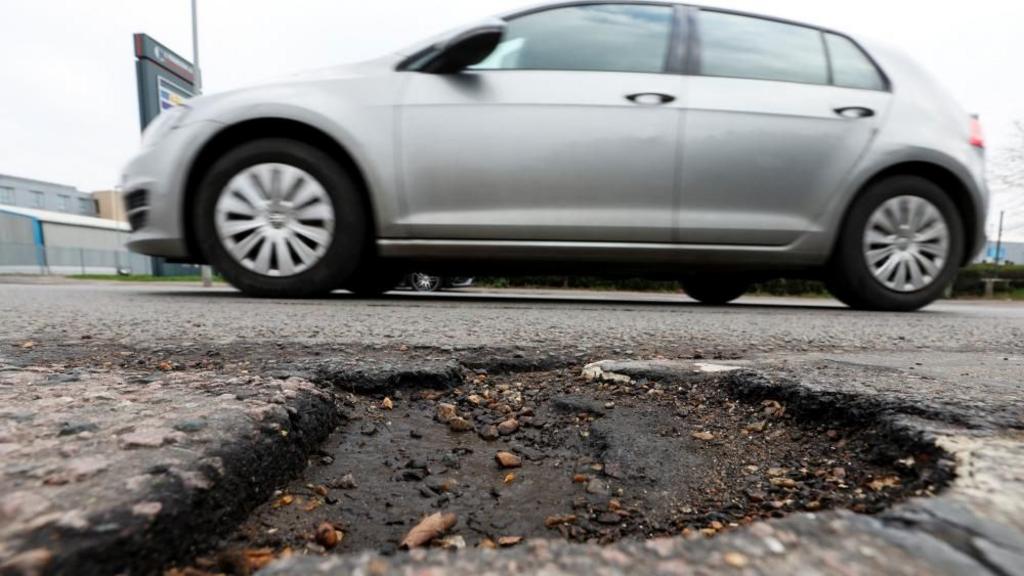
A new mapping tool and traffic light rating system will allow drivers in England to assess how effectively local authorities are addressing the pervasive issue of pothole-ridden roads.
Based on road conditions and the efficacy of their spending of government funding for repairs, thirteen local authorities—including Cumberland, Bolton, Kensington and Chelsea, Bedford, West Northamptonshire, North Lincolnshire, and Derbyshire—have been assigned a “red” rating.
In contrast, Essex, Wiltshire, Coventry, Leeds, and Darlington are among the councils that have received a “green” rating on the Department for Transport (DfT) map.
Transport Secretary Heidi Alexander stated that drivers have “for too long” borne the brunt of inadequate road maintenance.
Speaking on the BBC’s Sunday with Laura Kuenssberg, she noted public frustration with encountering the same potholes repeatedly, leading to costly and “needless trips to the garage.”
Alexander emphasized the government’s commitment to providing increased funding to councils for road maintenance and the importance of public oversight regarding the utilization of these funds.
The government allocated £7.3 billion in the November Budget for road repairs over the next four years.
The DfT assessed 154 local highway authorities, categorizing them as red, amber, or green based on road conditions and the efficient use of government funds.
The majority of authorities received an amber rating, indicating ongoing road patching and preventative measures, but with identified areas for improvement.
Derbyshire, previously dubbed the “pothole capital of the UK,” received the lowest rating for road maintenance.
RAC data from December revealed that Derbyshire experienced the most significant increase in pothole compensation claims between 2021 and 2024. However, Charlotte Hill, the council’s cabinet member for potholes, highways, and transport, reported a 72% decrease in claims since May 2025.
Red-rated councils will receive additional support, with the government allocating £300,000 for “expert planning and capability assistance.”
The DfT stated that future funding will be “linked to performance” to incentivize councils to use “taxpayer money efficiently to repair and maintain their roads before potholes form.”
Alexander noted the absence of historical data collection and a formal definition of potholes, emphasizing the government’s novel approach to data gathering in this area.
Speaking to Sky News, she explained that the map assesses areas based on road condition, investment levels, and the extent to which the local authority is “using best practice and providing value for money.”
Estimates suggest that the UK has over one million potholes, which the RAC attributes to 25,758 incidents in 2025.
The RAC also highlights that damaged roads contribute to numerous serious injuries, accidents, and breakdowns annually.
According to the motoring group, drivers spend an average of £590 on pothole-related damage, with some incurring costs exceeding £1,000.
Common vehicle issues resulting from potholes include damaged shock absorbers, broken suspension springs, and distorted wheels.
Tom Hunt, chair of the Local Government Association’s Inclusive Growth Committee, welcomed the funding boost as “a helpful step in the right direction.”
However, he noted that councils face a £17 billion backlog of road repairs, emphasizing that “long-term funding certainty” and preventative measures would save taxpayer money and reduce the need for reactive repairs.
Shadow Transport Secretary Richard Holden criticized the initiative, stating, “A map won’t stop tyres blowing or suspensions snapping.”
He added, “Motorists, already being squeezed tight by Labour, deserve real action to back them.”
Author Christopher Beanland explores the architectural impact of the motor car in the West Midlands.
There is a fine balance between the benefits of improved infrastructure, versus the cost of disruption. Does the country have it right?
Dartford Junction and several stations will be improved over the half-term break, rail bosses say.
John Hawkins sold a late man’s car, which would have funded his widow’s retirement, without permission.
Party says 22 to 59-year olds would benefit from the cap if it leads the Welsh government after May.
“`