

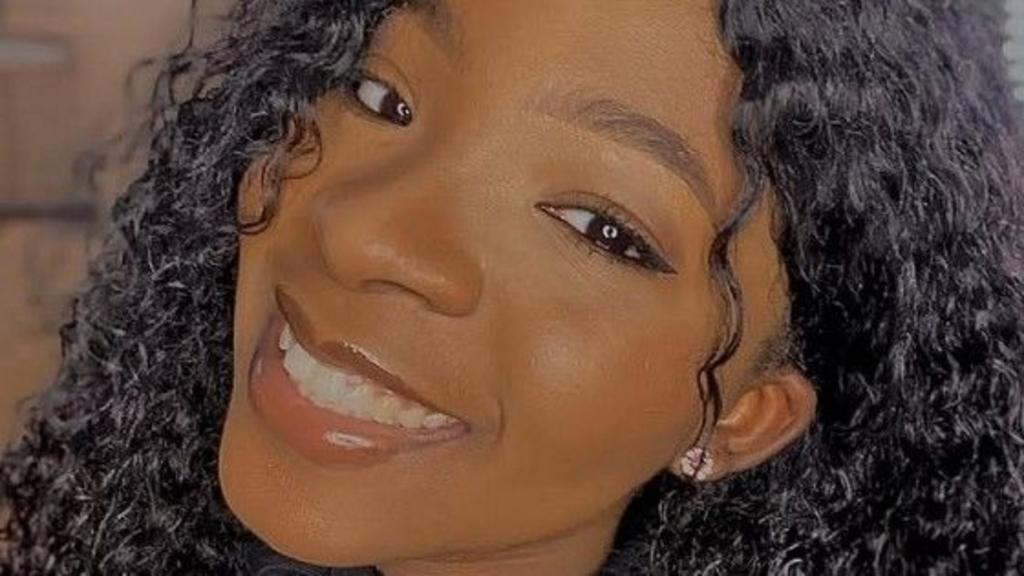
Nigeria is mourning the loss of Ifunanya Nwangene, an aspiring singer who tragically passed away on Saturday in Abuja after a snake bite.
Nwangene, aged 26, gained recognition as a contestant on The Voice Nigeria in 2021. Renowned for her musical versatility, she seamlessly blended genres such as jazz, opera, classical, and soul.
Footage circulating on social media depicts a snake handler removing a snake, reportedly a cobra, from her residence as onlookers express alarm.
Sam Ezugwu, a close friend and music director of the Amemuso Choir where Nwangene performed, described her to the BBC as a “rising star.”
Ezugwu noted that she had been planning her inaugural solo concert for later this year. Nwangene was also a qualified architect.
Hillary Obinna, a fellow singer, recounted to the BBC that Nwangene was reportedly awakened by the snake bite while she was asleep.
Obinna stated that two snakes were subsequently discovered within the property.
Nwangene initially sought treatment at a local clinic, which lacked antivenom, before being transferred to a hospital.
Ezugwu said he rushed to the hospital on Saturday upon learning of her admission. He reported that the hospital possessed one of the necessary antivenoms but lacked the other.
“While medical personnel attempted to stabilize her, she was unable to speak but could communicate through hand gestures. She was struggling to breathe,” he stated.
Ezugwu said he left to locate the missing antivenom, but upon his return, he learned that she had died.
He added that the entire choir went to the hospital that evening, “hoping that a miracle would happen.”
In a statement, the hospital refuted claims that the antivenom was unavailable and denied any inadequacy in its response, asserting that such claims “do not reflect the reality of the situation.”
The Federal Medical Centre, Jabi, stated on Sunday: “Our medical staff provided immediate and appropriate treatment, including resuscitation efforts, intravenous fluids, intranasal oxygen, and the administration of polyvalent snake antivenom.”
The hospital noted that a “thorough but quick” assessment indicated severe complications from the snake bite. Prior to being transferred to intensive care, her condition suddenly deteriorated, and medical personnel were “unable to revive her.”
“We stand by the quality of care and dedication our team demonstrates daily.”
Obinna described Nwangene as “a very wonderful girl, she is humble – very intelligent and very talented.”
“Everybody is shattered. We could not sleep at night.”
Nwangene’s death has reignited discussions in Nigeria regarding the quality of healthcare and patient safety, amidst recent allegations of medical negligence.
These include the recent death of novelist Chimamanda Ngozi Adichie’s 21-month-old son. The hospital in that case has denied any wrongdoing.
In response to public concern, Nigeria’s health minister has acknowledged “systemic challenges” in the health system and announced the creation of a national task force on “clinical governance and patient safety.”
While snake bite victims are typically found in rural areas of Nigeria, Nwangene’s death in an upscale area of the capital has shocked many Nigerians.
The World Health Organization (WHO) identifies venomous snakebites as a neglected public health crisis in numerous tropical and subtropical nations.
The WHO estimates that between 435,000 and 580,000 snakebites requiring treatment occur annually in Africa, predominantly affecting women, children, and farmers in rural communities where healthcare systems are underdeveloped and medical resources are limited.
These bites result in approximately 30,000 deaths each year in sub-Saharan Africa, although some estimates suggest the actual number may be significantly higher.
Experts suggest that antivenom shortages contribute significantly to the difficulty in assessing the true scope of the problem, often leading victims to seek care from traditional healers and resulting in unreported cases.
Even when available, antivenom is often prohibitively expensive, and storage is challenging due to the refrigeration requirements in areas with unreliable electricity.
Go to BBCAfrica.com for more news from the African continent.
Follow us on Twitter @BBCAfrica, on Facebook at BBC Africa or on Instagram at bbcafrica
The mine gave way after heavy rains on Wednesday, a local rebel spokesman says.
The Zulu king was trying to calm anti-migrant feelings but ended up using a highly derogatory phrase.
The Ugandan president’s son, notorious for explosive remarks on X, has ambitions to succeed his father.
Prosecutors say Mamadou Hawa Gassama described Alassane Ouattara as a “tyrant” and “an enemy of Mali”.
Niger’s defence ministry said four military personnel were injured and 20 attackers killed in the incident.