

“`html
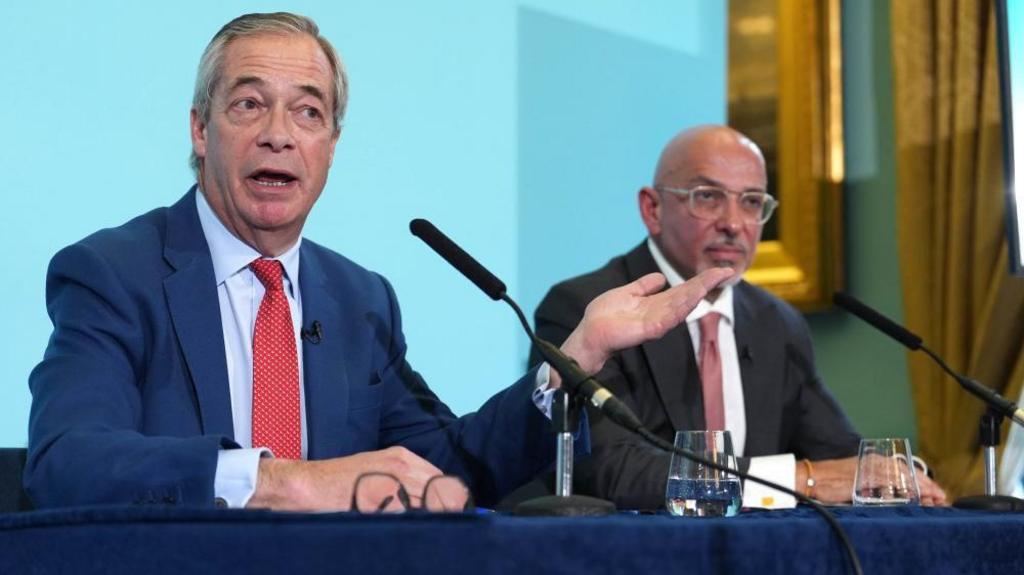
What is the significance of Nadhim Zahawi’s decision to join Reform?
The move is noteworthy, but it also presents potential challenges for Nigel Farage’s party.
Here’s a breakdown of why this is an important development.
Mr. Zahawi is arguably the most prominent figure to date to switch from the Conservative Party to Reform.
During his time in government, he played a key role in the widely praised Covid-19 vaccine rollout. He also held the position of education secretary, and briefly served as chancellor and the most senior minister at the Cabinet Office, a central hub of government.
Nigel Farage has long maintained that for Reform to be a credible contender for power, it needs experienced figures who understand how government operates.
Mr. Zahawi brings precisely that experience.
Furthermore, the former MP has a compelling personal history. Born in Iraq, he fled with his family as a child.
Upon arriving in the UK, he did not speak English. However, he went on to have a successful career in business, including co-founding the polling firm YouGov. His story is one of an immigrant who rose to become a prominent figure in both the business world and government.
Mr. Zahawi is the latest in a growing list of senior Conservatives to defect to Reform. According to the BBC’s latest count, 22 former MPs have now made the switch, including several former cabinet and junior ministers.
Many of these individuals were strong supporters of Boris Johnson, including Nadine Dorries, Andrea Jenkyns, Jonathan Gullis, and Lia Nici, in addition to Mr. Zahawi.
For a party aiming to supplant the Conservatives as the leading force on the right of British politics, the appeal of these defections is clear.
These are individuals who have held positions at the highest levels of the Conservative Party but have concluded that it is no longer fit for purpose. They have all decided that a new alternative is needed and have therefore joined Reform.
However, this is where the risks emerge.
Reform has been highly critical of the Conservatives’ record in power, particularly Boris Johnson’s handling of issues such as immigration.
Many Reform members disapprove of the Conservative Party’s actions while in government, and some are skeptical about the idea of sharing a party with former cabinet ministers.
It is likely that Reform’s political opponents will attack the party for increasingly becoming a haven for unsuccessful Conservative MPs. The Conservatives themselves have accused Reform of becoming a party of “has-been politicians looking for their next gravy train.”
Nigel Farage has acknowledged this risk, claiming to have turned down other Conservatives who wished to join his party but were deemed unsuitable.
However, the question Mr. Farage faces is: how many former Tory MPs are too many? Some believe he may have already reached that point.
There is also another risk: Mr. Zahawi himself.
The Conservatives have claimed that he was lobbying them just weeks ago to be appointed to the House of Lords. A source close to Mr. Zahawi has denied that he “begged” for a peerage, but the Conservatives are alleging that their former MP only made the switch because they would not grant him what he desired.
Furthermore, there are questions surrounding Mr. Zahawi’s personal tax affairs. He was dismissed by Rishi Sunak following a highly critical report from the prime minister’s ethics advisor, who found that he had failed to disclose that HMRC was investigating his tax affairs.
This was not a minor matter; the report concluded that he had committed a serious breach of the ministerial code and had missed multiple opportunities to be transparent about his tax affairs. While Mr. Zahawi described his mistakes as careless, they brought his ministerial career to an embarrassing end.
Nigel Farage has determined that the baggage is worth it and that the advantages of Nadhim Zahawi’s defection outweigh the disadvantages.
This is undoubtedly another significant event that has sparked conversation in Westminster, with many wondering who might be next.
However, the steady stream of former Conservatives joining Reform is not without its risks.
The former Conservative minister and Scottish Tory treasurer has been officially unveiled by Nigel Farage.
A banker from Greenock who joined the House of Lords in 2021, Malcolm Offord has made much of a relatively short political career.
Labour came third in the Caerphilly by-election, its first parliamentary defeat in the area for 100 years.
The new intake include 14 defectors from the Conservatives and one from the Green Party.
Chandra Kannenganti wants “honest, practical politics” and Heather Blurton says Tories let UK down.
“`