

Dog owners in England and Wales now face unlimited fines and potential pet confiscation under new legislation aimed at bolstering the protection of farm animals from attacks.
The updated “livestock worrying” laws, effective Wednesday, supersede regulations established over 70 years ago. They grant law enforcement the authority to collect DNA samples from dogs suspected of harassing, chasing, or injuring livestock.
According to insurer NFU Mutual, livestock worth nearly £2 million were severely injured or killed by dogs in 2025, a 10% increase from the previous year.
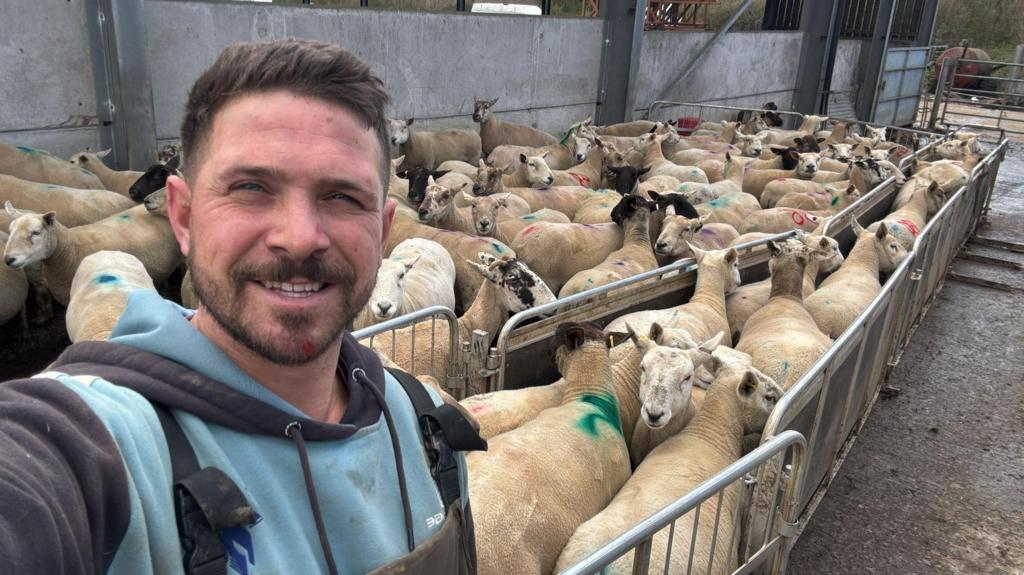
One farmer described the dog attacks on his sheep as a persistent “nightmare” in an interview with the BBC, emphasizing the need for improved public awareness regarding the risks.
Joshua Gay, who operates a mixed farm near Newton St Loe in Somerset, reported losing thousands of pounds worth of livestock in a single incident last June when approximately 35 ewes and lambs were attacked by an unrestrained dog.
“Some were killed by the dog. Others were just driven into deep brambles and bushes so they couldn’t get out and, with it being 30 degrees and them in a wool fleece, they basically baked like an oven and died,” he explained.
Gay notes that minor incidents are common during the summer as walkers venture “where they aren’t used to going”.
“They don’t know the etiquette or the countryside code and they tend to not be aware or not in control. But their dog may never have seen sheep before. Their dogs just aren’t used to it,” he said.
“The owners think they know their dog but that instinct just takes over.”
Gay welcomed the changes introduced by the Dogs (Protection of Livestock) (Amendment) Act 2025, which will now see:
Alpaca owner Helen Edmunds, 57, of Garth Hall Farm, Rhondda Cynon Taf, said the change to include camelids was important as the number of owners had grown significantly since the original law was introduced in 1953.
She said attacks could have a lasting emotional impact, adding she still vividly remembered a dog attack on the sheep farm where she grew up and knew of fellow alpaca owners whose animals had suffered serious leg injuries after being bitten by dogs.
Dr Anna Muir, a dog behaviourist who runs a training centre near Mold, Flintshire, also welcomed the changes, saying: “For irresponsible dog owners who let their dogs run loose under no control, who let them off lead in sheep fields, who show no effort to reduce them chasing livestock – I am absolutely supportive of unlimited fines.”
But she warned that responsible dog walkers, who would normally put their dogs on leads while walking through agricultural fields, could get “caught out” if they came across stray animals on the roads, or if a farmer happened to be moving their livestock between fields.
Dr Muir said the safest option wherever livestock may be present was to keep dogs on a lead.
The National Sheep Association conducted a survey of farmers revealing that 87% of respondents had experienced a dog attack on their flock within the past year.
Gavin Lane, president of the Country Land and Business Association (CLA), representing rural landowners, hailed the law change as a “serious step forward,” asserting that “farmers should not have to live in fear of dogs attacking their animals.”
“No farmer can forget finding an animal they’ve cared for in pain,” he added.
The Charity Commission has launched a statutory inquiry into Animal Lifeline, based in Stoke-on-Trent.
A concession currently allows shearers from Australia and New Zealand to travel to the UK for three months but the rules are set to change.
PD Khan is crowned overall regional champion at the Eastern region police dog trials.
Farmers say they have “never seen this much rain” and it might put them “out of business”.
A marine charity is urging beachgoers to keep dogs on a lead and observe seals from a distance.