

“`html
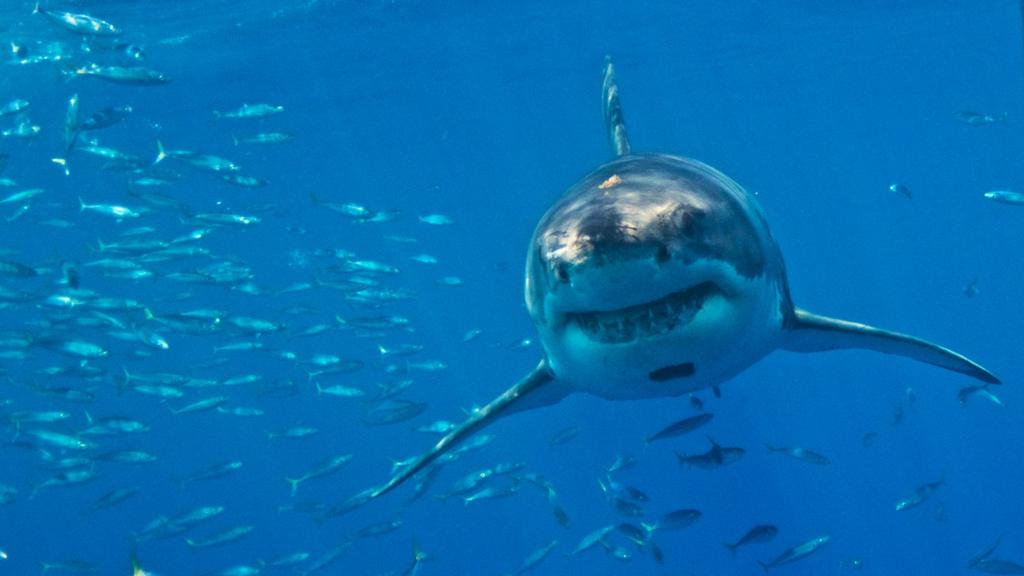
Great white sharks in the Mediterranean Sea are facing a critical threat of extinction, exacerbated by illegal fishing activities.
Research conducted by U.S. scientists in collaboration with the UK’s Blue Marine Foundation indicates that endangered species, including great white sharks, are being illicitly traded in North African fish markets.
Great white sharks are among over 20 Mediterranean shark species protected under international law, which prohibits their capture and sale.
However, monitoring of fishing ports along the North African Mediterranean coast has revealed that at least 40 great white sharks were killed in 2025 alone.
The BBC has independently verified social media footage showing protected sharks being brought into North African ports deceased.
One video depicted a large great white shark being hauled ashore from a fishing vessel in Algeria. Another, filmed in Tunisia, showed the heads and fins of what appeared to be a short-finned mako shark, another threatened and protected species, being prepared for sale.
Dr. Francesco Ferretti from Virginia Tech, the lead researcher, explained that many shark populations, particularly white sharks, have experienced a dramatic decline in the Mediterranean in recent decades.
“No other body of water is fished as intensely as the Mediterranean Sea,” he stated to the BBC News science team from a research vessel off the coast of Sicily in late 2025.
“The impact of industrial fishing has been intensifying, and it is plausible that they will go extinct in the near future.”
The Mediterranean white shark population is currently classified as Critically Endangered by the International Union for the Conservation of Nature.
In a recent effort to locate and study the remaining predators, Dr. Ferretti and his team focused on the Strait of Sicily, an area between Sicily and North Africa identified as a “last stronghold” for several threatened shark species in the Mediterranean.
A primary objective of their mission was to attach a satellite tracking tag to a white shark, a feat never before accomplished in the Mediterranean Sea.
To facilitate this, the researchers deployed over three tonnes of fish bait, including a shipping container filled with frozen mackerel and tuna scraps, along with 500 liters of tuna oil to create a “fat slick” designed to attract sharks from hundreds of meters away.
Despite a two-week effort involving baiting the ocean, collecting seawater samples for shark DNA analysis, and deploying underwater cameras, the researchers were unable to locate any sharks to tag.
They only briefly observed a single blue shark on their submarine cameras.
“It’s disheartening,” Dr. Ferretti stated. “It just shows how degraded this ecosystem is.”
During the team’s search, they received reports that a juvenile great white shark had been caught and killed in a North African fishery, just 20 nautical miles from their location.
It remains unclear whether the animal was caught accidentally or deliberately targeted.
Dr. Ferretti and his team estimate that over 40 great white sharks have been caught around that coast. “This is a significant number for a critically endangered population,” he said.
The researchers, along with North African colleagues, are monitoring several fishing ports in the region. Furthermore, work with the BBC Forensics team indicates that protected sharks are being caught, landed, and offered for sale in countries including Tunisia and Algeria.
Footage posted on social media shows a great white shark being landed in a fishing port in Algeria and another large shark, appearing to be a protected short-finned mako, being prepared for sale on a trolley in a fish market in Tunisia.
The regulations protecting sharks are complex. Currently, 24 threatened species have international legal protection, including mako, angel, thresher, and hammerhead sharks.
The EU and 23 nations around the Mediterranean have signed an agreement stipulating that these species cannot be “retained on board, transhipped, landed, transferred, stored, sold, displayed, or offered for sale.”
The international agreement states that “they must be released unharmed and alive [where] possible.” These rules do not address accidental bycatch, and enforcement varies from country to country.
James Glancy from Blue Marine told BBC News that his own investigation revealed multiple white sharks for sale in Tunisian fishing markets. However, he noted a paradoxical element of hope in this situation, suggesting that the presence of white sharks for sale indicates their continued existence.
“It shows that there is wildlife left,” he told BBC News. “And if we can preserve this, there is a chance of recovery.”
In poorer communities in North Africa, fishers who catch sharks may face the difficult choice between feeding their families and returning a threatened species to the ocean.
Sara Almabruk from the Libyan Marine Biology Society suggests that most catches in North African waters are accidental, but adds: “Why would they throw sharks back into the sea when they need food for their children?”
“If you support them and train them in more sustainable fishing, they will not catch white sharks – or any sharks.”
James Glancy from Blue Marine added that collaborative efforts among Mediterranean countries offer “hope.”
However, he cautioned, “we’ve got to act very quickly.”
The fossil was so complete experts could see remains of the last meal it ate, 330 million years after it died.
Marine habitats around Sark could be getting extra safeguards through a new protection order.
There are hopes the partnership will safeguard endangered species “for generations to come”.
His groundbreaking field research was instrumental in banning the international ivory trade and protecting elephants from poachers.
The centre, founded by David Mills, partner of Dame Judi Dench, is celebrating a key milestone.
“`