

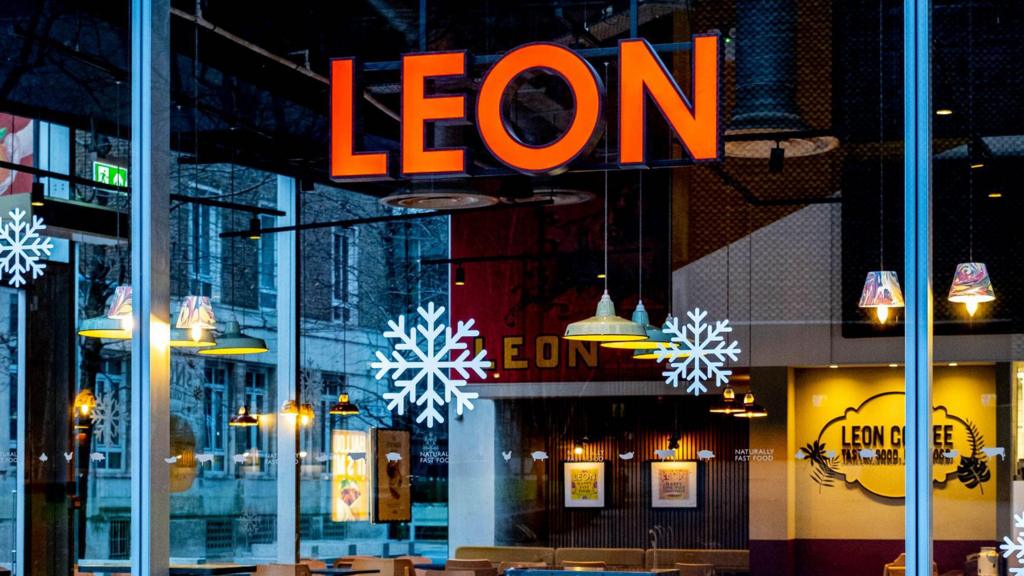
Leon, the fast-food chain, is set to expand its presence in service stations, airports, and train stations, according to its chief executive, following the closure of 20 High Street locations.
John Vincent cited escalating business rates and overall cost pressures as factors rendering the High Street less profitable. Leon has reportedly been incurring annual losses of £10 million.
Vincent, a co-founder of the chain, repurchased the company from Asda last year. However, the firm appointed administrators last month, announcing a significant restructuring of its 71 restaurants, which employ 1,000 individuals.
The government has stated its commitment to supporting hospitality businesses through a support package aimed at mitigating bill increases.
In an interview on the BBC’s Big Boss Interview podcast, Vincent described tax increases as “incredibly toxic” for the hospitality sector.
He warned that further tax increases on businesses would lead to a situation where “the only people that are going to survive are those selling… food that’s not very good quality.”
The business rates relief for the hospitality sector, introduced during the Covid-19 pandemic, is set to expire in April. Simultaneously, increases in the rateable value of premises will take effect.
The Treasury has indicated plans to announce additional support for pubs in the coming days, but has faced criticism from other hospitality businesses regarding their exclusion from the package.
Chancellor Rachel Reeves stated at a press conference on Wednesday that she was “working with the hospitality sector.”
Vincent noted that traditionally, “the more fast food units you have, the better the operations, the better the supply chain, the better you can buy, the better your systems can be.”
However, he added, “I’m not sure this is true anymore because of pressure on the market.”
Vincent stated that Leon would be closing its restaurants outside of London, while also noting that the high costs of operating in the capital were making business “incredibly difficult” due to “incredibly high upward-only rents.”
He explained that even though airports, in particular, take a significant portion of a retailer’s earnings, a 2% profit margin there “is worth the same as a 6% on the High Street.”
“You might be doing two or three times the revenue in that airport than you might in a High Street location,” Vincent said.
In response to Vincent’s comments, a Treasury spokesperson stated, “We’re backing hospitality businesses with a £4.3bn support package to limit bill rises.”
The spokesperson added that this was in addition to “capping corporation tax at 25%, cutting red tape and taking action on the cost of living to boost high streets.”
Beyond rising costs, Vincent believes Leon is struggling due to a departure from its original mission of providing good-quality fast food for the masses.
He explained that the menu initially focused on simplicity, featuring meatballs, a superfood salad, and tapas – relatively healthy options at a time when fast food was primarily dominated by burgers, fried chicken, and kebabs.
However, Leon “lost chutzpah, leadership and confidence” after its sale in 2021, resulting in “a lack of clarity about what it wants the menu to be,” he stated.
He previously expressed sympathy for the company’s former owners, acknowledging the challenges faced by restaurants since the onset of the pandemic.
“I think Leon needs to make sense again,” he said. “We don’t always make sense to people at the moment.”
He plans to restore simplicity through menu changes this year: “We do have to, as a brand, realise and remember, we were always about the best food for the most people.”
“We were not about posh fast food for posh people. That was never our intention.”