

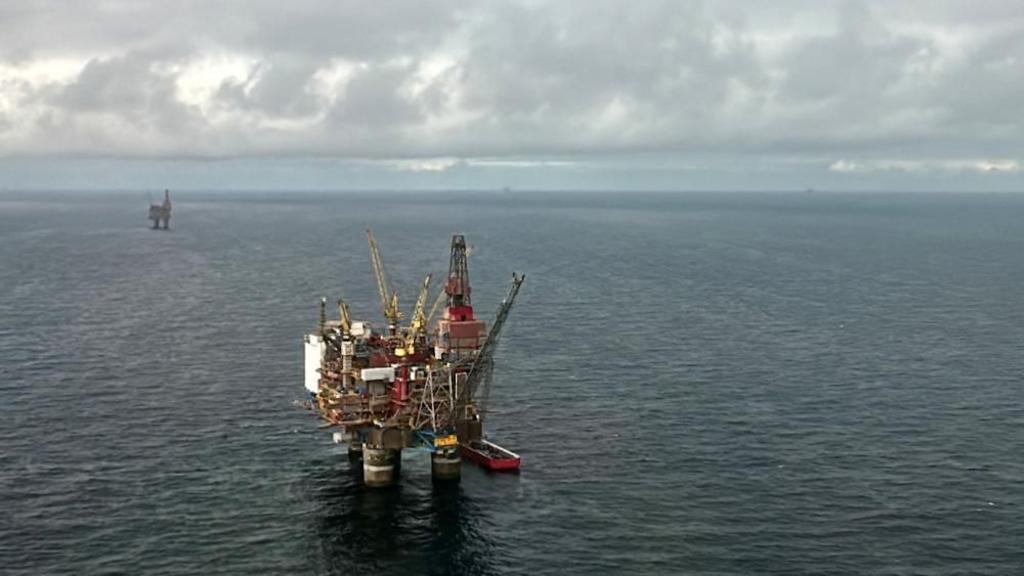
The government is set to unveil its North Sea Strategy on Wednesday, outlining plans to ease restrictions on new oil and gas drilling in the region.
According to the BBC, Chancellor Rachel Reeves will announce the strategy’s publication during the Budget. The Department for Energy Security and Net Zero is expected to release a detailed document shortly thereafter.
The strategy is anticipated to present a more flexible interpretation of a previously stated commitment to ban new oil and gas exploration, potentially through expanded extensions of existing fields.
The concept of allowing new drilling connected to existing infrastructure was initially discussed at the Labour conference in September.
While the forthcoming North Sea review will not directly address the controversial Rosebank oil field decision, a project Ed Miliband previously opposed, the broader relaxation of rules is widely seen as increasing the likelihood of its approval.
The Rosebank project remains subject to separate regulatory and judicial processes. Traditionally, “tiebacks” have facilitated smaller extensions to existing fields, reaching into unlicensed seabed areas.
However, Rosebank is a substantial facility requiring its own distinct production infrastructure.
Speculation has also arisen regarding a potential early phasing out of the 78% windfall tax, currently slated to expire in 2030.
The oil and gas industry has actively lobbied for alterations to the energy profits levy, asserting its detrimental impact on the sector.
Investment levels are reportedly at a historic low, with companies increasingly seeking opportunities in regions with more favorable tax environments.
Research from Robert Gordon University in Aberdeen suggests that approximately 1,000 jobs are being lost each month.
Sources indicate that the approval of “tie backs” would be perceived as insufficient without accompanying tax concessions.
A “cap and floor” mechanism, triggered by a return to elevated oil prices similar to those following the Russian invasion of Ukraine, is considered a likely government measure.
Industry representatives argue that subsequent declines in crude oil prices demonstrate the end of the “windfall” period, necessitating corresponding tax adjustments.
Russell Borthwick, chief executive of the Aberdeen & Grampian Chamber of Commerce, has criticized the UK government for its “badly wrong” North Sea policy.
“This is the first step towards addressing the damage that has already been done – but while the Energy Profits Levy remains in place, this change in isolation will not stem the loss of jobs and investment in our oil and gas industry,” he stated.
Mr. Borthwick warned that maintaining the EPL would “ensure that more jobs will vanish in their thousands.”
He further predicted an increase in companies leaving the North Sea region.
“The Chancellor must signal a shift away from this tax today, and that shift must come in 2026 before it is too late,” he added.
North Sea producers claim the tax, implemented in response to the oil price surge following Russia’s invasion of Ukraine, is severely impacting the sector.
Donald Singer from Aberdeen died while working on the Ninian Southern Platform in 2020.
The fresh assessment was ordered after a successful legal challenge by environmental groups.
Hundreds of staff have been told their jobs are at risk with the Fife Ethylene Plant in Mossmorran due to close in February.
Lee Hulse, 32, was working on the Valaris 121 drilling rig when an incident happened on Friday.