

“`html
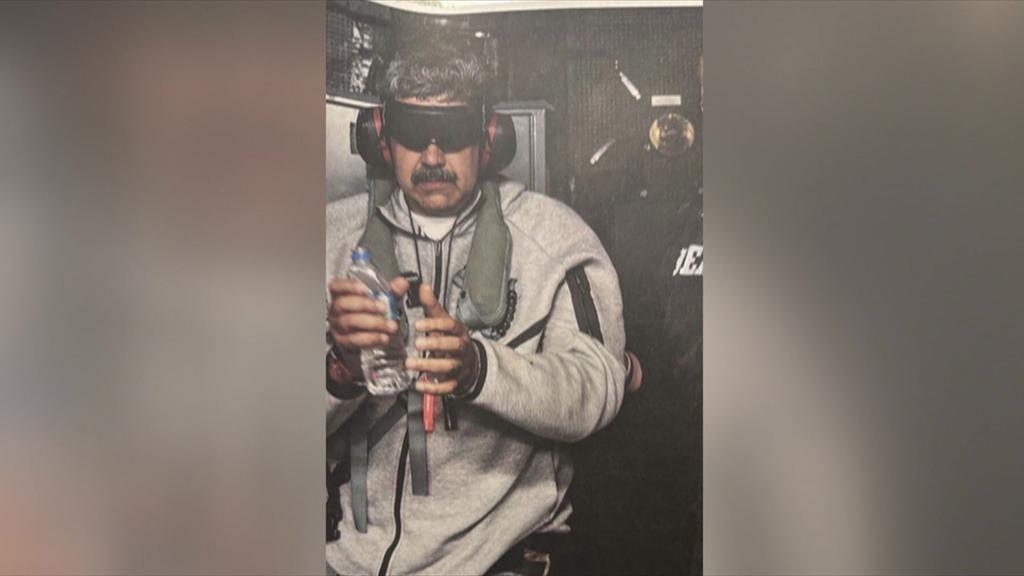
The United States has apprehended Venezuela’s President Nicolás Maduro following a large-scale operation within the South American nation, according to statements from U.S. President Donald Trump.
President Trump announced that the Venezuelan leader and his wife were extracted via a military operation conducted in coordination with U.S. law enforcement agencies. Both are facing charges in New York related to alleged drug and weapons offenses.
This development follows reports of explosions across Caracas, the Venezuelan capital, early Saturday morning, including incidents at military installations.
In response, the Venezuelan government has deployed its armed forces and declared a state of national emergency.
Maduro’s capture marks an escalation in tensions between the U.S. and Venezuela, amidst Washington’s recent actions targeting vessels in the Caribbean suspected of narcotics trafficking.
The U.S. has previously accused the Venezuelan president of direct involvement in drug smuggling and has questioned his legitimacy as a leader. Maduro, in turn, has accused the U.S. of intimidation and of seeking to exploit Venezuela’s oil reserves.
During a Saturday press conference, President Trump stated that the U.S. would “run” Venezuela “until a safe, proper, and judicious transition” could be established, also indicating that American oil companies would become involved in the country.
Here’s a summary of the key details known thus far.
According to CBS News, the BBC’s U.S. news partner, Maduro was taken into custody by the U.S. Army’s Delta Force, an elite counter-terrorism unit.
CBS News also reported that a CIA source within the Venezuelan government provided critical intelligence to the U.S., enabling the tracking of Maduro’s location.
General Dan Caine, Chairman of the U.S. Joint Chiefs of Staff, speaking alongside President Trump, detailed that Operation Absolute Resolve involved months of meticulous planning and rehearsals, with forces poised for optimal conditions.
The operation utilized over 150 aircraft to insert an extraction team into Caracas.
The team breached Maduro’s compound – described by President Trump as a “fortress” – at 02:01 local time (06:01 GMT), coinciding with a U.S.-initiated power outage in Caracas.
President Trump stated that Maduro attempted to secure himself in a fortified safe room but was ultimately unsuccessful in closing the door.
He added that the operation resulted in no U.S. fatalities and “few” injuries, further noting that he monitored the operation in real-time.
Maduro and his wife were transported initially by ship and subsequently by plane, landing at Stewart Air National Guard Base in New York State, approximately 60 miles (97km) north of Manhattan.
CBS News has reported that they are expected to be held at the Metropolitan Detention Center, a federal facility in Brooklyn.
Concurrently with the military operation, Caracas experienced loud explosions and visible plumes of smoke.
Videos purportedly depicting explosions and helicopter activity have been circulating on social media, although their authenticity remains unconfirmed.
The extent of any casualties is currently unknown.
The Venezuelan government has reported that the states of Miranda, Aragua, and La Guaira were also affected.
President Trump indicated that U.S. forces were prepared for a follow-up operation but deemed it unnecessary due to the “powerful” initial strike.
BBC Verify is currently analyzing videos depicting explosions, fires, and smoke in various locations around Caracas to determine the precise targets.
To date, five locations have been confirmed:
Vice-President Delcy Rodríguez, in a televised address, urged calm and unity, called for Maduro’s release, asserting that he remains the “only president,” and affirmed that Venezuela would never become a colony of any nation.
Earlier on Saturday, President Trump stated that Rodríguez had been sworn in as president, had spoken to U.S. Secretary of State Marco Rubio, and conveyed, “we’ll do whatever you need.” President Trump added, “She really doesn’t have a choice.”
Venezuelan Defense Minister Vladimir Padrino López claimed that the strikes impacted civilian areas and stated that the government is gathering information regarding fatalities and injuries.
He further stated that Venezuela would “resist” the presence of foreign troops.
The Venezuelan government issued a formal statement condemning the “extremely serious military aggression” by the U.S. “against Venezuelan territory and population in civilian and military locations.”
The statement also accused the U.S. of jeopardizing international peace and stability and characterized the attack as an attempt to seize “Venezuela’s strategic resources, particularly its oil and minerals,” in an effort to “forcibly break the political independence of the nation.”
During Saturday’s press conference, President Trump stated that the U.S. intends “to run the country until such time as we can do a safe and proper and judicious transition.”
When questioned about Venezuelan opposition leader and 2025 Nobel Peace Prize nominee María Corina Machado, President Trump stated that she lacks support or respect.
Earlier, on social media, Machado stated that “the hour of freedom has arrived” and urged Edmundo González Urrutia, who, according to vote tallies released by her party, won the 2024 election, to assume power.
President Trump also indicated that American oil companies would move in to repair infrastructure “and start making money for the country.”
He stated, “we’re going to be taking a tremendous amount of wealth from the ground,” which would benefit both the people of Venezuela and the U.S., adding, “we’re going to get reimbursed for everything we’ve spent.”
He further stated that the U.S. would sell oil to other countries.
When asked whether U.S. troops would be deployed to Venezuela, President Trump responded, “we’re not afraid of boots on the ground.”
U.S. Attorney General Pam Bondi stated that Maduro and his wife, First Lady Cilia Flores, have been indicted in the Southern District of New York.
The charges include conspiracy to commit narco-terrorism and import cocaine, possession of machine guns and destructive devices, and conspiracy to possess machine guns and destructive devices against the U.S.
“They will soon face the full wrath of American justice on American soil in American courts,” Bondi posted on X.
Nicolás Maduro rose to prominence under the leadership of left-wing President Hugo Chávez and his United Socialist Party of Venezuela (PSUV). He succeeded Chávez as president in 2013.
In 2024, Maduro was declared winner of the presidential election, even though voting tallies collected by the opposition suggested that its candidate, Edmundo González, had won by a landslide.
He has been at odds with Trump over the arrival of hundreds of thousands of Venezuelan migrants in the US and the movement of drugs into the US, in particular fentanyl and cocaine.
Trump has designated two Venezuelan drug gangs – Tren de Aragua and Cartel de los Soles – as Foreign Terrorist Organisations (FTOs) and has alleged that the latter was led by Maduro himself.
The US had offered a $50m (£37m) reward for information leading to Maduro’s arrest.
Maduro has vehemently denied being a cartel leader and has accused the US of using its “war on drugs” as an excuse to try to depose him and get its hands on Venezuela’s vast oil reserves.
In recent months, US forces have also carried out more than two dozen strikes in international waters on boats it alleges have been used to traffick drugs into the US. More than 100 people have been killed.
First Lady Cilia Flores – who was also taken to the US and indicted alongside her husband – has held a number of senior posts in Venezuela, including attorney general and president of the national assembly. She is seen as a powerful political operator in her own right.
Flores, 59, is colloquially known as Maduro’s primera combatiente (first warrior), and has often been pictured at his side during public engagements.
Like her husband, she was living under US sanctions – which were imposed during Trump’s first presidency on the allegation that she was involved in Maduro’s corrupt practices. At the time, Maduro hit back by saying: “You don’t mess with Cilia. You don’t mess with family.”
Flores is a lawyer by training, and she once fought for the release from prison of Hugo Chávez, who tried to seize control of the Venezuelan government in 1992 and later went on to become the country’s president. Her career became forever linked with Chávez’s movement.
Flores’s tenure as head of the National Assembly was not without controversy, including her decision to prohibit press access to the parliamentary chamber, and accusations of nepotism.
Flores’s relatives have previously been targeted by the Americans on similar accusations of drugs trafficking. In 2015, two of her nephews were arrested in Haiti and convicted and imprisoned in the US on drugs charges. They were later released under a 2022 prisoner swap.
The initial news of the strikes prompted the strongest reaction from Venezuela’s long-term allies.
Russia accused the US of committing “an act of armed aggression” that was “deeply concerning and condemnable”.
China’s foreign ministry said in a statement that it was “deeply shocked and strongly condemns” the use of force against a sovereign country and its president.
Iran’s foreign ministry called the strikes a “flagrant violation of the country’s national sovereignty”.
Venezuela’s neighbours Colombia and Brazil criticised the moves.
Colombian President Gustavo Petro called the strikes an “assault on the sovereignty” of Latin America, while Cuba’s President Miguel Diaz-Canel described it as a “criminal attack”.
Brazil’s President Luiz Inacio Lula Da Silva wrote on X that the bombings and Maduro’s capture “cross an unacceptable line”, adding “attacking countries in flagrant violation of international law is the first step toward a world of violence, chaos, and instability”.
Chile’s President Gabriel Boric expressed “concern and condemnation” on X and called for “a peaceful solution to the serious crisis affecting the country”.
Cuban President Miguel Diaz-Cane accused the US of a “criminal attack”.
Meanwhile, Trump’s ally in Argentina, Javier Milei, wrote “Freedom moves forward” and “Long live freedom” on social media.
On the international stage, UN Secretary General Antonio Guterres is “deeply alarmed” by the strikes, with his spokesman saying in a statement it sets a “dangerous precedent”.
The UN chief is “deeply concerned that the rules of international law have not been respected” and calls on all actors in Venezuela to engage in inclusive dialogue, in full respect of human rights and the rule of law”, his spokesman said.
UK Prime Minister Keir Starmer said his government would “shed no tears” about the end of Maduro’s regime and would discuss the “evolving situation” in Venezuela with US counterparts.
The EU’s top diplomat Kaja Kallas reiterated the bloc’s position that Maduro lacks legitimacy and that there should be a peaceful transition of power, but said the principles of international law must be respected.
French President Emmanuel Macron said the transition of power “must be peaceful, democratic, and respectful of the will of the Venezuelan people” in a post on X.
He added he hoped González – the opposition’s 2024 presidential candidate – could ensure the transition.
German Chancellor Friedrich Merz said the legality of the US operation was “complex” and international law in general must apply. He warned that “political instability must not be allowed to arise in Venezuela”.
The office of Italian Prime Minister Giorgia Meloni said the government believed “external military action is not the way to end totalitarian regimes” but said it considered “defensive intervention” against hybrid attacks to be “legitimate, as in the case of state entities that fuel and promote drug trafficking”.
If it is safe to do so, you can get in touch by following this link
The US launched strikes on Venezuela on Saturday in which Maduro and his wife were captured by US forces.
President Donald Trump has said the US will “run” Venezuela after it launched strikes on the country and captured President Nicolas Maduro.
Will the US push for elections or will it try to depose more members of the government, asks the BBC’s Ione Wells.
The PM told the BBC’s Laura Kuenssberg that he won’t “shy away from this” but added we “haven’t got the full picture at the moment”.
The US has been ramping up pressure on the Venezuelan leader since Trump took office last January.
“`