

“`html
Jury trials in England and Wales are set to be eliminated for crimes carrying a likely sentence of less than three years, according to an announcement by the Justice Secretary.
These changes to the justice system include the establishment of “swift courts” as part of the government’s strategy to address unprecedented delays within the court system.
While serious offenses such as murder, robbery, and rape will continue to be decided by a jury, volunteer community magistrates, who already handle the majority of criminal cases, will see their responsibilities expanded.
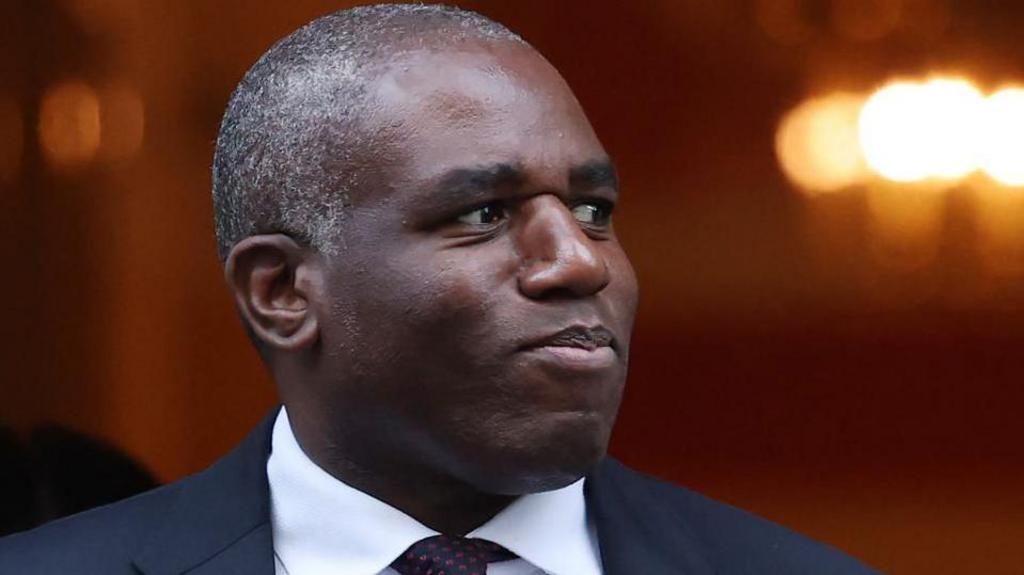
David Lammy has characterized the reforms as “bold” yet “necessary,” while the Conservative party has criticized the plans as signaling “the beginning of the end of jury trials.”
The Lord Chancellor commissioned retired Court of Appeal judge Sir Brian Leveson to propose solutions for reducing the backlog in the courts, a process initiated in December 2024.
These proposals included exploring jury-free trials and increasing the use of out-of-court settlements, such as cautions.
In July, Sir Brian emphasized the need for “fundamental” reforms to “reduce the risk of total system collapse.”
A prior version of the plan, which was leaked to the BBC and The Times last week and drew upon Sir Brian’s recommendations, suggested ending jury trials for most crimes punishable by sentences of up to five years.
However, during Tuesday’s announcement in the Commons, David Lammy scaled back the most radical aspects of the proposed reforms.
Lammy stated that the new system would expedite case processing by approximately 20% compared to jury trials.
He justified the changes by noting that current projections indicate Crown Court caseloads reaching 100,000 by 2028, up from the current backlog of nearly 78,000 cases.
This backlog implies that a suspect charged with an offense today might not face trial until 2030.
Reportedly, six out of ten rape victims are withdrawing from prosecutions due to these extensive delays.
Moreover, a defendant’s right to a jury trial will be limited to prevent them from “gaming the system,” according to Lammy.
The reforms will remove the right for defendants to request a jury trial where a case can be handled by magistrates or a new form of judge-only Crown Court.
Defendants accused of fraud and complex financial crimes will also no longer have access to a jury trial – a recommendation previously presented to the government by a retired senior judge.
The Ministry of Justice (MoJ) has assured that jury trials will be guaranteed for the most serious offenses, including rape, murder, aggravated burglary, blackmail, people trafficking, grievous bodily harm, and the most serious drug offenses.
Approximately 1.3 million prosecutions occur annually in England and Wales, with 10% of these cases proceeding to the Crown Court. Of those, trials are held in roughly 30% of cases.
Thus, the reforms suggest that more than 20% of cases will still be decided by a jury.
Critics of the limitations on trial by jury – including the vast majority of barristers – argue that such changes will not affect the backlogs because the primary cause is underfunding to the MoJ.
Evidence also suggests that ethnic minorities perceive a fairer hearing from juries compared to magistrates alone.
Lammy has previously expressed reservations about reducing jury trials but told the BBC that the “facts had changed” and that the government needed to introduce reforms to alleviate the backlog.
Shadow Justice Secretary Robert Jenrick accused Lammy of “scrapping the institution he once lauded.”
In the Commons, he raised the question of what mandate the Justice Secretary believes he possesses to dismantle centuries of jury trials without even mentioning it in his party’s manifesto.
In response, Lammy attributed the need for change to the previous government’s cuts to court sitting days, highlighting that magistrates already handle the vast majority of UK trials.
The reforms grant magistrates the authority to hear cases with a maximum sentencing range of up to 18 months. A reserve power will be established to allow them to sentence criminals for up to two years.
Currently, magistrates can impose sentences of up to 12 months or an unlimited fine.
Legislative action will be required to implement these changes.
The Liberal Democrats have affirmed that jury trials are a “fundamental right” and have advocated for a strategy that “increases court sitting days, makes better use of underused courtrooms, fixes broken private contracts that leave defendants stuck in prison vans, and invests in rehabilitation to reduce re-offending.”
Abigail Ashford, a solicitor advocate with Stokoe Partnership, representing clients in the Crown Court, warned that the reforms could erode trust in the justice system.
“Judge-only trials risk deepening existing inequalities and eroding confidence among communities who already feel marginalized,” she stated.
“In complex or sensitive cases, removing the community from assessing credibility and fairness undermines trust in a way that cannot be compensated for by concentrating decisions in the hands of a single judge.”
The Criminal Bar Association, which represents specialist criminal barristers in England and Wales, has criticized the changes, describing them as “a wrecking ball to a system that is fundamentally sound and has been in place for generations.”
“Juries work – they do their job superbly, and without bias,” the Association stated.
“Juries have not caused the backlog.”
Chair Riel Karmy-Jones KC also expressed concern “about the lack of detail provided in David Lammy’s comments.”
Tom Franklin, chief executive of the Magistrates’ Association, acknowledged the increased powers for magistrates as a “big vote of confidence,” but emphasized the need for more resources for courts, including adequately trained and well-compensated legal advisors, and repairs to crumbling infrastructure.
He also advocated for the new swift courts to include two magistrates sitting alongside a judge when passing sentences, as originally proposed by Sir Brian, ensuring that “ordinary people” participate in both verdict and sentencing.
Sir Brian is expected to release a second report focusing on measures to enhance court efficiency but stated that “they would not, on their own, be sufficient to change the overall position.”
April Jeffers calls for more support for inmates’ children after feeling abandoned as a teenager.
Only cases of alleged murder, rape or manslaughter will be decided by a jury under new proposals to cut court backlogs.
Only a fraction of fraud reports result in a prosecution, new analysis suggests.
Giving evidence in court can be traumatising says London victims’ commissioner Claire Waxman.
Lorraine Beavers cited the murder of a Blackpool teenager, whose sister wants tougher sentencing.
“`