

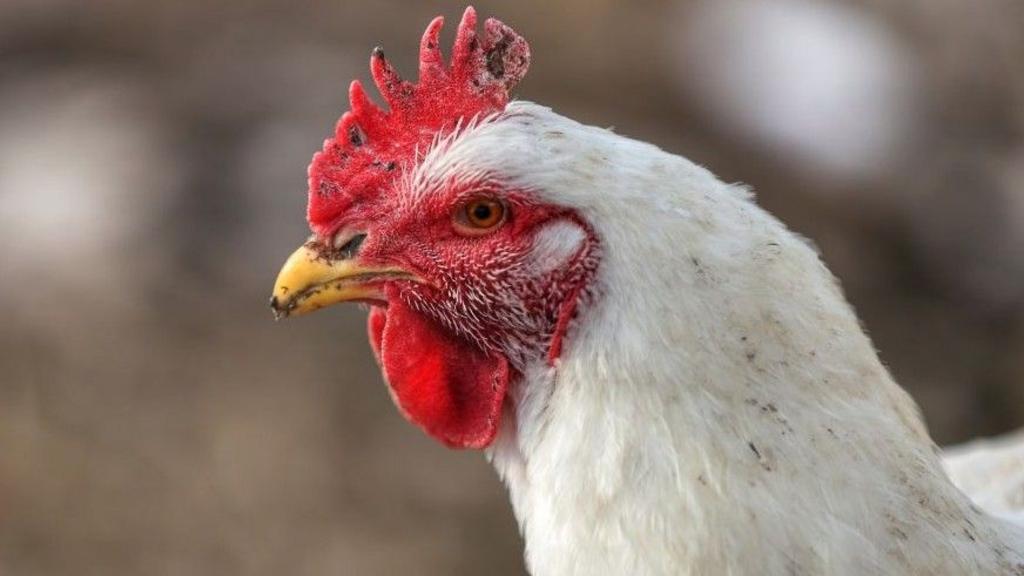
For years, the scientific community has cautioned that avian influenza, commonly known as H5N1, possesses the potential to transmit from avian species to humans, precipitating a global health emergency.
Avian influenza, a subtype of influenza, is endemic across South and Southeast Asia and has sporadically infected humans since its emergence in China in the late 1990s. From 2003 to August 2025, the World Health Organization (WHO) has reported 990 human H5N1 cases across 25 countries, including 475 deaths, yielding a case fatality rate of 48%.
In the United States alone, the virus has affected over 180 million birds, spread to more than 1,000 dairy herds in 18 states, and infected at least 70 people, predominantly farmworkers, resulting in several hospitalizations and one fatality. In January, three tigers and a leopard succumbed to the virus, which typically infects birds, at a wildlife rescue center in Nagpur, India.
Symptoms in humans are similar to those of severe influenza: high fever, cough, sore throat, muscle aches, and, in some instances, conjunctivitis. Asymptomatic cases have also been observed. While the risk to humans remains low, health authorities are closely monitoring H5N1 for any mutations that could enhance its transmissibility.
This concern has prompted new peer-reviewed modeling by Indian researchers Philip Cherian and Gautam Menon of Ashoka University. Their research simulates the potential progression of an H5N1 outbreak in humans and evaluates the effectiveness of early interventions in containing its spread.
The model, published in the BMC Public Health journal, employs real-world data and computer simulations to project how an outbreak might propagate in a real-life scenario.
“The threat of an H5N1 pandemic in humans is a genuine one, but we can hope to forestall it through better surveillance and a more nimble public-health response,” Prof. Menon stated to the BBC.
Researchers suggest that a bird flu pandemic would likely commence with a single infected bird transmitting the virus to a human, typically an individual working in agriculture, markets, or poultry handling. The primary concern then shifts to the potential for sustained human-to-human transmission.
Given the initial ambiguity of real-world outbreak data, the researchers utilized BharatSim, an open-source simulation platform originally developed for COVID-19 modeling, adaptable for studying other diseases.
The study highlights the critical importance of timely intervention for policymakers to prevent an outbreak from escalating beyond control, according to the researchers.
The paper estimates that once the number of cases exceeds approximately two to ten, the disease is likely to extend beyond primary and secondary contacts.
Primary contacts are defined as individuals who have had direct, close contact with an infected person, such as household members, caregivers, or close colleagues. Secondary contacts are those who have not met the infected person but have been in close contact with a primary contact.
The research indicates that quarantining households of primary contacts upon the detection of just two cases can almost certainly contain the outbreak.
However, once 10 cases are identified, the infection is overwhelmingly likely to have already disseminated into the broader population, rendering its trajectory virtually indistinguishable from a scenario with no early intervention.
To maintain the study’s relevance to real-world conditions, the researchers selected a model of a single village in Namakkal district, Tamil Nadu, a central region of India’s poultry industry.
Namakkal hosts over 1,600 poultry farms and approximately 70 million chickens, producing more than 60 million eggs daily.
A village of 9,667 residents was generated using a synthetic community—households, workplaces, market spaces—and seeded with infected birds to replicate real-life exposure. (A synthetic community is an artificial, computer-generated population that mimics the characteristics and behaviors of a real population.)
In the simulation, the virus originates at a workplace—a mid-sized farm or wet market—spreads initially to people there (primary contacts), and subsequently extends to others (secondary contacts) they interact with through homes, schools, and other workplaces. Homes, schools, and workplaces formed a fixed network.
By tracking primary and secondary infections, the researchers estimated key transmission metrics, including the basic reproductive number, R0, which measures the average number of people to whom one infected person transmits the virus. In the absence of a real-world pandemic, the researchers instead modeled a range of plausible transmission speeds.
Subsequently, they assessed the impact of various interventions, including culling birds, quarantining close contacts, and implementing targeted vaccination strategies.
The results were unequivocal.
Culling birds is effective, but only if executed before the virus infects a human.
The researchers determined that timing becomes paramount if a spillover event occurs.
Isolating infected individuals and quarantining households can halt the virus at the secondary stage. However, once tertiary infections emerge—friends of friends or contacts of contacts—the outbreak becomes uncontrollable unless authorities implement more stringent measures, including lockdowns.
Targeted vaccination is beneficial by raising the threshold at which the virus can sustain itself, although it has limited impact on the immediate risk within households.
The simulations also highlighted a challenging trade-off.
Quarantine, if implemented too early, prolongs the duration families remain together, thereby increasing the likelihood of infected individuals transmitting the virus to their cohabitants. Conversely, if introduced too late, it has minimal effect on slowing the outbreak.
The researchers acknowledge the limitations of this approach.
The model is based on a single synthetic village with fixed household sizes, workplaces, and daily movement patterns. It does not account for simultaneous outbreaks triggered by migratory birds or poultry networks, nor does it factor in behavioral changes, such as mask-wearing, once people become aware of bird deaths.
Seema Lakdawala, a virologist at Emory University in Atlanta, introduces another caveat: this simulation model “assumes a very efficient transmission of influenza viruses.”
“Transmission is complex, and not every strain will exhibit the same efficiency as another,” she says, adding that scientists are also beginning to understand that not all individuals infected with seasonal flu transmit the virus equally.
She notes that emerging research indicates that only a “subset of flu-positive individuals actually shed infectious influenza virus into the air.”
This parallels the super-spreader phenomenon observed with COVID-19, although it is less well-characterized for influenza—a gap that could significantly influence how the virus spreads through human populations.
What are the potential consequences if H5N1 adapts successfully to the human population?
Dr. Lakdawala believes that it “will cause a large disruption likely more similar to the 2009 [swine flu] pandemic rather than COVID-19.”
“This is because we are more prepared for an influenza pandemic. We have known licensed antivirals that are effective against the H5N1 strains as an early defense and stockpiled candidate H5 vaccines that could be deployed in the short term.”
However, complacency would be ill-advised. Dr. Lakdawala suggests that if H5N1 becomes established in humans, it could re-assort—or intermingle—with existing strains, amplifying its public-health impact. Such mixing could reshape seasonal influenza, leading to “chaotic and unpredictable seasonal epidemics.”
The Indian modelers suggest that the simulations can be executed in real time and updated as data becomes available.
With refinements—better reporting delays, asymptomatic cases—they could provide public-health officials with invaluable insights during the early stages of an outbreak, offering a sense of which actions are most critical before the window for containment closes.
Follow BBC News India on Instagram, YouTube, X and Facebook.
The number of flu cases in hospital in the South East is 20% higher than the same time last year.
Paul Martin called on people to attack the UK’s infrastructure during the pandemic, the Old Bailey heard.
NHS remains on high alert over flu, health bosses say, but there are signs infections are levelling off.
Use our interactive tool to explore the latest flu numbers in your area
Flu cases have fallen across Scotland, dropping by 20% in the week to 14 December, official health figures show.