

“`html
“Until a few years ago, the butterfly pea flower was just another climbing plant in my village,” recounts Nilam Brahma, a resident of Anthaigwlao in the northeastern Indian state of Assam.
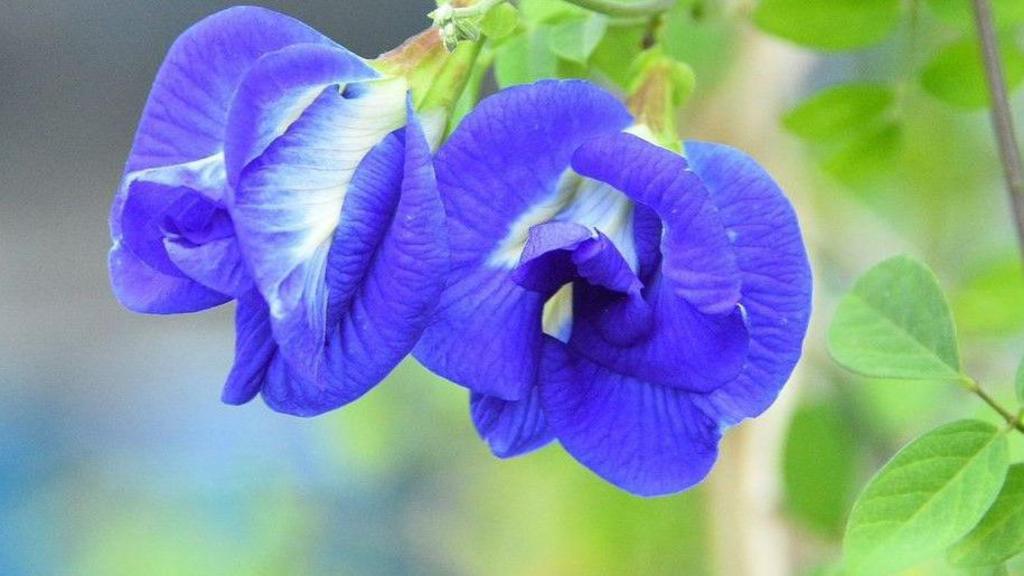
The butterfly pea, known locally as aparajita, is a vine characterized by its vibrant blue blossoms.
Approximately two years ago, Brahma learned that local women were generating income by selling these flowers, which can be processed into tea or a natural blue dye.
Inspired, she decided to participate in this emerging market.
“The results were surprisingly positive. My initial earnings of $50 (£37) from selling dried flowers were a revelation. It instilled in me the confidence to take control of my future,” she explains.
This initial venture has since blossomed into a small business.
“I secured a modest loan and invested in solar dryers. These devices have enabled me to expedite the drying process, preserve the flowers’ color, and adhere to the stringent quality requirements of buyers.”
While Thailand and Indonesia have traditionally dominated the butterfly pea flower market, a surge in global demand is attracting entrepreneurs in India.
“The worldwide demand for natural colorants is experiencing significant growth,” observes Varshika Reddy, founder of THS Impex, a company specializing in the export of natural dyes and additives.
This demand is fueled by increasing consumer preference for natural ingredients and stricter regulations on synthetic food dyes in the US and Europe .
In 2021, the US Food and Drug Administration (FDA) approved butterfly pea flower as a food additive.
Conversely, in 2022, the European Food Safety Authority (EFSA) expressed safety concerns regarding the flower’s use.
Both the EU and the UK classify butterfly pea flower as a “novel” food, necessitating further evaluation before widespread adoption.
Despite these regulatory considerations, Indian entrepreneurs remain optimistic about the flower’s potential and are committed to developing India’s market presence.
“The crop is still predominantly viewed as an ornamental or medicinal plant, rather than a commercial commodity,” notes Reddy. “The absence of structured market awareness, official government classification, and standardized pricing mechanisms creates uncertainty for farmers regarding potential returns.”
Her work involves collaborating with farmers to elevate production standards.
“We maintain close relationships with a dedicated group of farmers and their families in Uttar Pradesh, many of whom are women.
“We have established formal contracts and provide comprehensive agronomic support, including guidance on optimal farming practices, irrigation management, and crop-specific techniques,” she elaborates.
Others in India have also recognized the commercial possibilities of butterfly pea flowers.
“The transformation of the flower into a blue hue when infused in hot water, and then to purple upon the addition of lemon, felt almost magical,” says Nitesh Singh, based near Delhi.
Echoing Reddy’s sentiments, he believes the flower possesses significant untapped potential in India.
“It has been present here for millennia, yet its potential as a clean, healthy food source has remained largely unexplored,” Singh adds.
Driven by this realization, he founded Blue Tea in 2018, with the goal of establishing a prominent Indian brand centered around Indian-grown butterfly peas. The initial stages, however, were challenging.
“Initially, we were compelled to import flowers due to the scarcity of high-quality flowers within India. Local flowers often had fewer petals, and their quality deteriorated significantly upon sun-drying. We sought flowers with greater pigment and petal density to retain their color after drying.”
Over the past seven years, Singh has collaborated with farmers to improve both the quantity and quality of butterfly pea production.
Starting with just five farmers, he now partners with 600 farmers across the country.
“Training and quality control are the most significant hurdles,” he acknowledges.
The harvesting process, particularly the plucking of flowers, is predominantly carried out by women.
“Their delicate touch and inherent understanding enable them to harvest the fragile flowers without causing damage to the plant. Consequently, women receive specialized training in identifying flowers suitable for plucking,” Singh explains.
Following harvesting, the flowers undergo a careful drying process.
“Maintaining precise temperature control is paramount during the drying phase; even a minor error can compromise the flower’s value,” he emphasizes.
Farmers perform initial drying steps before the flowers are transported to Blue Tea, where their moisture content is assessed, and further drying is conducted.
“We employ gentle temperatures for an extended duration. Excessive heat can scorch the flower, diminishing its medicinal properties and color,” Singh explains.
Beyond its striking color, emerging evidence suggests that butterfly pea flowers may offer health benefits, although further research is warranted.
“When we began reviewing the scientific literature, we discovered a dearth of studies specifically focused on butterfly pea, despite its purported functional and herbal attributes. Existing research primarily involved animal models, such as rats and mice,” states V Supriya, Associate Professor at the Sri Ramachandra Institute of Higher Education and Research in Chennai.
She conducted a pilot study involving individuals with pre-diabetes and observed that those who consumed tea made with butterfly pea flowers exhibited improved blood sugar control compared to those who did not.
“Butterfly pea has been largely underappreciated. However, with the emergence of new evidence, particularly from human trials, its health benefits may contribute to its widespread popularity,” concludes Supriya.
Pushpal Biswas, a small farm owner in West Bengal, was introduced to butterfly pea cultivation by Blue Tea.
“I traditionally cultivated rice and vegetables. However, I often struggled to sell my produce and incurred losses,” he recounts.
The introduction of butterfly pea cultivation seven years ago has transformed his prospects.
“It is a relatively easy crop to cultivate,” he remarks.
“By adopting scientific methods, my production increased from 50kg to 80kg. The resulting income enabled me to lease additional land, expanding my farm’s capacity and increasing my overall earnings.”
For certain Indian communities, the cultivation of butterfly pea flowers has had a profound impact.
“Over the past few years, numerous individuals from neighboring villages have joined us in this endeavor,” Biswas states.
“This has evolved into more than just farming; it has become a network, a community, and a business family.”
Companies are trying to wean staff off Excel spreadsheets to centralise control of their data.
The president also called on defence firms to increase production or face a crackdown on payouts.
Trump’s import levies are still changing the patterns of international trade.
The chip giant is looking for ways to move the AI revolution beyond software and into physical products.
The firm plans to deploy the technology at the same plant that was involved in a huge immigration raid in 2025.
“`