

“`html
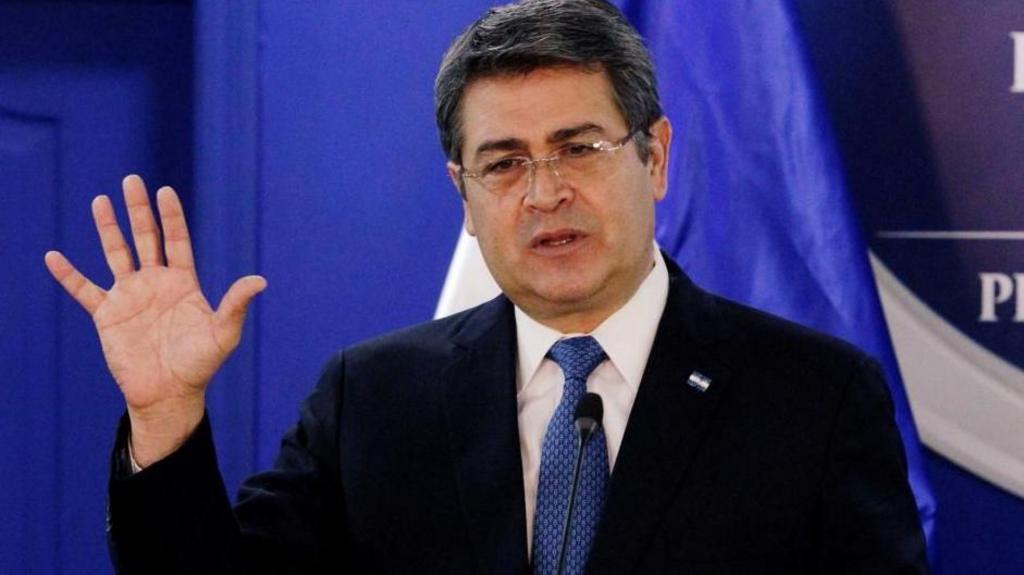
Former Honduran President Juan Orlando Hernández has been released after President Donald Trump granted him a pardon. Hernández was previously convicted and sentenced to 45 years in prison by a U.S. court for his role as a key figure in a drug trafficking scheme that allegedly funneled over 400 tons of cocaine into the United States.
Trump has asserted that Hernández is a victim of political persecution and has been “treated very harshly and unfairly.”
The pardon has drawn surprise from some observers, considering the severity of the charges and the administration’s stated commitment to combating illegal drug flows into the U.S.
Here’s a look at Hernández’s political background, the crimes he was accused of, and potential motivations behind Trump’s pardon.
Hernández first ran for president of Honduras in 2013 under the banner of the conservative National Party. He sought re-election in 2017, an election marred by allegations of fraud and subsequent violent protests.
During his two terms in office, Hernández maintained a working relationship with the U.S. Former President Barack Obama lauded him as one of the “excellent partners” in addressing the migrant-children crisis, and Trump supported his victory in the contested 2017 election.
However, Hernández’s political standing began to erode in 2019.
U.S. federal prosecutors accused him of accepting a $1 million bribe from the notorious drug lord Joaquín “El Chapo” Guzmán during his first presidential campaign. The alleged bribe was reportedly in exchange for protecting narcotics routes through Honduras.
These allegations surfaced in a separate case involving his brother, Juan Antonio “Tony” Hernández, who was arrested in Miami in 2018 on charges of smuggling cocaine into the U.S. At the time, the then-president denied any involvement in his brother’s alleged crimes.
Tony Hernández was convicted in 2019 and subsequently sentenced to life in prison.
The conclusion of his brother’s trial marked only the beginning of the ex-president’s legal challenges.
Shortly after leaving office in 2022, he was arrested and extradited to the U.S. on charges related to drug trafficking and weapons offenses.
Hernández’s federal trial spanned three weeks in 2024.
U.S. prosecutors argued that he played a central role in a drug-trafficking operation lasting more than 18 years, which allegedly funneled over 400 tons of cocaine into the U.S.
“The people of Honduras and the United States bore the consequences,” stated then-Attorney General Merrick Garland.
Prosecutors detailed how Hernández allegedly abused his office to protect drug traffickers, some armed with machine guns and grenade launchers. In exchange, he reportedly received millions of dollars to finance his political campaigns.
According to prosecutors, multiple branches of the Honduran state were implicated, including the National Police, which allegedly provided protection to cocaine shipments as they moved through Honduras en route to the U.S.
Prosecutors also alleged that drug traffickers associated with Hernández committed violent crimes and murders to suppress rival gangs and expand their operations.
During his sentencing, Hernández maintained his innocence, insisting he was the victim of “political persecution.”
“The prosecutors and agents did not do the due diligence in the investigation to know the whole TRUTH,” he wrote in a letter following his conviction.
Trump announced the pardon on Friday via a Truth Social post, stating that, according to “many people that I greatly respect,” Hernández had been unfairly treated by prosecutors.
In the same post, he endorsed Tito Asfura for president of Honduras ahead of Sunday’s election. Asfura ran under the same National Party ticket as Hernández.
As of Tuesday, preliminary results indicate a close election, necessitating a hand recount of ballots.
Trump’s endorsement of Asfura was anticipated by many, given the right-leaning National Party’s ideological alignment with the current U.S. administration.
Trump has previously weighed in on the politics of other countries in the Western Hemisphere, including Brazil and Argentina.
“We’ve seen the President’s affinity with leaders on the right that he sees as being favorable to some of interests of his administration,” noted Jason Marczak, vice-president and senior director at the Atlantic Council’s Adrienne Arsht Latin America Center.
However, the decision to pardon Hernández has simultaneously surprised some experts.
“It was hard for me to believe, because there was such an overwhelming case against Hernández,” said Michael Shifter, an adjunct professor at the Center for Latin American Studies at Georgetown University.
Mr. Shifter added that he found the “contradiction” between the pardon and Trump’s stated policy of clamping down on drug trafficking more puzzling.
Trump has repeatedly pledged to curb the flow of drugs into the U.S., and his administration carried out controversial strikes on boats in the waters around Venezuela, alleging they were piloted by drug traffickers.
Over 80 people have reportedly been killed in a number of strikes in the Caribbean Sea since early September.
At the White House briefing on Monday, Press Secretary Karoline Leavitt argued that the charges against Hernández were tainted by corrupt “over-prosecution” under President Biden.
Asked if the pardon undermined the U.S. president’s campaign against “narco-terrorists” on the American continent, Leavitt stated that the aim was to “correct the wrongs” of the Justice Department under Biden.
“I think President Trump has been quite clear in his defense of the United States homeland to stop these illegal narcotics from coming to our borders whether that is by land or by sea,” Leavitt added.
U.S. media outlet Axios later reported that Hernández penned a four-page letter in October praising President Trump and requesting a review of his case “in the interest of justice.”
In the letter, he reportedly recalled the working relationship he and Trump had during the U.S. president’s first term and claimed his case “advanced only because the Biden-Harris DOJ pursued a political agenda to empower its ideological allies in Honduras.”
The outlet also reported that Roger Stone, a lobbyist and long-time Trump advisor, had told the U.S. president that a pardon for Hernández would energize the National Party ahead of the Honduran election.
Trump subsequently told reporters on Sunday that he believed the ex-president’s prosecution “was a Biden setup.”
Mr. Marczak of the Atlantic Council noted that the prosecution of Hernández was the result of an independent investigation by the U.S. Justice Department.
However, he added that the decision to pardon Hernández aligned with the Trump administration’s “willingness to question decisions made during the Biden presidency.”
“They deserve to be in jail. They deserve to go to hell,” she said of the person who killed four people at the party for her two-year-old.
Thirteen other people were also safely lowered to the ground after a power outage hit the Sunburst Ski Area in the US state of Wisconsin.
The donation will help seed new Trump-branded investment accounts.
The 66-year-old had previously been diagnosed with non-Hodgkin Lymphoma, a form of blood cancer.
Kristi Noem says she will recommend a ban on entry for several countries that she says are “flooding” the US with criminal activity.
“`