

The United Kingdom is set to expand its testing for per- and polyfluoroalkyl substances (PFAS), commonly known as “forever chemicals,” as part of a newly unveiled national strategy to address rising environmental and health concerns.
PFAS are utilized in a wide array of consumer products due to their water-resistant properties. However, these same properties contribute to their accumulation in water, soil, and within living organisms, rather than breaking down.
While comprehensive data regarding the prevalence and effects of the thousands of different PFAS remains limited, certain compounds have been identified as toxic and potentially carcinogenic.
The government has announced its intention to align more closely with European Union regulations by 2029, as the EU pursues a prohibition on all non-essential uses of these substances.
Environment Minister Emma Hardy, in launching the plan, characterized forever chemicals as “one of the most pressing chemical challenges of our time.”
“It’s crucial that we protect both public health and the environment for future generations. Through our PFAS Plan, we will act decisively to reduce their harmful effects while transitioning to safer alternatives,” she stated.
These substances possess exceptionally strong chemical bonds, imparting properties like water and oil resistance, while also being inexpensive to manufacture.
As a result, PFAS have become ubiquitous in everyday life, finding applications in items such as school uniforms, medication coatings, and hydrogen production.
Examples of household products where PFAS can be found include:
However, the presence of these chemicals in the environment raises concerns about potential harm.
“PFAS are very persistent in the environment, they are also bioaccumulative and they are also known to be toxic, those three things together gives our rise for concern about chemicals in the environment,” explained Dr. Liz Chadwick, senior lecturer in biosciences at Cardiff University.
Dr. Chadwick noted that PFAS can leach into the environment from manufacturing processes, the washing of PFAS-containing clothing or products, and the application of waste sludge from water treatment facilities onto agricultural land.
The plan is structured around three primary objectives:
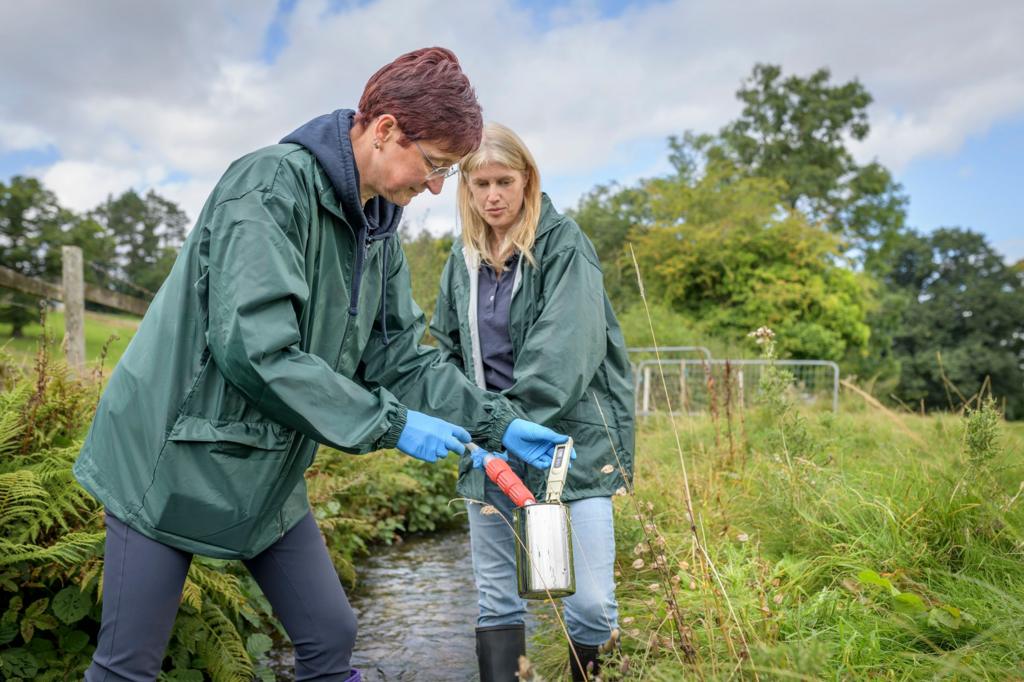
The strategy will increase water sample testing for PFAS by 50% across Scotland and Wales. Additionally, testing will be conducted on animals in coastal regions of England and soils in five designated priority areas to identify potential hotspots.
The initiative has garnered support from environmental organizations and scientists. However, a debate persists regarding the necessity of additional research before implementing stricter regulations.
“More research, more monitoring is important, but that should not come before regulating them at the source. We should not be waiting for people to start showing adverse impacts before we take action,” asserted Dr. Shubhi Sharma, a scientific researcher at the environmental charity Chem Trust.
Dr. Sharma advocated for the government to adopt a “precautionary principle” approach, wherein the use of a chemical is curtailed if the potential harm outweighs the benefits, particularly in light of emerging risks associated with certain PFAS.
Earlier in the year, the World Health Organization expressed significant concerns regarding two specific PFAS, classifying PFOA as carcinogenic and PFOS as possibly carcinogenic – thereby increasing the risk of thyroid, testicular, and kidney cancers. Both of these substances are already prohibited in the UK.
While the new plan does not explicitly commit to a complete ban on PFAS, the government has stated that the UK will “more closely align” with EU regulations by December 2028. The EU is currently proposing a universal ban on these chemicals unless their use is deemed essential for society.
Stephanie Metzger, policy advisor at the Royal Society of Chemistry, suggests that closer alignment with the EU could expedite future regulation of PFAS.
“Our regulators after Brexit, obviously, have been quite overwhelmed and busy with adapting to the changes that Brexit has caused, and so it means that doing this sort of in-depth work has often been pushed back. And so I think this is a really positive step,” she said.
Some manufacturers have already transitioned to PFAS-free alternatives, but the cost of switching remains a significant challenge, according to Debbie Reed, head of CSR at Equip Outdoor Technologies, which owns Rab and Lowe Alpine.
“It’s challenging as our supply chains are complex, in an insulating jacket there are120 components. To make sure the products are PFAS-free we have to make sure the entire production line is cleaned,” she explained.
Reed emphasized that navigating diverse regulations is a “full-time job” and that alignment with the EU would be beneficial in reducing both time and costs, thereby making products more accessible to consumers.
However, the water industry advocates for a more comprehensive approach, urging the government to implement a complete ban on these chemicals.
Currently, water companies are required to routinely test for the 48 most concerning PFAS and treat the water supply when elevated levels are detected. The industry argues that this costly undertaking should not be their responsibility.
“While this is a useful first step, the government needs to go much further. The problem with PFAS will only get worse until chemical companies are forced to stop their manufacture and sale and clean up the mess they’ve already created,” stated a spokesperson for the industry body Water UK.
Conversely, the Chemical Industries Association has responded by stating that while they are actively seeking alternatives to PFAS, the process is not immediate.
“Finding a suitable and viable alternatives that are environmentally better and provide the needed performance is a challenging task, often needing innovators to return to the drawing board in search of a potential replacement,” said the trade body’s spokesperson.
Additional reporting by Becki Bowden and Tom Ingham.