

Families and industries across Europe are watching with apprehension as gas prices and the cost of petrol surge.
While the UK government has largely advised calm, the European Commission has urged citizens to embrace remote work and curtail travel.
Policymakers caution that the situation could worsen, contingent on developments in the Middle East. This comes on the heels of a recent cost-of-living crisis driven by escalating energy costs and inflation following Russia’s invasion of Ukraine.
Consequently, discussions in Europe are once again focusing on energy independence.
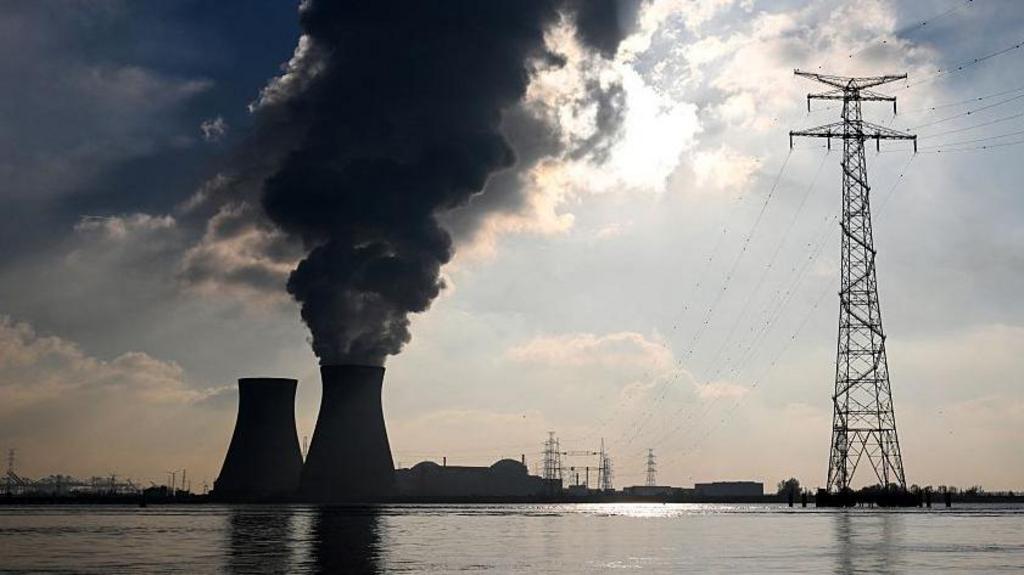
Nuclear energy is regaining favor as a component of a domestic European energy mix, both in the UK and the EU. However, questions remain regarding the speed, safety, and reliability of nuclear as a solution.
At the recent European Nuclear Energy Summit in Paris, European Commission President Ursula von der Leyen characterized Europe’s past reluctance towards nuclear as a “strategic mistake,” despite her prior role as a minister in the German government when it decided to phase out nuclear power plants in 2011.
In 1990, nuclear power accounted for approximately one-third of Europe’s electricity production. This figure has since declined to an average of 15%, leaving the continent “completely dependent on expensive and volatile imports” of fossil fuels, according to von der Leyen, thereby disadvantaging Europe compared to other regions.
Europe imports over 50% of its energy, primarily oil and gas.
This reliance exposes the continent to supply disruptions, as witnessed with Russia following energy export sanctions, or price spikes in the global market, as currently observed due to Iran’s constraints on energy exports via the Strait of Hormuz.
While gas prices tend to rise uniformly across Europe, the impact on electricity prices varies depending on each country’s energy portfolio.
In Spain, which has invested significantly in wind and solar power, the average electricity price forecast for the remainder of 2026 is approximately half that of Italy, where gas prices determine electricity costs 90% of the time.
France, Europe’s largest nuclear producer, generates approximately 65% of its electricity from nuclear power. Futures contracts indicate that German electricity prices for the next month are five times higher than those in France, a stark contrast.
Germany phased out nuclear power following the 2011 Fukushima nuclear disaster in Japan, leaving its energy-intensive industries, such as automotive and chemical manufacturing, heavily reliant on gas.
This week, leading economic research institutes in Berlin more than halved their growth forecasts for 2026 to a projected 0.6% of GDP, citing global gas price increases.
A renewed enthusiasm for nuclear power is evident across Europe:
“To build national resilience, drive energy security and deliver economic growth, we need nuclear,” remarked Reeves.
Recent polling data from YouGov indicates growing support for nuclear energy in Scotland, with a majority now favoring its inclusion in the country’s energy supply.
Unsurprisingly, France is a vocal proponent of nuclear energy. President Emmanuel Macron frequently emphasizes the industry’s low carbon emissions, potentially aiding the EU in achieving its net-zero goals.
During the European nuclear summit, he stated that “nuclear power is key to reconciling both independence, and thus energy sovereignty, with decarbonisation, and thus carbon neutrality.”
He also underscored the growing energy demands of AI and expressed his belief that nuclear power could provide Europe with a competitive advantage, enabling the continent “to open data centres, to build computing capacity and to be at the heart of the artificial intelligence challenge.”
Until last year, Germany opposed efforts to treat nuclear energy on par with renewables in EU legislation, causing friction with France.
However, Berlin has since agreed to remove anti-nuclear bias, potentially influenced by defense and security concerns stemming from strained relations with the Trump administration.
Germany has requested that France extend its independent nuclear deterrent to European partners, an agreement reached this month.
However, nuclear energy should not be viewed as a universal solution.
Nuclear development is a long-term endeavor, not a quick fix for current energy insecurity.
The construction of nuclear reactors can be subject to significant delays, as illustrated by recent examples in France and the UK, specifically Flamanville-3 and Hinkley Point C.
Concerns regarding waste management and the safety of nuclear energy persist.
Environmental groups caution that investment in nuclear energy may divert resources and attention from accelerating the development of renewables. Furthermore, a strategic risk exists as several Central European countries, including Hungary and Slovakia, remain dependent on Russian nuclear technology and uranium.
“You’re ignoring the history of nuclear in Europe if you think it can just slot in [as an easy energy crisis solution],” Chris Aylett, Research Fellow at the Environment and Society Centre, Chatham House, told me.
He believes that nuclear energy is part of the solution, but many European nuclear reactors are aging, requiring substantial government investment simply to maintain or extend their operational lifespan.
“The main challenge is maintaining existing share [of nuclear power]. If governments really want to increase the share, they need a lot of time and a lot of money.”
However, many European governments are facing debt, financial constraints, and competing priorities, such as maintaining welfare programs and increasing defense spending to levels promised to the US President Donald Trump.
Aylett also notes that nuclear is losing ground on price as the costs of wind and solar energy decrease.
With cost and practicality in mind, the European Commission has rapidly embraced the concept of small modular reactors (SMRs).
SMRs are considered more cost-effective sources of nuclear power. They can be mass-produced in factories and are well-suited to meeting the energy demands of AI data centers, hydrogen production, and local heating networks.
A €330m EU nuclear energy investment package, with strong support for SMRs, has recently been announced. Brussels hopes to bring this technology online by the early 2030s.
The focus on SMRs is international. Last week, the US and Japan unveiled a $40bn project to develop SMRs in Tennessee and Alabama, while last month Emma Reynolds, the environment secretary, published the regulatory justification for Rolls-Royce’s plan to become the first company to attempt building SMRs in the UK.
Despite their appeal, SMRs are considered unproven at a commercial scale. As of early 2026, no construction licenses had been granted for SMRs anywhere in the EU.
Nuclear fusion research is also receiving attention from the EU, with the aim of developing the first commercial fusion power plant online.
However, for the time being, most of Europe remains reliant on fossil fuel imports.
Aylett contends that it is clearly in the continent’s interest to enhance energy independence to mitigate exposure to the unpredictability of exporters, including erratic leaders or algorithms in oil and gas commodity markets.
European governments evidently view nuclear energy as part of the medium- to long-term solution. But what about the immediate future?
A former US marine tells the BBC the priority of any recovery team would be to look for signs of life.
Hungary is going to the polls in nine days – after 16 years in power, can Viktor Orban be unseated?
Conflict has spread across the Middle East since the US and Israel launched strikes on Iran on 28 February.
The advisory follows recent military developments, including a US jet reportedly being shot down and Israeli strikes on parts of Beirut.
Six weapons experts have contested the US claim that video evidence suggests an Iranian missile could have hit the hall.