

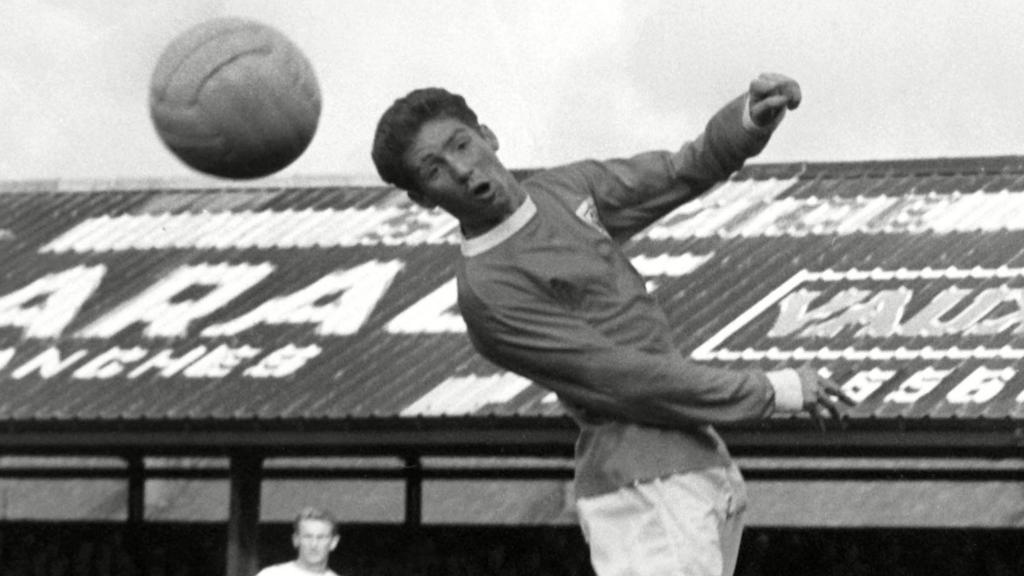
Future World Cup winner Alan Ball found the net for Blackpool on Christmas Day in 1965.
With presents unwrapped and dinner concluded, what’s next? A televised nap? A dog walk? Or perhaps a festive football match?
Up to six decades ago, the latter was a viable option, culminating in Blackpool versus Blackburn Rovers, the final Football League game played on December 25th.
From the second league season in 1889-90, Christmas Day held a prominent place on the football calendar. As a rare public holiday, it offered teams the chance to draw significant crowds, facilitated by available public transport.
“Christmas football was originally rooted in a broader tradition of communal entertainment,” Professor Martin Johnes of Swansea University told BBC Sport.
“While the Victorian middle class viewed Christmas as a domestic celebration, the working class, often living in cramped conditions, prioritized social outings.
“Football, pantomimes, informal gatherings, community rituals, and traditions all provided opportunities for socialization and leisure on their day off.”
Preston North End inaugurated the tradition as reigning league champions, hosting Aston Villa in 1889, securing a 3-2 victory thanks to a Nick Ross hat-trick as the Lilywhites went on to retain their title.
Teams commonly played the return fixture on Boxing Day to minimize travel distances. Notably, the 1965 Blackpool-Blackburn encounter marked their third Christmas Day meeting, with the reverse fixture played the following afternoon on the previous two occasions.
As the league evolved, Christmas Day football gained popularity until 1957, the last year with a full schedule of matches.
“By the interwar period, observers noted a shift towards a more private Christmas,” Professor Johnes noted.
“This was reflected in reduced transport services and cinema screenings. Football persisted longer, partly as an escape for men from domestic life.
“However, by the 1950s, Christmas Day games seemed incongruous with the broader holiday spirit. There were increasing expectations for men to be at home, and homes had become more comfortable due to improved furnishings, new housing, slum clearances, and more affordable fuel.
“The availability of home entertainment, such as television, further diminished the appeal of escaping family for a few hours, and football attendances generally declined during the 1950s.”
The introduction of floodlights by numerous Football League clubs also led to more midweek games, lessening the need to concentrate fixtures during the festive season.
In 1959, Coventry defeated Wrexham 5-3 in Division Three, while Blackburn overcame Blackpool 1-0 at Ewood Park in Division One. These were the last games played on December 25th until six years later, when the two Lancashire teams met for the final Christmas Day fixture.
“The decisive factor against Christmas Day football was transport,” Professor Johnes added.
“Decreased demand for Christmas Day travel, due to the holiday becoming more home-centric, and the desire of transport workers for a day off, resulted in curtailed rail and bus services.”
Blackburn’s Mike England scored the final goal in the last Football League game played on Christmas Day.
Both teams entered the game struggling near the bottom of Division One, with Blackburn in 20th place, only outside the relegation zone on goal average, and Blackpool slightly better off in 18th, one point ahead.
The home side had won just one of their previous eight league matches, while Rovers’ form had improved with two wins from three before the trip to Bloomfield Road.
The Tangerines’ lineup included future England World Cup winner Alan Ball, while Blackburn featured Mike England, a Wales international defender who would go on to make nearly 400 appearances for Tottenham and manage his country for eight years.
A crowd of 20,851 witnessed Neil Turner giving Blackpool the lead, only for George Jones to equalize before half-time.
The home side dominated the second half, with goals from Bobby Waddell and top scorer Ray Charnley, and another from Ball.
England then etched his name in history by scoring Blackburn’s second goal of the afternoon—the final goal scored in the Football League in England on Christmas Day.
The two sides were scheduled to play the return fixture at Ewood Park on Boxing Day, but it was postponed due to a frozen pitch.
Blackpool eventually secured their place in the division, finishing 13th, but Rovers endured a disastrous run in the new year, winning just three of their remaining 20 matches and suffering relegation to the second tier.
That match in 1965 marked the end of Christmas Day football until 1983, when Brentford attempted to play their Third Division match with Wimbledon at 11am.
“I see it as a tremendous opportunity for the family to enjoy a fresh-air Christmas morning,” said Brentford chairman Martin Lange at the time.
Supporters disagreed, and after numerous complaints, the game was moved to Christmas Eve, with promotion-bound Wimbledon winning 4-3.
Comments can not be loaded
To load Comments you need to enable JavaScript in your browser