

“`html
As temperatures drop each winter, concerns regarding heating expenses invariably rise. With the energy price cap poised to increase in January, we have compiled practical guidance to help households stay warm while managing costs during the colder months.
This month, millions of households will experience a slight increase in their energy bills, following an announcement by Ofgem, the energy regulator, that it is increasing the price cap by 0.2%.
The price cap represents the maximum amount energy suppliers can charge customers per unit of energy in England, Scotland, and Wales.
Between January 1 and March 31, 2026, the energy price cap is set at £1,758 annually for a typical household using electricity and paying via direct debit.
The impact of energy costs can vary significantly, particularly affecting residents in older homes, renters, and low-income households.
George Pearson, head of technical services at Retrofit West – an organization funded by the West of England Mayoral Combined Authority covering Bristol, Bath and North East Somerset, and South Gloucestershire – notes that even minor adjustments can contribute to reducing heat loss.
“Sealing gaps and draught-proofing is the most impactful initial step due to its low cost,” he stated.
Mr. Pearson recommends sealing gaps around skirting boards, letterboxes, and even light fittings.
He further suggests optimizing boiler efficiency by reducing the flow temperature.
While many households set their boiler temperature to 60°C (140°F), lowering it to 55°C (131°F) or 45°C (113°F) could result in savings, according to Mr. Pearson.
“Heating and hot water constitute the majority of the average household’s energy bill,” stated Nick Trapp from the Centre of Sustainable Energy.
“Therefore, expenditure in this area exceeds that of lighting, computer usage, or oven operation.”
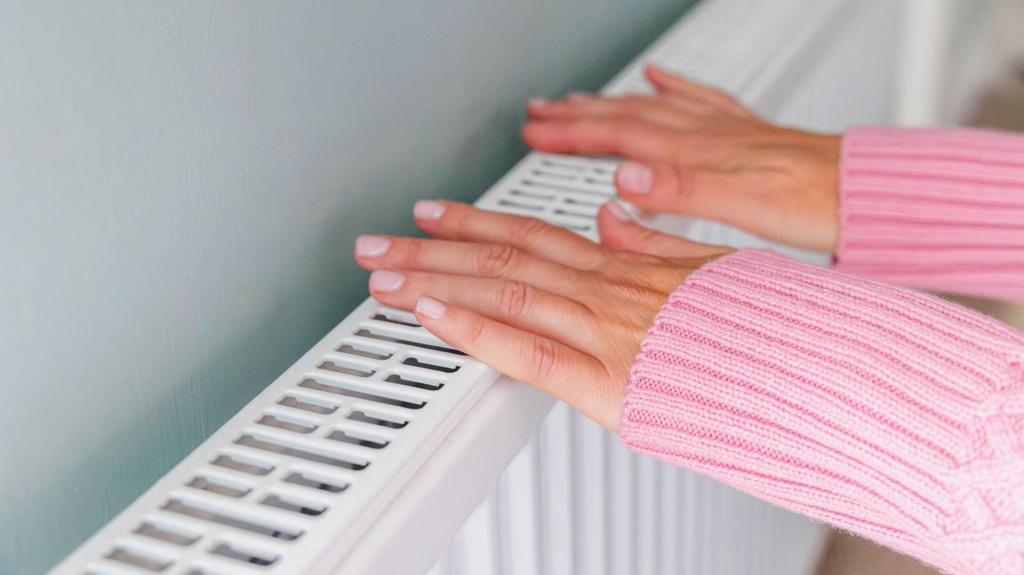
To minimize heating costs, he advises turning off radiators in unused rooms and regulating overall temperature using the central thermostat.
Moreover, reducing your heating by just one degree Celsius could yield savings of up to £73 annually.
However, it is recommended to maintain a minimum temperature of 18°C (64°F) in households with elderly individuals, those who are ill, or families with young children.
Routine annual boiler servicing can also ensure the efficient operation of heating systems and prevent more significant, costly issues down the line.
Furthermore, a thick insulating jacket for your boiler can potentially save approximately £183 each year.
“Other effective, low-cost solutions include installing reflective panels,” Mr. Pearson mentioned.
“Positioning these behind radiators can reflect heat back into the room, preventing heat loss into the wall itself.”
Mr. Pearson also suggests bleeding radiators to eliminate trapped air and maintain even heat distribution.
While numerous plug-in heaters are available, Mr. Trapp cautions that they can often be more expensive than utilizing central heating.
“Individuals are often drawn to them due to their perceived smaller size, leading to the expectation of lower energy consumption; however, they are frequently far less efficient,” he explained.
Changing your energy tariff can yield savings by switching to a more economical fixed deal, a discounted variable tariff, or a time-of-use tariff, such as an economy plan that offers cheaper electricity rates during nighttime hours.
During winter months, when indoor clothes drying becomes more prevalent, a dehumidifier can reduce the reliance on tumble dryers, while simultaneously helping to prevent dampness and mold formation.
Mr. Trapp advises using a dehumidifier within the room where laundry is being dried and keeping the door closed to prevent water vapor from spreading throughout the rest of the house.
When feasible, maintain consistent heating in your home to prevent dampness and mold-related issues.
While numerous low-cost solutions exist, some homeowners may want to consider longer-term strategies to enhance their home’s energy efficiency.
One such option is installing insulation, which can protect your home from both hot and cold weather conditions.
Mr. Pearson also recommends insulating pipes, where feasible, to minimize heat loss from hot water as it travels through the plumbing.
Regarding loft insulation, Mr. Pearson advocates for a depth of 15.7 inches (39.8 cm) of insulation, which, while it may seem considerable, significantly reduces heat loss.
If you are experiencing significant difficulty with your energy bills, you may be eligible for additional support.
The government offers a Warm Homes Discount, providing a one-time rebate on your energy bill. Eligibility automatically triggers the discount.
A Winter Fuel Payment ranging from £100 to £300 is also available for eligible individuals born on or before September 22, 1959.
You may also qualify for a Cold Weather Payment if you receive certain benefits.
Some individuals may be eligible for the government’s Warm Homes Grant, which provides funding to make energy-saving improvements to your home.
Follow BBC Bristol on Facebook, X and Instagram. Send your story ideas to us on email or via WhatsApp on 0800 313 4630.
Avon and Somerset Police has urged the public to call 999 immediately if they see them.
Keynsham Music Festival has been running since 1997 but is now struggling with rising costs.
Marcus Willcocks, who died in June, wanted to see bollards in his area painted in bright colours.
GWR in public ownership and the Portishead line moving closer are some of the predictions for 2026.
Two pet food banks speak about helping pet owners struggling to feed their animals.
“`