

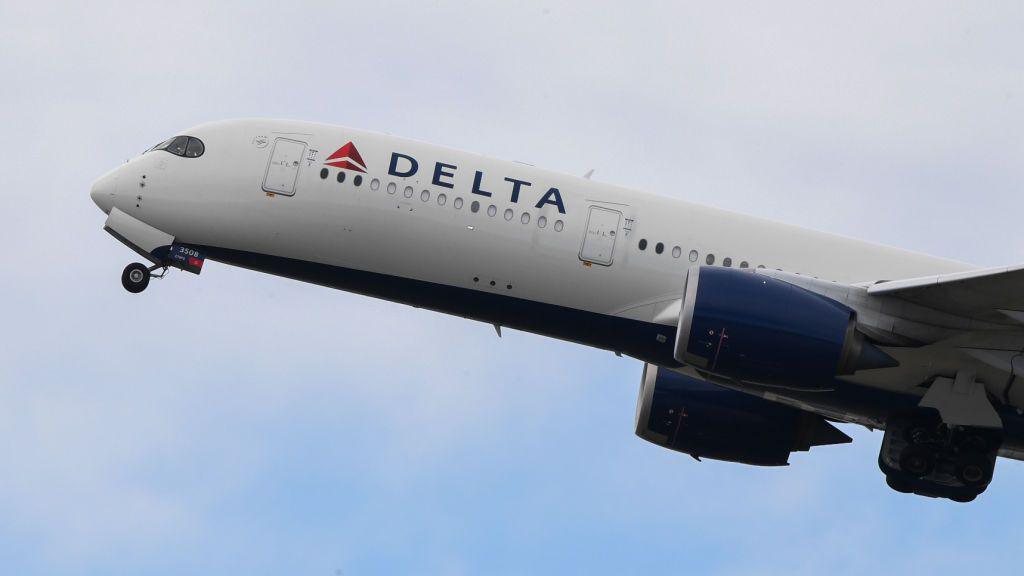
Several individuals sustained injuries after a Delta Airlines flight en route from Los Angeles to Sydney encountered turbulence early Friday morning.
Delta Flight 41 “encountered brief turbulence” upon approach to Sydney Airport, according to a statement from an airline spokesperson to the BBC. The incident resulted in injuries to four flight attendants.
The New South Wales Ambulance Service reported assessing five patients, subsequently transporting three to a local hospital for treatment of minor injuries, including back pain and headaches. The affected individuals ranged in age from their 30s to 70s.
This incident marks the latest in a series of turbulence-related events affecting air travel, with experts increasingly citing climate change as a significant contributing factor.
The Delta spokesperson confirmed that the Airbus A350 carried 245 passengers and 15 crew members, emphasizing that the aircraft “safely and normally” landed at Sydney Airport at 06:48 local time on Friday (19:48 GMT on Thursday).
NSW Ambulance Service indicated that they received an alert just three minutes prior to the plane’s landing, ensuring that emergency response teams were present on the tarmac upon arrival.
In a separate incident last year, a Delta Airlines flight traveling from Salt Lake City to Amsterdam experienced “significant” turbulence approximately two hours into the journey, necessitating an emergency landing and resulting in injuries to 25 people. Read more about that incident here.
Earlier this year, passengers and crew aboard a Singapore Airlines flight endured a harrowing five seconds of severe turbulence, resulting in one fatality and numerous injuries as unrestrained individuals were violently thrown about the cabin.
While turbulence is a common occurrence in air travel, instances of strong or severe turbulence, while seemingly on the rise, remain relatively rare.
Statistical estimates suggest approximately 5,000 incidents of severe-or-greater turbulence occur annually, compared to a total of over 35 million flights worldwide.
Severe turbulence is defined as instances where the vertical movement of an aircraft through disturbed air exerts a force exceeding 1.5g on passengers, potentially lifting unrestrained individuals from their seats.
Experts caution that the shifting atmospheric conditions associated with climate change may lead to increased turbulence, with temperature fluctuations and altered wind patterns in the upper atmosphere expected to increase both the frequency and intensity of severe turbulence events.
A spokesperson says it wants customers to use greener methods like public transport.
Paul Lynn says he has been given several new flight times by Emirates, all cancelled or rescheduled.
It comes after the war in Iran caused mass disruption to flights across the Middle East and UAE.
Travellers faced long queues at some airports at the weekend, after transport security workers missed their first full paycheck on Friday.
The Scottish government support will keep the service going until about the middle of August.