

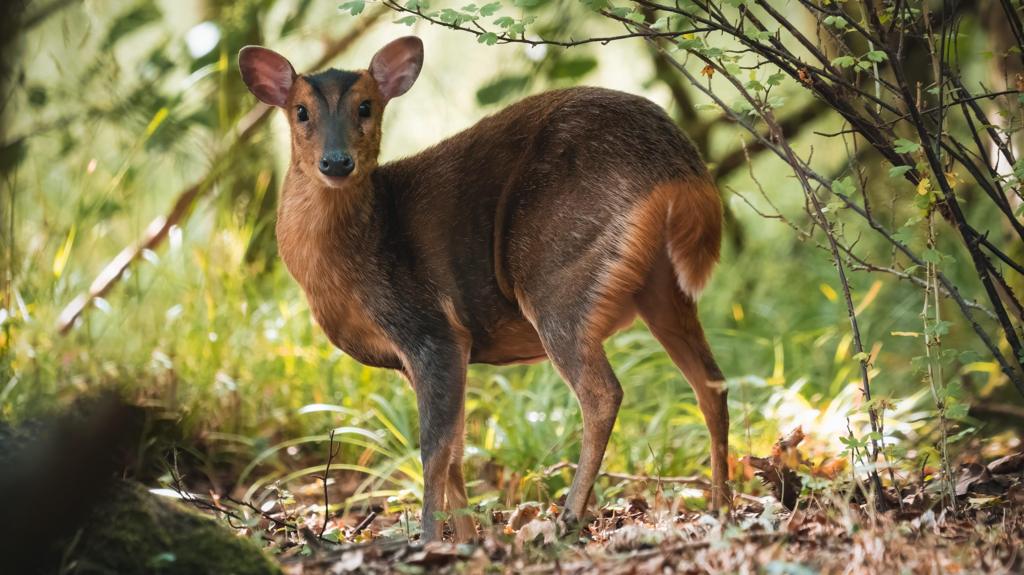
England is set to streamline deer culling efforts under a newly released 10-year government plan. The initiative addresses a surge in deer populations that poses a threat to woodlands, newly planted trees, and agricultural lands.
Estimates suggest there are over two million deer in Britain, with their impact felt across a third of English woodlands and resulting in substantial crop losses for farmers.
The government’s strategy outlines priority culling zones and aims to facilitate licensed nighttime and closed-season shooting. Farmers may also receive expanded legal rights to protect their crops by culling deer.
However, some animal welfare advocates argue that culling is inhumane and ineffective as a long-term solution.
Andrew Blenkiron, who manages the Elveden estate in Suffolk, has expressed support for measures that simplify deer population control, noting a significant increase during COVID-19 lockdowns.
Blenkiron told the BBC that managing smaller deer species like muntjac is challenging due to their rapid reproduction, with crop damage costing the estate up to £100,000 annually.
“Carrots are a real focus for them. They even dig potatoes up, believe it or not. The big red deer dig potatoes out of the ground,” he explained.
He also mentioned that venison from deer culled on the estate is sold locally and supplied to a nearby primary school.
A representative from People for the Ethical Treatment of Animals (PETA) stated that culling would not resolve the overpopulation issue.
“Removing deer from the landscape doesn’t stop their numbers from rebounding, and, in many cases, a temporary reduction in population leaves more food available per animal, which can increase breeding rates in the survivors,” she said.
PETA advocates for humane and sustainable alternatives, including habitat modification, appropriate fencing, and limiting access to artificial food sources.
Britain is home to six deer species—red, sika, fallow, roe, muntjac, and Chinese water deer—but the British Deer Society identifies only red and roe as “truly indigenous.”
While precise figures are unavailable, estimates suggest a deer population exceeding two million, a significant increase from the 450,000 estimated in the 1970s and the highest number in 1,000 years.
The government noted that current deer management efforts have been insufficient, with 33% of English woodlands now in “unfavourable condition” due to excessive trampling and grazing, up from 24% in the early 2000s.
According to the RSPCA, over 74,000 deer are involved in vehicle collisions annually, resulting in 10 to 20 human deaths and over 700 injuries.
The government’s plan will identify national priority areas for focused culling and streamline the licensing process for deer shooting, particularly at night and during the closed season, enabling “landowners to more quickly and easily protect crops and timber.”
Martin Edwards, head of deer and woodland management for the British Association for Shooting and Conservation, welcomed the plan, anticipating “real opportunities to build on the work of both volunteer and professional deer managers in tackling the UK’s expanding deer population.”
Nature Minister Mary Creagh stated the government’s commitment to assisting landowners and farmers in addressing deer-related issues, “so woodlands can flourish and crops can be better protected.”
The government aims to promote a domestic market for venison from culled deer, encouraging increased procurement by schools, prisons, and hospitals.
The Country Food Trust, a food poverty charity, utilizes venison from deer culled on estates and farms to provide meals at 1,500 food banks, homeless shelters, and community kitchens across the UK.
Its chief executive, SJ Hunt, said the charity was trying to make sure those in need were benefiting from deer culls in their own region.
Hunt supported the government’s initiative to broaden the domestic venison market, highlighting its low cholesterol and high protein content, but called for increased funding to support schemes like the Trust’s in utilizing culled deer carcasses.
A new cross-border pilot aims to emulate New Zealand’s success in dramatically reducing infections.
A SpaceX Falcon 9 crashed to Earth last year. Now scientists have measured the pollution it caused.
NatureScot says assessments suggest grazing by the animals is having less of an impact.
During winter in Britain fresh produce is sent by cargo ship from the West African nation every week.
From The Gambia to the US, sea salt is increasingly seeping into the freshwaters people need for drinking and producing food.