

“`html
After weeks of anticipation, the contents of this year’s Budget are finally set to be revealed.
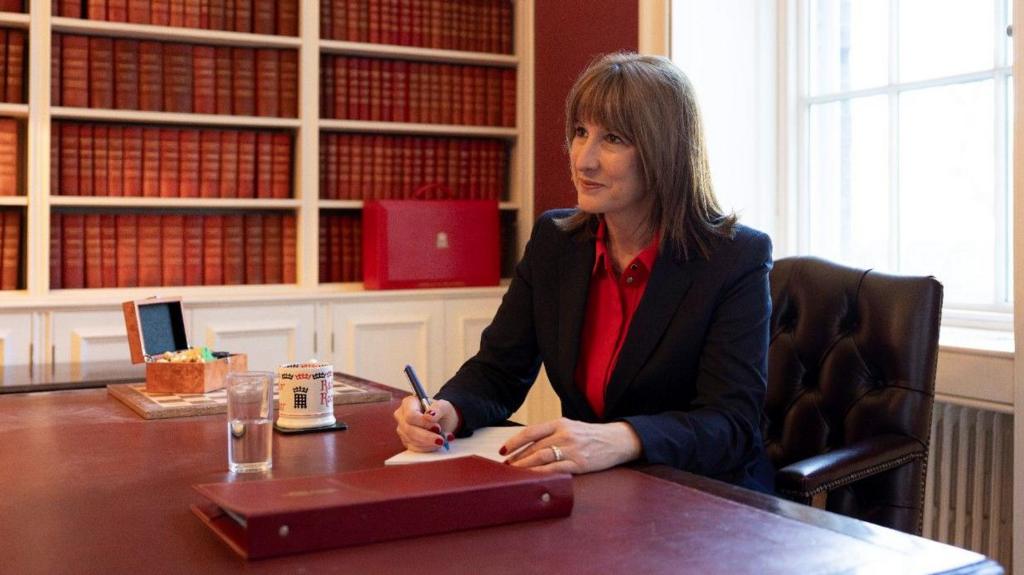
Chancellor Rachel Reeves is expected to frame her proposals as “fair and necessary choices.”
The term “necessary” hints at potentially difficult measures.
The core of the Chancellor’s address will likely center on three key objectives: alleviating the cost of living, reducing NHS waiting lists, and lowering government debt as a proportion of national income.
Achieving these goals may necessitate tax adjustments, a move that could increase the cost of living for higher earners.
Reeves is likely to emphasize measures designed to mitigate the cost of living for some, such as freezing certain rail fares.
However, avoiding income tax increases could lead to a series of smaller tax hikes targeting specific groups, potentially sparking protests similar to those seen after last year’s inheritance tax announcement affecting farmers.
The annual Budget process invariably involves a blend of official briefings, speculation, and leaks.
This year, however, the volume of information circulating since the summer break has been particularly high.
Furthermore, the Chancellor has engaged in pre-Budget discussions more frequently than in the past.
Underlying this increased activity is the government’s recognition that this Budget represents a pivotal moment.
Current polling data suggests the relatively new government faces significant unpopularity, with the Prime Minister and Chancellor experiencing even lower approval ratings.
The economy continues to struggle, the cost of living remains a burden for many, and government officials acknowledge that the promised “change” is not materializing quickly enough for a significant portion of the population.
Against this backdrop, Labour MPs are increasingly uneasy, feeling the party’s unfavorable standing, hearing about it from constituents, and seeing it in their inboxes.
One MP characterized the situation as “the middle of the end,” anticipating that this could be Sir Keir Starmer and Reeves’ final Budget.
Another, foreseeing defeat in the next general election said, “I am on a four-year walk to the guillotine.”
Even the most loyal MPs express concern in private.
It is therefore understandable that Reeves has publicly stated her anticipation for future Budgets, a remark typically made when such prospects are uncertain.
Few Labour MPs privately dispute that the lead-up to this Budget has been anything other than chaotic.
The disarray has even prompted some to suggest abolishing the annual Budget altogether.
The relationship between the government and its backbenchers can be described, at best, as strained, and at worst, as volatile.
Widespread unpopularity and nervous Labour MPs are the key factors shaping both the anticipation and the aftermath of this Budget.
The possibility of a leadership challenge, potentially before Christmas, prompted Prime Minister loyalists to assert that Sir Keir would resist any such attempt.
The potential for dissent among Labour MPs if the Chancellor broke the manifesto promise against raising income tax led to the recent attempt to justify the measure, followed by a subsequent reconsideration.
This display of indecision is difficult for Labour MPs to defend.
However, the negativity is not unidirectional.
One government source described the Parliamentary Labour Party as “sprawling and naïve.”
Adding, “They want to avoid the trade-offs and we have to tell them we’re in government, you can’t do that.”
Rachel Reeves’s best-case scenario is a Budget that avoids exacerbating her and Sir Keir Starmer’s precarious position, buying them some time and patience from their own MPs and the public.
However, both are acutely aware that patience is in short supply.
Sign up for our Politics Essential newsletter to keep up with the inner workings of Westminster and beyond.
What businesses, families, pensioners and politicians thought of Rachel Reeves’ Budget announcements.
BBC News hears from people with a range of incomes about what they think of the Budget.
Changes to tax, pensions and welfare – here’s what you need to know from Rachel Reevesher second Budget.
Stormont’s Finance Minister John O’Dowd says the funding means Stormont will only get an extra £18.8m this financial year.
Some pension savers face a hit to the amount of money they can put into their pension without paying national insurance.
“`