

“`html
For the Indian film industry, 2025 represented a return to familiar territory.
The prior year had witnessed women-led narratives briefly reshape India’s global cinematic presence, garnering awards and significant attention. However, in 2025, violent, male-driven action thrillers from Bollywood dominated both the domestic box-office and cultural discourse.
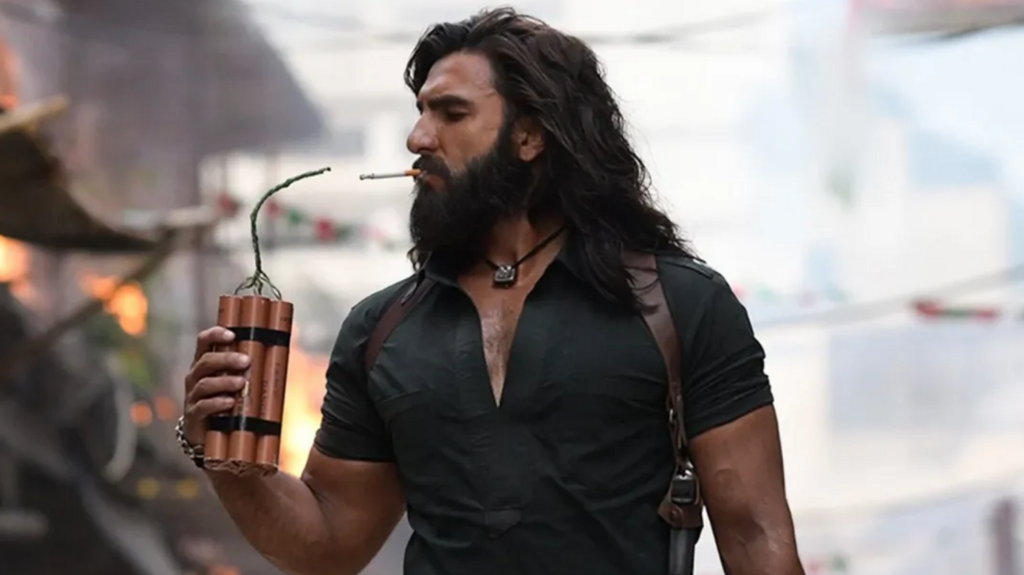
In the closing weeks of 2025, Indian social media platforms were saturated with discussions surrounding a singular cinematic force: Dhurandhar, an espionage thriller set against the backdrop of India-Pakistan tensions.
Replete with graphic violence and explorations of gangland politics, the film emerged as the definitive hit of the year, solidifying its position within a trend of aggressive, hypermasculine films that shaped popular conversation.
This trend stood in stark contrast to 2024, when several films helmed by women – including Payal Kapadia’s “All We Imagine As Light,” Shuchi Talati’s “Girls Will Be Girls,” and Kiran Rao’s “Laapataa Ladies” – received international acclaim and recognition.
“What 2024 established was that Indian women filmmakers are not marginal voices, but leading global ones,” notes film critic Mayank Shekhar, describing it as “a moment of truth” rather than a fleeting trend.
The anticipation was that richer, more nuanced narratives centered on women would expand in both number and popularity. Instead, in 2025, the top 10 box-office successes – five of which originated from Bollywood, a minor reprieve for a Hindi film industry still striving to recover post-pandemic – were overwhelmingly dominated by larger-than-life, hypermasculine heroes, ranging from the historical epic “Chhaava” to the action spectacle “War 2.” The sole woman-led film on the list was an exception: the Malayalam-language superhero film “Lokah.”
The focus on men extended beyond action thrillers. The blockbuster romance “Saiyaara” revolved around a troubled male rockstar who ultimately “rescues” his partner grappling with Alzheimer’s disease. Even mythical spectacles such as “Kantara: Chapter 1” (Kannada) and “Mahavatar Narsimha” (dubbed into multiple languages) amplified traditional depictions of male heroism.
The year’s most discussed films were characterized by portrayals of men experiencing pain, power, and vengeance on a grand scale.
Among the top 10, one of the year’s most debated hits was “Tere Ishk Mein,” featuring an angry, volatile male protagonist and a high-achieving woman whose ambitions are overshadowed by his obsessive love. Despite criticisms of romanticizing toxic masculinity, the film became actor Dhanush’s highest-grossing Hindi release, earning over 1,550 million rupees ($17.26 million, £12.77 million) worldwide.
Another unexpected success was “Ek Deewane Ki Deewaniyat,” a relatively low-budget romance drama featuring a hero who, as one review described, is “an obsessive lover who refuses to take no for an answer.”
2024 offered “a glimpse of what’s possible,” according to Priyanka Basu, a senior lecturer in Performing Arts at King’s College London.
She emphasizes that Hindi cinema has historically marginalized women protagonists, adding that the male-centric industry has long exhibited significant inequalities in casting, pay, and opportunities.
“Just one year to change that is unrealistic. We need more such years, and more stories that put women front and centre,” she asserts.
Indian cinema’s, and particularly Bollywood’s, fascination with the macho hero can be traced back to Amitabh Bachchan’s “angry young man” persona of the 1970s.
Even the romantic era of superstars like Shah Rukh Khan offered only a temporary deviation – one he has since abandoned in favor of action-heavy blockbusters such as “Pathaan” and “Jawan.”
This trend has extended to streaming platforms as well – once considered alternative spaces where women-centric storytelling could thrive.
A recent report by media research firm Ormax, analyzing 338 Hindi shows on streaming platforms, revealed that action and crime thrillers, predominantly male-led, now constitute 43% of the titles; female-led stories have declined from 31% in 2022 to just 12% in 2025.
“At some point, OTT (over-the-top, or streaming) platforms began chasing box-office logic,” Mr. Shekhar explains. “Streaming now mirrors theatrical trends instead of challenging them.”
Trade experts argue that this shift reflects audience demand rather than creative stagnation within the industry.
“Indian films have traditionally been male-led, but we have also had female-centric classics like ‘Mother India’ and ‘Pakeezah’,” states analyst Taran Adarsh.
He suggests that accusations of toxicity originate from a “handful of critics” and are unlikely to influence a film’s success.
“At the end of the day, the only verdict that matters is that of the audience,” he concludes.
However, attributing everything to audience preferences is an oversimplification, argues Anu Singh Choudhary, co-writer of “Delhi Crime 3,” the third season of a Netflix thriller that explored the issue of women-trafficking through a feminist lens.
“Macho blockbusters have persisted for a long time because they reflect a society that has always been patriarchal and male-dominated. Will that change overnight? No. But as the world order changes, so will our films,” she says.
There’s also the economic reality. Producers, distributors, and exhibitors control the number of screens, marketing, and overall visibility that any film receives – and this often hinges on the bankability of the male star. Independent and women-led films face a significant challenge, particularly if they lack prominent stars.
Films are also currently experiencing a “period of performative, exaggerated misogyny,” observes screenwriter Atika Chohan, whose credits include women-led films “Chhapaak” and “Margarita With a Straw.”
She believes that some of this is a reaction to the accountability demanded by women during the MeToo movement of 2017-19.
While the movement exposed widespread abuse within the film industry, its impact was inconsistent. Some of the accused faced temporary setbacks, but most returned to work, and structural power imbalances largely remain.
“As long as these [hypermasculine] films make money, they aren’t going anywhere,” Ms. Chohan states.
But, as always, there are signs of hope, primarily emerging from smaller, regional film industries and independent filmmakers.
A new generation of independent filmmakers in India is creating “riveting, viable cinema” rather than simply “mass entertainers,” Ms. Choudhary notes.
Sharp independent films such as “Sabar Bonda” and “Songs of Forgotten Trees” delved into complex social and political issues and presented sensitive stories about relationships.
The Telugu film “The Girlfriend” narrated the story of a woman in a toxic relationship learning to break free, while “Bad Girl” (Tamil) was praised as a successful coming-of-age drama told from a female perspective.
In Malayalam cinema, “Feminichi Fathima” – with “Feminichi” being a social-media distortion of “feminist” – employed humor to depict a Muslim housewife’s subtle rebellion against patriarchy. On the streaming front, “The Great Shamsuddin Family” has been lauded for capturing the everyday resilience and complexities of modern Muslim women.
“It’s a quieter movement, operating from the margins,” Ms. Choudhary says. “And it isn’t going to disappear.”
Find out who is in each squad for the Men’s T20 World Cup which begins on 7 February.
“She was what I understand a woman to be”, says Buckley on playing Shakespeare’s wife and the mother of their son Hamnet.
Coleraine born Maggie O’Farrell says she always wanted Paul Mescal to star in the film adaption of Hamnet.
Hamnet author Maggie O’Farrell says the Irish actor “stood out a mile” long before break out Normal People role.
Whitlock was known for his notably elongated, profane catchphrase, which he used on The Wire and in films.
“`