

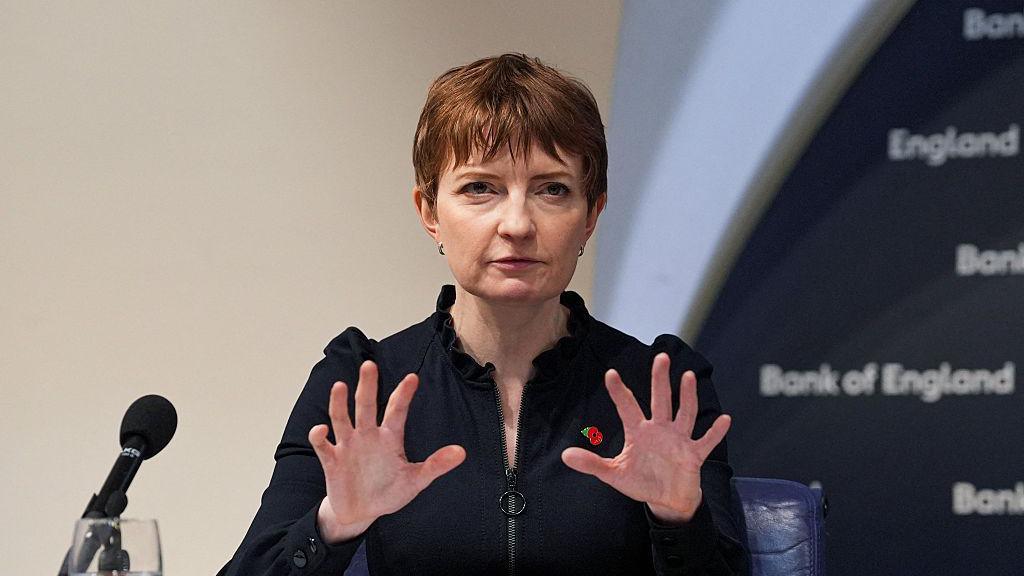
The Chancellor’s recent Budget could lead to a 0.5% reduction in inflation next year, according to a Bank of England deputy governor.
Clare Lombardelli informed the Commons’ Treasury Committee that measures outlined by Rachel Reeves in November are projected to decelerate the rate of price increases starting in April 2026.
During her testimony before MPs, Ms. Lombardelli indicated that capping fuel duty, reducing energy prices, and freezing rail fares would contribute to moderating inflationary pressures.
The Office for Budget Responsibility (OBR), the official forecasting body, has estimated that the measures within Reeves’ Budget will result in a 0.4% decrease in inflation.
The UK’s current inflation rate stands at 3.5%, with OBR forecasts suggesting a decline to 2.5% in the coming year, before reaching the Bank of England’s target of 2% by 2027.
In response to inquiries regarding the Budget’s impact on inflation, Ms. Lombardelli, the Bank’s deputy governor for monetary policy, stated: “We anticipate a reduction in inflation of between 0.4% and 0.5% for a year, commencing in the second quarter of 2026.”
“This is strictly a mechanical consequence of adjustments to energy prices, fuel duty, and changes related to electric vehicles and rail fares.”
“This will simply shift inflation, and it constitutes the most significant impact for us.”
In her second Budget as Chancellor, Reeves extended a 5p cut in fuel duty until September of the following year. She also eliminated green levies from energy bills and general taxation, a move the Treasury projects will save households £88 annually, while discontinuing a customer-funded program aimed at assisting low-income households with home insulation, resulting in an additional saving of £59.
The government has also implemented a freeze on rail fares until March 2027, marking the first such freeze in decades. Typically, rail fares increase in January based on the July rate of the retail price index (RPI) + 1%.
However, the Chancellor did announce plans to introduce a new road tax for electric and certain hybrid vehicle drivers.
Effective April 2028, electric car drivers will be subject to a road charge of 3p per mile, while plug-in hybrid drivers will pay 1.5p per mile, with rates increasing annually in line with inflation.
Ms. Lombardelli’s remarks will likely be welcomed by Reeves as she works to manage inflation and ease the cost of living pressures impacting households.
Regarding the Budget’s potential impact on economic growth, a primary objective of the Labour government, Ms. Lombardelli acknowledged that “the effects are quite small.”
However, she noted that there would be a “short-term” effect, adding 0.2% to GDP in 2027, further stating “there is an effect there”.
Conservative leader Kemi Badenoch has criticized the Chancellor’s 2024 Budget for contributing to inflationary pressures, arguing that it was “stoked by her tax and spend decisions”.
The president has repeatedly blamed Democrats for lingering economic challenges, and has recently increased his focus on the cost of living. The BBC’s White House correspondent, Bernd Debusmann, explains.
The annual pay for full-time workers on minimum wage will rise to just under £25,000 from April.
Customers will pay for investment in Britain’s energy networks, but should save from other changes.
Dozens of the party’s backbenchers are said to have abstained, amid concerns from rural MPs at the move.
Publicans worry higher business rates will mean pints cost more, or pubs go bust.