

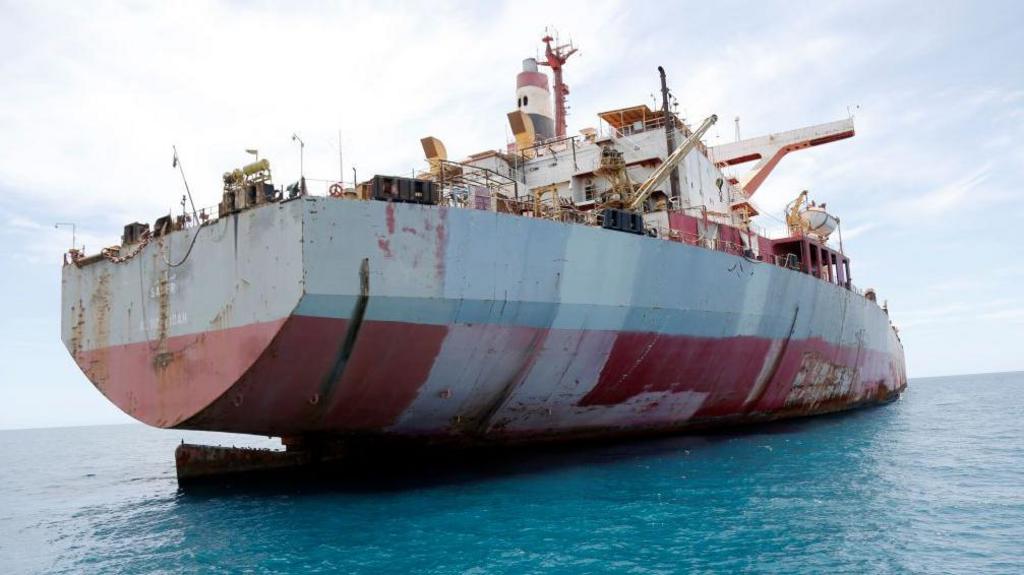
A notable increase in the abandonment of oil tankers and other commercial vessels by their owners has been observed globally over the past year. What factors are contributing to this surge, and what are the implications for the affected merchant sailors?
Speaking from an abandoned oil tanker situated outside Chinese territorial waters, Ivan (a pseudonym), a senior deck officer, shared his experiences.
“We faced shortages of essential supplies, including meat, grains, and fish, which are vital for survival,” the Russian officer stated. “This situation has negatively impacted our health and overall operational environment.”
He added, “The crew was suffering from hunger and frustration as we navigated each day.”
The vessel, whose name is being withheld to protect Ivan’s identity, is carrying approximately 750,000 barrels of Russian crude oil, estimated at a nominal value of around $50 million (£37 million). It departed from Russia’s Far East en route to China in early November.
The International Transport Workers’ Federation (ITF), a global trade union organization, reported the ship’s abandonment in December after the crew reported months of unpaid wages.
The vessel remains in international waters. Due to heightened scrutiny, China is reportedly reluctant to allow the ship into its ports.
The ITF has intervened to secure payments for Ivan and his colleagues through December and has arranged for the delivery of food, drinking water, and other necessary supplies to the ship.
While some crew members have been repatriated, most, including Ivan, remain on board.
According to the ITF, 20 ships were abandoned worldwide in 2016. By 2025, this number had risen sharply to 410, affecting 6,223 merchant seamen. Both figures represent an increase of nearly one-third compared to 2024.
Geopolitical instability is cited as a significant factor driving this increase in recent years. Widespread conflicts and the Covid-19 pandemic have disrupted supply chains and caused volatility in freight costs, challenging the viability of some operators.
The ITF suggests that the growing prevalence of “shadow fleets” may also be contributing to the surge in abandonments last year.
These shadow fleets often consist of aging oil tankers with unclear ownership, questionable seaworthiness, and lacking insurance, posing significant operational hazards. They typically operate under flags of convenience (FOCs), registered in countries with limited regulatory oversight.
Shadow fleet vessels aim to evade detection to facilitate crude oil exports from countries like Russia, Iran, and Venezuela, circumventing Western sanctions.
Following its invasion of Ukraine in February 2022, Russia has faced sanctions that include a price cap on its crude oil exports.
Russia has identified buyers, such as China and India, willing to pay higher prices, although India has recently committed to ceasing purchases under a new US trade agreement.
The practice of merchant ships flying FOCs dates back over a century, allowing owners to avoid domestic laws and regulations. In the 1920s, American-owned passenger ships commonly registered in Panama to circumvent US prohibition laws and sell alcohol on board.
Panama, Liberia, and the Marshall Islands are the most common FOC states, representing 46.5% of all merchant ships by weight, while Gambia has emerged as a significant player in recent years.
In 2023, Gambia had no registered oil tankers, but by March of the following year, it had become the paper-host to 35 such vessels. Host nations benefit from substantial fees.
FOC vessels are prominently featured in abandonment cases. In 2025, they accounted for 337 ships, or 82% of the total. While the exact number of shadow fleet ships within this figure remains unclear, the poor condition of these vessels and the ambiguous ownership structures suggest heightened risks for both the crafts and their crews.
The International Maritime Organisation (IMO) defines seafarer abandonment as occurring when a shipowner fails to cover repatriation costs, provide necessary maintenance and support, or unilaterally severs ties with the seafarer, including failing to pay contractual wages for at least two months.
The ITF’s General Secretary, Stephen Cotton, stated to the BBC that “abandonment is not an accident,” adding, “Seafarers often lack comprehensive information about their destinations.”
“They sign a contract, travel to a different part of the world, and encounter numerous challenges.”
Data from UN agencies, including the IMO and the International Labour Organization, indicate that abandoned merchant navy crews worldwide were owed a total of $25.8 million last year.
The ITF reports having recovered and returned nearly two-thirds of this amount, totaling $16.5 million. Wage arrears on Ivan’s ship were approximately $175,000 at the time of the ITF’s initial involvement.
Indian sailors were the most affected nationality in maritime abandonment cases in 2025, accounting for 1,125, or 18% of the total. Filipinos (539) and Syrians (309) ranked second and third, respectively.
In September of last year, to protect its significant seafaring community, the Indian government blacklisted 86 foreign vessels due to seafarer abandonment and rights-violation issues. Investigations revealed that many of these vessels had untraceable owners or received no response from flag states.
Mark Dickinson, the general secretary of Nautilus International, a trade union for maritime professionals, attributes this issue to the “complete derogation of responsibility” by FOC states toward their merchant fleets and the crews serving on them.
He emphasizes the necessity of “a genuine link between ship owners and the flags under which they sail,” a requirement already stipulated under international maritime law, though without a universally agreed definition.
Ivan’s ship was sailing under a false Gambian flag, unregistered and unknown to Gambia. It has since been provisionally accepted under the flag of another African nation, which has reportedly initiated a formal inquiry into the vessel.
ITF inspector Nathan Smith suggests that the tanker’s fate will likely be resolved only when the oil is transferred off the ship via a ship-to-ship transfer in open sea.
Ivan notes that he will exercise greater caution when considering future ship crew assignments.
“I will certainly engage in thorough discussions regarding the vessel’s condition, payment terms, and provisions, and I will consult online resources to identify vessels that are banned or under sanction.”
Seafarers like Ivan often depend on the contracts available to them. Given that shadow-fleet voyages are a critical component of the supply chain for Russian oil, enhanced international cooperation is essential to protect seafarers from the inherent risks of maritime service.
Parts of the aviation industry are shifting towards wealthy customers and selling a more luxurious type of international travel.
Major firms collectively announce $650bn worth of investment in AI this week, rattling investors.
Firms are working to make the motors that drive robots more efficient and cheaper.
Workers are writing letters, staging strikes and in some cases resigning over how bosses are handling the immigration crackdown.
The event was attended by representatives of more than 50 countries, the White House said.