

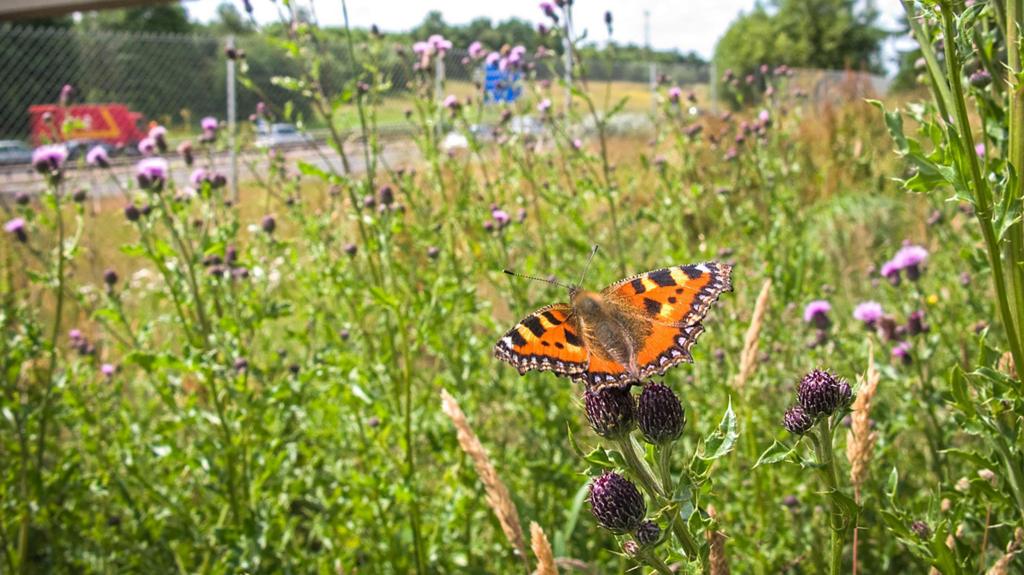
The latest biodiversity indicators reveal that UK ecosystems are continuing to decline or remain unchanged, rather than showing improvement.
Published annually since 2007, these indicators monitor progress towards both national and international biodiversity targets over the short and long term.
Scientists at the UK Centre for Ecology & Hydrology (UKCEH) in Wallingford, Oxfordshire, have played a vital role in shaping the 2025 report through analysis of trends in animal and plant species.
Dr. Francesca Mancini, an ecological modeller at UKCEH, noted that while the overall picture was not “completely positive,” the indicators offered “some glimmers of hope.”
This year’s indicators have been jointly published by the Joint Nature Conservation Committee and the Department for the Environment, Food & Rural Affairs.
They are based on data contributions from approximately 100 organizations, including government agencies, research institutions, voluntary groups, and citizen science initiatives like the UK Butterfly Monitoring Scheme.
“Most of the indicators provide insights into whether a group of species is improving, deteriorating, or experiencing little to no change over the long term – typically from the start of monitoring until the present – or over the short term, usually the past five years,” Dr. Mancini explained.
Research from the butterfly monitoring scheme, conducted by Dorset-based charity Butterfly Conservation, revealed in April that 31 out of 59 species have experienced population declines since monitoring began in 1976.
Dr. Mancini indicated that this year’s indicators showed an increase in long-term declines.
“However, some of those indicators declining in the long term are showing little change in the last five years, suggesting that these declines may be starting to stabilize.”
“While it’s not an entirely positive assessment, there are some encouraging signs within the indicators.”
Dr. Mancini emphasized that the invaluable contributions of thousands of volunteers who collect data annually are essential, stating that without them, scientists would be “completely flying blind.”
She suggested that individuals can participate through various avenues, such as pollinator monitoring in the spring, creating bug hotels, or providing water for birds in gardens.
“If you lack a garden, consider window boxes, and explore local community initiatives focused on transforming green spaces to be more wildlife-friendly.”
You can follow BBC Oxfordshire on Facebook, X (Twitter), or Instagram.
The authority says it has reduced carbon emissions by 63% since 2018/19.
We look back at what voluntary groups across East Yorkshire and Lincolnshire achieved in 2025.
A main road will be closed for extensive work amid fears of a “life-threatening” landslip.
Processing drone data can take hours, but an AI tool is doing the job within a matter a seconds.
Winter brings its own wildlife highlights at a spectacular nature reserve on the Yorkshire coast.