

This video can not be played
Assessment Underway for Potential Northern England Olympic Bid in the 2040s
London Mayor Sadiq Khan has voiced criticism regarding the government’s consideration of a northern England bid for the Olympic and Paralympic Games, asserting that excluding the capital would represent “a missed opportunity.”
Government ministers have commissioned UK Sport to undertake an “initial strategic assessment” to determine the feasibility of the region hosting the Games in the 2040s.
The funding agency will analyze the potential expenditures associated with staging the event for the first time since London 2012, alongside the anticipated socio-economic benefits and the likelihood of a successful bid.
Culture Secretary Lisa Nandy stated that the government is “starting the firing gun” on the project.
In response, a spokesperson for Mayor Khan remarked, “London is recognized as a global sporting capital, and the Mayor has openly expressed his aspiration for the city to participate in a future Olympic and Paralympic Games.”
“Mayor Khan believes that a potential nationwide bid, leveraging the UK’s assets, including the publicly-owned London Stadium, would ensure the most successful Olympic Games possible.”
“Utilizing London’s existing world-class infrastructure would contribute to delivering the greenest and most sustainable Games, while also stimulating significant economic growth both in London and throughout the country.”
“Failing to include the capital in an Olympics bid would represent a missed opportunity and would prevent the nation from realizing the full potential benefits of a UK-wide Games.”
Earlier, Secretary Nandy commented, “For too long, we have been told that the Olympics is simply too large and important to be hosted in the north.”
“That is no longer the case. It is time for the Olympics to come north and for us to showcase what we can offer to the world.”
“We are confident in our ability to deliver not just an incredible bid, but an incredible Olympics. We are initiating this process with a phase-one study examining the investment, resources, infrastructure, and transportation requirements.”
The findings of UK Sport’s study will inform the decision on whether to proceed with a more in-depth “technical feasibility study,” with the ultimate decision on any bid resting with the British Olympic Association (BOA).
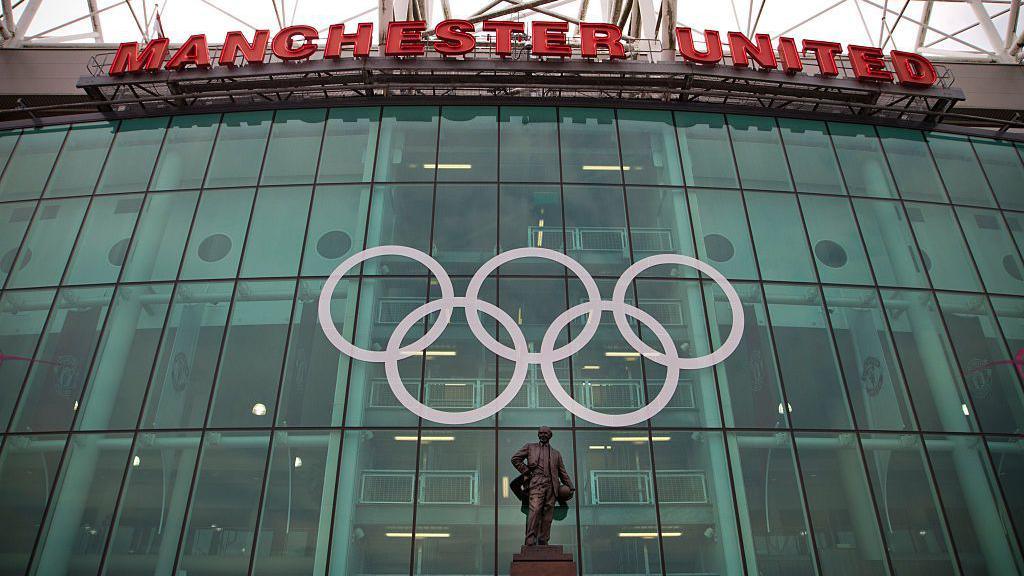
Manchester United’s Old Trafford stadium hosted Olympic football matches during the London 2012 Games.
In February, a coalition of northern political leaders urged the government to ensure that any future Olympic bid would be based in the region, asserting that there was a “compelling” case and that the region “already possesses many of the foundations necessary to deliver a world-class Games, including elite sporting venues, major stadia, and arenas.”
North East Mayor Kim McGuinness stated, “I am pleased that ministers and sporting bodies are now exploring how we can translate this ambition into reality. We are prepared to collaborate in developing a credible, deliverable vision that can effectively present the case to the International Olympic Committee (IOC).”
A survey conducted the year following London 2012 revealed that more than two-thirds of the UK public believed that the £8.77 billion cost of the Games was a worthwhile investment, despite exceeding the original budget threefold.
The event was also credited with contributing to the regeneration of east London and stimulating economic growth. However, it did not achieve the anticipated increase in sports participation that organizers had hoped for.
“It was an incredible experience for the country,” Secretary Nandy remarked. “It attracted substantial investment… and brought the entire nation together.”
Manchester’s previous bids for the 1996 and 2000 Olympics were unsuccessful. However, the city successfully hosted the 2002 Commonwealth Games, with the City of Manchester Stadium serving as the athletics venue. Subsequently, it was converted into a football arena for Manchester City, now known as the Etihad Stadium, one of several major sporting venues in the region.
Manchester also houses the National Cycling Centre (Velodrome) and an aquatics center. Previous proposals have suggested that Liverpool’s Albert Dock and River Mersey could host sailing events, with the Lake District potentially serving as the venue for open-water swimming.
Manchester United has announced plans to construct a new 100,000-seat stadium by 2035. Leeds United also has plans to redevelop Elland Road.
When questioned about which stadium might serve as the centerpiece of any northern Olympic bid, Secretary Nandy responded, “The study will identify all potential sites required… There are particular challenges regarding certain athletics facilities, but these are issues that any government should address, and an Olympic bid provides an opportunity to do so.”
“Given the current financial climate, our approach will prioritize leveraging existing infrastructure,” Secretary Nandy explained. “The north of England possesses robust infrastructure, but it requires upgrades… The construction of facilities like the new Everton stadium demonstrates our capabilities in this area.”
In an effort to mitigate costs and reduce the need for investment in new infrastructure, the International Olympic Committee (IOC) is reportedly more receptive to multi-city or regional bids.
“We must demonstrate to them that we can successfully host the Games in the north of England,” Secretary Nandy asserted. “I am confident that we can, and we are fully committed to making it a reality.”
The government has also announced the launch of the “Stadium Regeneration Accelerator.” This project will involve collaboration with sports organizations such as the Premier League and the English Football League on infrastructure development projects, including stadiums, “that have the potential to regenerate their surrounding areas.”