

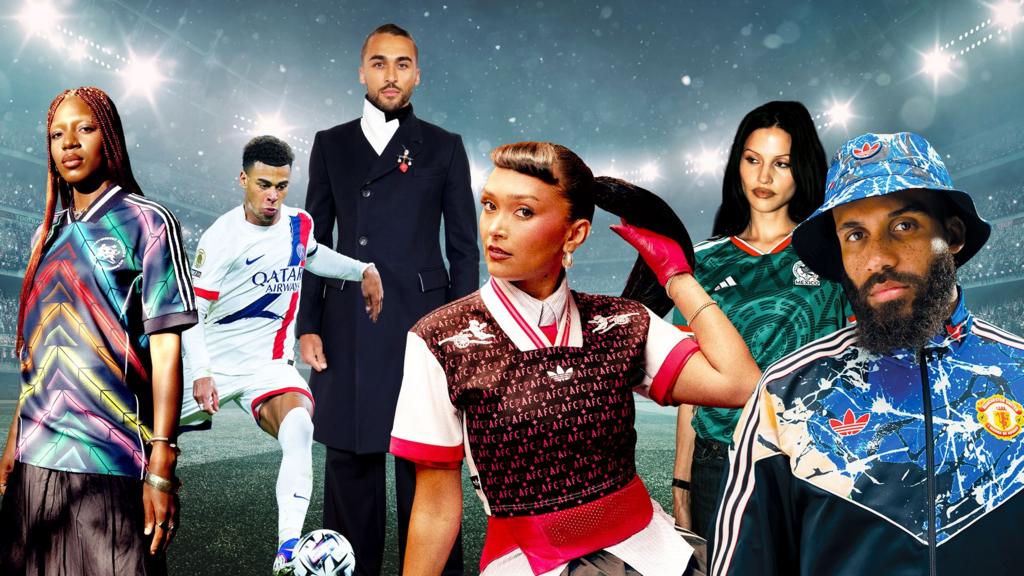
The unveiling of new shirts is a highly anticipated event for every World Cup.
This year’s campaigns from leading kit manufacturers Adidas and Nike represent a significant shift, featuring collections inspired by streetwear rather than traditional football attire.
These collections, influenced by football culture both on and off the field, blend classic designs with contemporary streetwear elements.
Nike launched its World Cup home shirts with a cinematic short film, showcasing star players like Virgil van Dijk, William Saliba, and Cole Palmer modeling the kits with cargo trousers, jeans, and trainers.
Adidas took a similar approach, unveiling their away shirts in Los Angeles with celebrities such as Kendall Jenner and Damson Idris in attendance. Models styled the kits with flared trousers, distressed denim, and micro-shorts.
According to Adidas football’s global manager, this approach aims to demonstrate to fans “how to bring the kits into their own life.”
Sam Handy notes that “the worlds of streetwear, music, fashion, and culture converge in football as a universal shared passion across the world.”
“It took a few seasons for everyone to see it.”
Streetwear is deeply rooted in the casuals subculture, which emerged in the UK during the 1970s.
Casuals moved away from full team colors in favor of everyday attire, opting for polo shirts, denim jackets, or flared trousers from brands like Adidas, Fila, Sergio Tacchini, Lacoste, Slazenger, Stone Island, and Fred Perry.
Over time, these styles transcended football culture and gained mainstream popularity.
Adidas acknowledges this history with its £80 Britcore Jersey, described as a 90s-inspired piece suitable for “layering up” or “making a statement at a weekend event,” indicating its broader appeal beyond football fans.
Nike has also launched its Jordan and Brazil collaboration ahead of the World Cup, featuring an “old-school jersey” goalie top priced at £79.99, which the brand describes as “field-ready style, remixed for the streets.”
In anticipation of the 2026 World Cup, to be held in the US, Mexico, and Canada from June 11 to July 19, some brands have further blurred the lines between sportswear and streetwear by introducing cropped versions of several shirts.
First introduced by Adidas for major European clubs like Liverpool, Real Madrid, and Bayern Munich in 2025, these crop tops have been described as a “more exciting product for female fans.”
Handy explains that the crop tops were inspired by “seeing lots of fans cutting jerseys and re-sewing them to get the fit they wanted.”
He emphasizes that “the future of football is women, and the people who don’t credibly invest in them are missing out on expanding fandom in 50% of the population.”
For 22-year-old Ellie-Ann Prendergast, styling match-day outfits has deepened her passion for Liverpool. “Styling myself for games has made me enjoy them more,” Prendergast says.
She expresses being “obsessed” with styling outfits and staying current with the latest kits, and appreciates seeing fans embracing fashionable attire on match days.
“As a new football fan, I feel like I’ve been accepted straight into the fanbase because they’re such a family,” she adds.
Given its established connections with the trendsetting US basketball and American football leagues, the NBA and NFL, it seems fitting that streetwear styles are incorporated into this year’s North American World Cup kit collections.
However, while streetwear is increasingly prominent in collections now, fashion in sport has not always been welcomed.
In 2005, the NBA implemented a dress code requiring players to dress in “business casual” attire while representing the sport, effectively banning streetwear from the league.
Players responded by hiring stylists to creatively circumvent the NBA’s rules, incorporating streetwear elements while showcasing their personal fashion sensibilities.
According to British football content creator Tiannah Pedler, many of today’s footballers have grown up “looking up to basketball players.”
She believes that fashion provides one of the few opportunities for footballers to express their individuality. “The ones that are interested in fashion can create this really strong personal brand,” the 26-year-old states.
David Beckham exemplified this in the early 2000s, and more recently, Kylian Mbappé, Marcus Rashford, and Jude Bellingham have all been seen attending Paris Fashion Week shows during their time off the pitch.
This trend has long been recognized among players in France, with their bold and innovative outfits frequently going viral.
In 2018, streetwear became further integrated into the sport when Paris Saint-Germain launched its commercial partnership with the Nike Air Jordan brand.
This collaboration with the Jordan brand, founded by basketball icon Michael Jordan, helped “kickstart” this fashion trend in European football.
“PSG are very good at making the club a bit of a lifestyle brand where even non-football fans might like to wear merch,” Pedler notes.
Pedler identifies Arsenal as a leader in this area, having collaborated with several London streetwear brands in the past year, including Places + Faces, LABRUM, and Aries.
“Arsenal have done a really great job with all their collections.”
“If they do win the league, they are going to have the best-dressed parade in the entire world,” Pedler jokes.
Other clubs, such as Everton, have recently created a collection with LA brand Anti Social Social Club, while Manchester United’s The Stone Roses collection with Adidas has proven to be a significant hit with fans.
As football clubs seek to capitalize on fans seeking more fashionable ways to support their teams, we can anticipate seeing more streetwear collaborations in the future.