

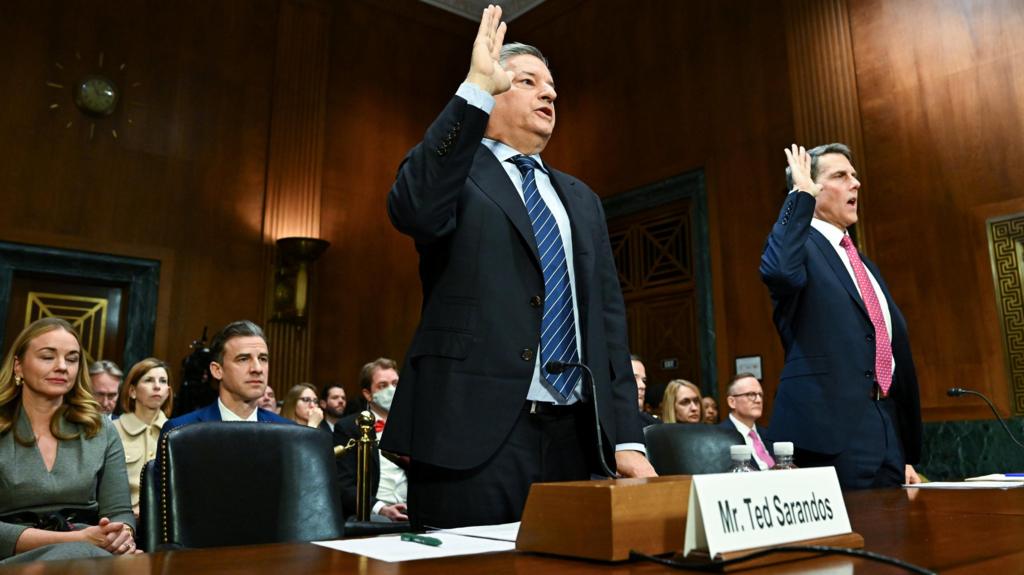
Netflix faced scrutiny from U.S. lawmakers as it attempted to justify its proposed $82 billion acquisition of Warner Bros Discovery, addressing concerns over potential impacts on consumers, workers, and the broader entertainment landscape.
On Tuesday, members of the Senate antitrust subcommittee, comprising both Democrats and Republicans, voiced apprehensions regarding reduced competition, potential price increases, and the future of movie theaters should the merger proceed.
The deal, currently under review by the Department of Justice (DoJ), would grant Netflix control over Warner Bros’ film and television studios, in addition to the HBO Max streaming service.
Paramount Skydance continues to pursue a competing offer to acquire the company.
The senators’ questioning underscored bipartisan opposition to the merger, though the DoJ holds the authority to ultimately approve or block the transaction.
During the hearing, senators pressed Netflix co‑chief executive Ted Sarandos on the potential fate of theaters following the deal’s approval, the effects on subscription costs, and the implications for the entertainment workforce.
Sarandos stated that Netflix would commit to releasing Warner Bros films for a 45‑day theatrical window, aligning with the current industry standard, and pledged to operate the studio “largely as it is today”.
He argued that combining the two entities would “give consumers more content for less”, noting that 80% of HBO Max subscribers, part of Warner Bros’ library, also subscribe to Netflix.
Sarandos also asserted that the merger would lead to the creation of more American jobs.
However, Republican Senator Mike Lee cautioned that “consolidating two major employers within the same market inevitably has an impact on, and can significantly weaken, competition for that labour”.
While several Republican senators raised concerns about competition, some also focused on the ongoing culture‑war debate.
Senator Eric Schmitt, a Republican, accused Netflix content programming of being “overwhelmingly woke”.
Notably absent from the hearing was David Ellison, CEO of Paramount, which continues to vie for the acquisition of Warner Bros despite facing repeated rejections.
Paramount, backed by the Ellison family, contends that its $108 billion deal for the company is the superior option.
Critics have denounced both merger proposals, arguing that either deal would concentrate excessive power within a single company.
Senator Cory Booker, a Democrat, expressed frustration over Paramount’s absence from the hearing, stating that David Ellison had declined his invitation to testify.
“With either merger, another corporation will have that increased control over what we see, what we hear and what news we consume,” Booker stated.
Netflix, in an effort to fend off rival Paramount’s bid for the Hollywood studio, last month updated its offer and announced it would pay entirely in cash after initially suggesting a combination of cash and shares.
The subcommittee hearing also addressed whether Alphabet’s YouTube represents a significant competitor to Netflix.
Sarandos argued that “we are competing for the same content, we are competing for the same viewers, we are competing often for the same ad dollars”.
“YouTube is not just cat videos anymore. YouTube is TV,” he added.
However, some lawmakers, including Lee, remained skeptical of these claims, asserting that YouTube should not be regarded as a rival. Paramount has also challenged these assertions.
The US president’s legal team file new court papers in the ongoing case over a Panorama documentary.
The film-maker speaks after a photo showed him with late sex offender Jeffrey Epstein and two women.
About 100 people from Edale were involved in Stone of Stone, a comedy film about a heist.
Next month, Netflix will stream the K-Pop superband’s first performance since their reunion.
Actor’s journey from Hull to Hollywood is raising aspirations among a new generation back home.