

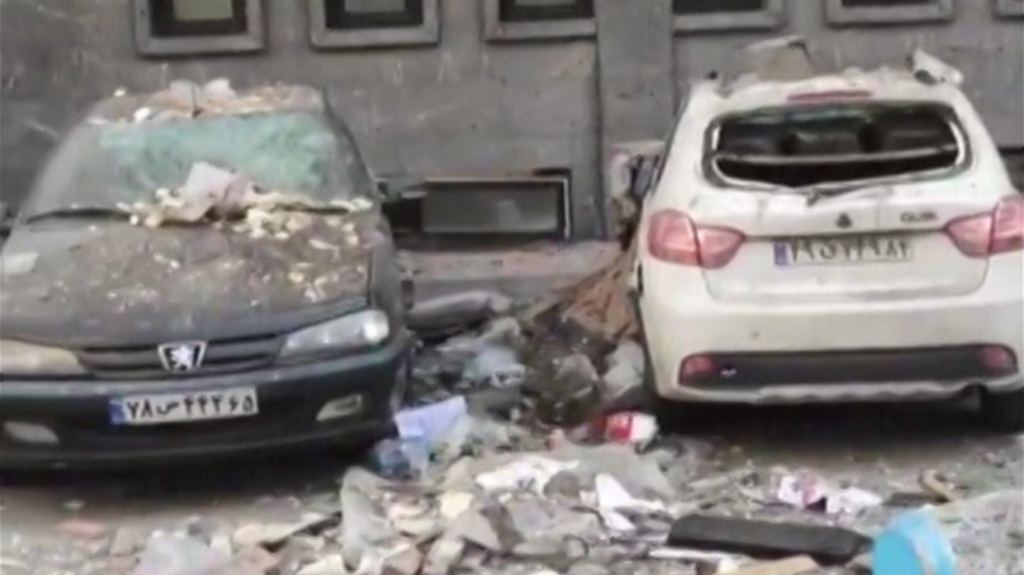
Authorities in Iran report that two separate explosions, attributed to gas leaks, have resulted in five fatalities.
According to a local official cited by Iran’s semi-official Mehr news agency, one person was killed and 14 others sustained injuries in an explosion at a residential building in Bandar Abbas, a southern city situated on the Gulf coast.
The state-run Tehran Times has reported that a separate explosion in the southwestern city of Ahvaz claimed the lives of four individuals.
These incidents occur amidst ongoing regional tensions, fueled by the increased presence of U.S. forces in the Gulf and persistent pressure from President Donald Trump for Tehran to negotiate an agreement concerning its nuclear program. President Trump stated on Saturday that Iran was “talking to” Washington.
State TV reported that the explosion in the port city of Bandar Abbas impacted an eight-story building, “destroying two floors, several vehicles, and shops” in the Moallem Boulevard area.
Mohammad Amin Liaqat, head of the local fire department, indicated that preliminary assessments suggest a gas leak and subsequent “build-up” as the cause.
“My colleagues will give more details in the next few hours,” he stated in a video published by Mehr.
Mehrdad Hassanzadeh, a regional official, informed the news agency that the injured individuals have been hospitalized.
The semi-official news agency Tasnim has refuted social media reports alleging that a commander of the Revolutionary Guards Corps navy was the target of the Bandar Abbas explosion.
In a separate incident, the Tehran Times reported a second explosion at a residential building in the Kianshahr neighborhood of Ahvaz, located near the Iraqi border.
The report stated that emergency officials successfully rescued a child trapped beneath the debris and transported the child for medical care.
On Saturday, amid ongoing tensions between the two countries, President Trump stated that Iran was “talking to us,” without providing specific details.
“They are negotiating,” he told Fox News, while adding that Washington could not share its plans with its allies in the Gulf.
“We’ll see if we can do something, otherwise we’ll see what happens… we have a big fleet heading out there.”
Iran’s President Masoud Pezeshkian said conflict would not be in the interest of either country nor the broader region.
“The Islamic Republic of Iran has never sought and in no way seeks war,” he said during a call with his Egyptian counterpart Abdel Fattah al-Sisi, news agency AFP reported citing a statement from Iran’s presidency.
Separately, the head of the country’s Supreme National Security Council Ali Larijani met the Qatari prime minister in Tehran on Saturday and “reviewed ongoing efforts to de-escalate tensions in the region”, Qatar’s foreign ministry said.
Larijani, whom the Kremlin said had also met Russia’s President Putin for talks on Friday, wrote on X: “Contrary to the hype of the contrived media war, structural arrangements for negotiations are progressing.”
Iran’s foreign minister has said Tehran is open to talks with the US provided they are based on trust and respect but cautioned that its missile defence system would “never” be the subject of negotiation.
Trump told Tehran on Wednesday that time was “running out” for it to reach a deal on its nuclear programme – which Iran insists is peaceful – and later said they must also “stop killing protesters” to avoid military action.
It came after he had promised to intervene to help those involved in a brutal crackdown on protests in the country earlier this month, although he later said he had heard on good authority that the execution of demonstrators had stopped.
The US-based Human Rights Activists News Agency says it has confirmed the killing of more than 6,300 people since the unrest began in late December, and is investigating another 17,000 reported deaths.
Analysts believe PM Netanyahu is urging the US towards maximalist strikes.
Tehran has said it will never negotiate on its missile and defence systems, but that it is open to talks.
Iran’s Foreign Minister Araghchi says armed forces had “fingers on the trigger” to respond to any US strike.
Tehran has threatened to treat an attack by the US as part of last summer’s war, and its response could be more dramatic.
Iran seized the oil tanker with 18 crew members, including 16 Indians, in December alleging it had illegal diesel.