

Donald Trump has long advocated for changes at the US central bank.
Now, with Jerome Powell’s tenure as Federal Reserve chairman nearing its end in May, the former president may see his wishes realized.
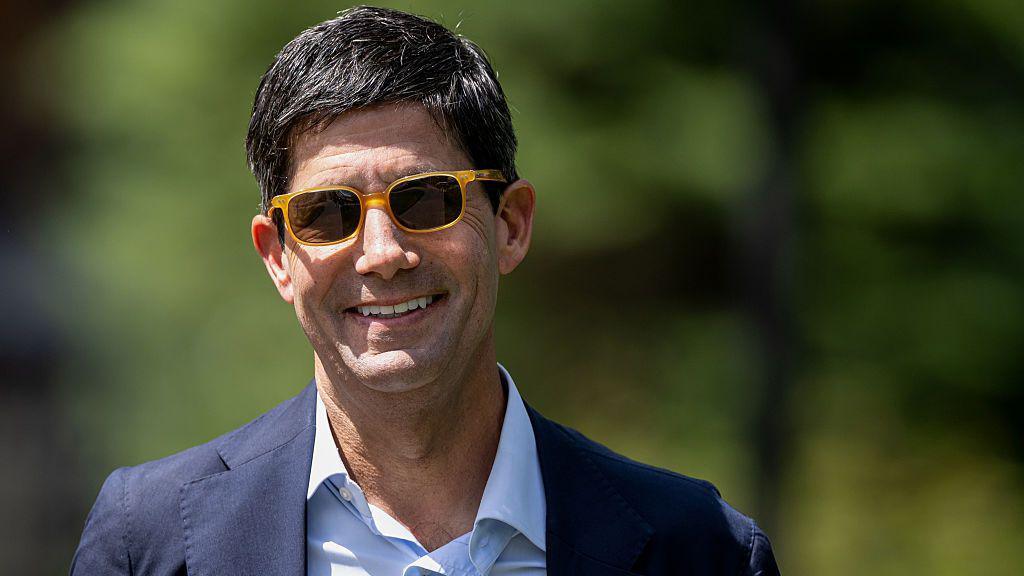
Sources indicate that Trump is considering Kevin Warsh – a conservative figure he reportedly regretted not selecting during his first term – as a potential replacement for Powell.
Trump alluded to the decision on social media, suggesting Warsh is a dependable choice.
The potential selection is notable, as Warsh has historically been associated with advocating for higher interest rates, though he has seemingly attempted to moderate this stance in recent publications and media appearances.
This position could create friction with Trump, who has often identified as a proponent of lower interest rates. The former president has previously voiced criticism of Powell for perceived slow action on rate cuts, making it clear that his preferred Fed leader would align with his economic perspectives.
It remains to be seen whether Warsh’s appointment would result in the type of central bank favored by Trump.
Warsh’s background includes an Ivy League education, prior service at the Fed, and experience on Wall Street and at the Hoover Institution, a conservative economic think tank.
Supporters claim he is attuned to concerns regarding the central bank’s independence and is aware of the potential risks if its policies prioritize short-term political objectives over broader economic considerations.
Lee Ohanian, an economics professor at UCLA and senior fellow at the Hoover Institution, suggests that following directions from Trump “would diminish the Fed” and “create tremendous turmoil in the financial markets,” adding that Warsh is aware of this.
In Congress and on Wall Street, where Trump’s past criticisms of Powell have raised concerns, Warsh’s potential for independent judgment is viewed favorably.
His nomination has garnered support from establishment figures such as former Secretary of State Condoleezza Rice and economist Mohamed el-Erian.
Critics have suggested that Warsh’s connection to Ronald Lauder, a Trump donor and friend, may have influenced the decision.
Others have questioned his record as a policymaker, highlighting his opposition to economic stimulus during the 2008 financial crisis due to inflation concerns – a position that was a minority view at the time.
Congressman Don Beyer has accused Warsh of demonstrating a “willingness to wildly alter his views…based on who is in the White House.”
However, many financial professionals view him as a responsible choice.
Wells Fargo analysts noted that “there appears to be at least some degree of comfort with a Warsh-led Fed vs. the other choices,” though they also acknowledged that his relatively low public profile in recent years introduces a degree of uncertainty.
Jeffrey Roach, chief economist for LPL Financial, told the BBC that “investors should be thankful.”
The acceptance of Warsh may reflect a gamble that his leadership at the Fed may not result in substantial changes.
Despite Trump’s previous complaints, the Fed implemented three interest rate cuts last year, and most analysts anticipate further cuts this year, regardless of Trump’s stance.
This could benefit borrowers in the US, potentially leading to lower rates on mortgages, car loans, and other forms of debt. It could also potentially benefit the former president, if it improves public sentiment regarding the economy.
This also implies that Warsh may not need to compromise his credibility as an independent economist to deliver lower interest rates favored by Trump.
However, differences may be more evident in other areas of the Fed, which Warsh has accused of “mission creep” and overreach.
He advocates for reducing its role in bank regulation and scaling back studies on issues such as climate change, aligning him with the White House.
Like Treasury Secretary Scott Bessent, he has strongly criticized the Fed’s market interventions following the 2008 financial crisis and again during the Covid-19 pandemic, which resulted in the bank holding substantial amounts of Treasuries and mortgage-backed securities.
Warsh argues that these policies artificially inflate the stock market and other assets, primarily benefiting the wealthy and large financial institutions rather than the broader economy. He has called for reducing these holdings and coordinating their management more closely with the Treasury Department.
It is uncertain whether he would actually lead the Fed to reduce its balance sheet more aggressively than it has been. One potential consequence of such action could be higher borrowing costs, the opposite of what Trump desires.
On Friday, gold prices decreased while the dollar strengthened, suggesting that traders anticipate Warsh will maintain his initial inclination as a “hawk” favoring higher interest rates.
Narayana Kocherlakota, a finance professor at the University of Rochester who served on the Fed alongside Warsh, believes he would oppose the former president if circumstances warranted.
“He’s very smart and he’s very independent. And I think that’s the kind of person that Americans should want at the head of their central bank,” Kocherlakota stated.
Others contend that Warsh’s economic views have evolved to closely align with Trump, including downplaying concerns that rapid growth and rising wages could lead to inflation.
Thierry Wizman, global foreign exchange and rates strategist at Macquarie Group, wrote that “Warsh is not the Fed’s guy, he is Trump’s guy, and has shadowed Trump on monetary policy almost every step of the way since 2009.”
Currently, Warsh may appear to be the candidate with the greatest potential to satisfy all parties involved.
However, Trump’s swift change of heart regarding Powell – his previous selection for Fed chair – should serve as a reminder of the potential for unexpected shifts.
Reporting contributed by Danielle Kaye, Daniel Bush and Jonathan Josephs
The US government released three million pages of documents relating to the late sex offender.
Tehran has said it will never negotiate on its missile and defence systems, but that it is open to talks.
Lemon says he was just doing his job as a journalist reporting on the protests at the church.
Funding for DHS will continue at its current amount for two weeks while both sides work out a new deal to fund the agency, according to US media reports.
Iran’s Foreign Minister Araghchi says armed forces had “fingers on the trigger” to respond to any US strike.