

“`html
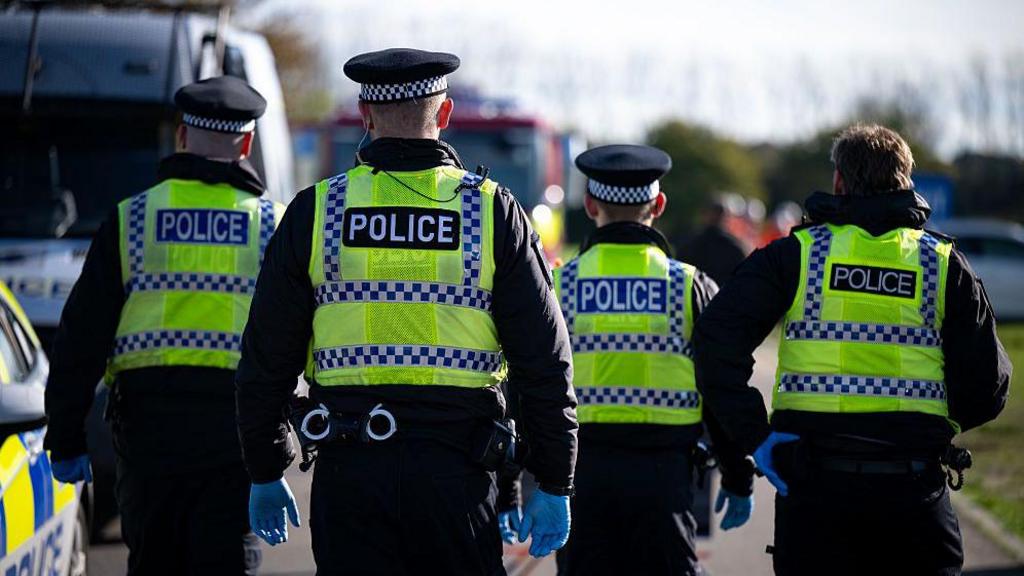
The government is poised to significantly reduce the number of police forces in England and Wales, initiating what sources are calling the most comprehensive reform of policing in decades.
Home Secretary Shabana Mahmood is scheduled to unveil the police reform plans next week.
She is expected to pledge a “significant” reduction in the current number of 43 forces, directing them to prioritize serious and organised crime. Senior police officials have advocated for the creation of approximately 12 “mega forces” to achieve cost savings and enhance crime-fighting capabilities.
Implementation of these changes may take several years, with government sources indicating a timeline extending to the end of the next parliament, around 2034.
In a policy proposal, Mahmood will argue that the current structure of 43 forces is overly bureaucratic and results in inefficient spending, due to each force maintaining its own headquarters, management teams, and support staff.
Government ministers also express concern over the inconsistent performance of local forces across England. They believe that smaller forces are less equipped to effectively address serious crime and respond to major incidents.
Mahmood is expected to emphasize that the newly formed, larger forces should concentrate on combating serious and organised crime, as well as complex cases such as murder and drug trafficking.
Furthermore, ministers will announce plans for the establishment of new Local Policing Areas, with local officers dedicated to neighborhood policing initiatives.
These Local Policing Areas are proposed to be established in every borough, town, or city across England, with the responsibility of collaborating with communities and addressing “local crime,” including shoplifting, phone theft, and drug dealing.
Government insiders acknowledge the prevalence of unpunished “everyday offences” and assert that criminals believe they can act “with impunity” due to extended wait times for police investigation.
A government source stated, “Your place of residence will no longer determine the quality of service you receive from your force.”
Ministers will refrain from specifying the exact number of forces under the new framework next week, opting instead to announce an independent review to determine precise details.
Similar reductions were proposed two decades ago, when then Home Secretary Charles Clarke suggested reducing the number of forces to 12.
Scotland also consolidated its forces in 2013 to create Police Scotland.
Allies of the Home Secretary will present these reforms as integral to her “modernising agenda.”
A source commented: “For decades, there have been calls for force mergers. Mahmood is a politician unafraid of bold reform and political challenges.”
Conservative leader Kemi Badenoch stated: “Keir Starmer’s forced police reorganisation will undermine efforts to combat crime across England and Wales, inevitably leading to centralised control and reduced policing in towns and villages across the country.”
Some police chiefs have supported a revamp of policing in England and have endorsed reducing the number of forces.
Chief Constable Gavin Stephens, chair of the National Police Chiefs’ Council, said: “Crime is changing, technology is evolving, and we need to be set up in the best possible way to tackle crime in the modern world, relentlessly focused on good quality neighbourhood policing alongside national threats.
“I know the home secretary shares this ambition. We look forward to seeing the government’s white paper and working with them to ensure policing delivers outstanding results and rebuilds confidence with the communities we serve.”
A spokesman for the Policing Federation, which represents officers from the rank of constable to chief inspector, said: “Fewer forces doesn’t guarantee more or better policing for communities.
“Skills, capabilities and equipment need significant investment if the public and officers are going to see reform deliver in the real world.
“Any proposals must be driven by evidence and best practice, not lowest cost, and must strengthen rather than weaken frontline, investigative and specialist capability, neighbourhood policing and public confidence.”
The first 27 men seeking asylum arrived at the camp in the early hours of Thursday morning.
The home secretary reflects on police actions in the run-up to a Maccabi Tel Aviv FC fan ban.
The home secretary is promising the biggest policing reform in centuries, but she faces a fight, writes Laura Kuenssberg.
The Home Office says 27 people seeking asylum have been housed in the training camp in East Sussex.
Wealden District Council leader James Partridge says: “We do need to make the best of it.”
“`