

“`html
Legislation designed to implement the government’s Chagos Islands agreement will not proceed to debate in the House of Lords as scheduled.
The bill, which proposes transferring sovereignty of the archipelago in the Indian Ocean to Mauritius while allowing the UK to lease back a vital military base for £101 million annually, was slated for discussion in the Lords on Monday.
However, on Friday evening, the Conservative Party, a long-standing opponent of the agreement, introduced an amendment calling for a deferral “in light of the changing geopolitical circumstances.”
The government has subsequently decided to postpone the debate, indicating that the bill will be brought back before the Lords at a later, unspecified date.
“The government remains fully committed to the agreement to secure the joint UK-US base on Diego Garcia, which is vital for our national security,” a government spokesperson stated.
“This is irresponsible and reckless behaviour by peers, whose roles is to check legislation, not interfere with our national security priorities.”
Government sources have indicated they are exploring options to address the situation and prevent similar tactics in the future.
The Diego Garcia Military Base and British Indian Ocean Territory Bill is currently undergoing the final stages of parliamentary review, a process known as “ping pong,” where the bill is exchanged between the House of Commons and the House of Lords as each attempts to amend its provisions.
The Conservative Party argues that passing the bill would place the UK in violation of a 1966 treaty with the United States concerning the islands, thereby breaching international law.
Article 1 of the 1966 treaty stipulates that “the territory shall remain under UK sovereignty.”
The Conservatives have urged ministers to secure an agreement with the United States regarding the 1966 treaty before the bill is reintroduced in the House of Lords.
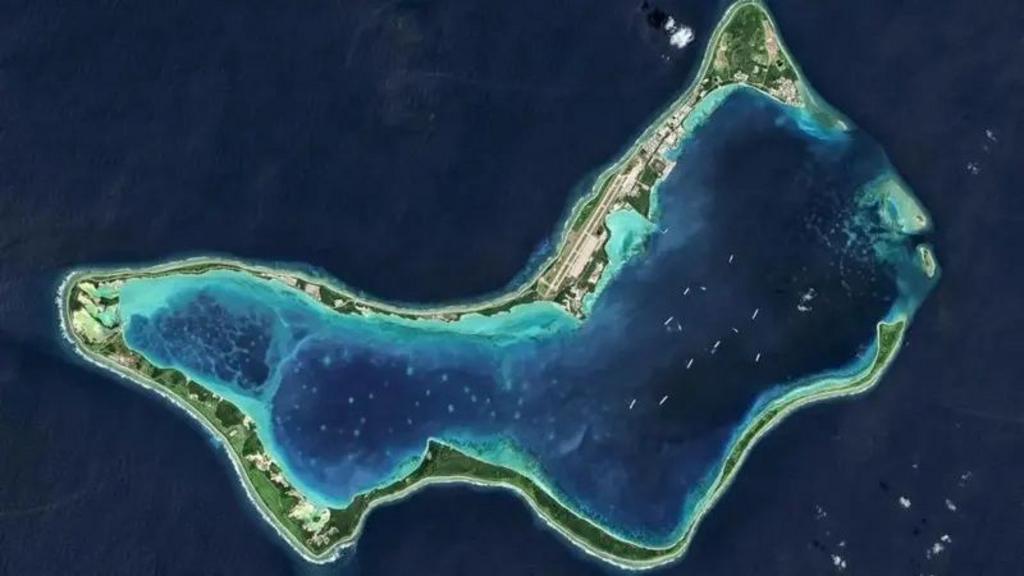
Under the proposed Chagos Islands agreement with Mauritius, the UK would lease back Diego Garcia, the largest island and the site of a joint UK-US military base.
The agreement establishes a 24-mile buffer zone around Diego Garcia, where no construction can occur without UK consent.
As per the agreement, signed by Sir Keir Starmer last May, Mauritius would gain sovereignty over the islands from the UK but allow the US and UK to continue operating a military base on Diego Garcia for an initial period of 99 years.
The government has stated that it would pay Mauritius an average of £101 million annually for 99 years, a figure Sir Keir has characterized as a “net cost” of £3.4 billion after accounting for factors such as inflation.
Last May, the Prime Minister emphasized the urgency of acting “now” to avoid potential legal action by Mauritius that could disrupt the Diego Garcia base.
He stated, “If we did not agree this deal the legal situation would mean that we would not be able to prevent China or any other nation setting up their own bases on the outer islands or carrying out joint exercises near our base.
“No responsible government could let that happen.”
The delay in the Bill’s parliamentary progress coincides with apparent shifts in US President Donald Trump’s stance on the agreement.
On Tuesday, Trump described the agreement as a “great act of stupidity,” despite his administration’s prior acceptance of its terms.
Before finalizing the agreement last May, the UK offered Trump a de facto veto, acknowledging its implications for US security.
While some of the president’s allies had voiced concerns, during a meeting with Starmer in the Oval Office last February, Trump stated, “I think we’ll be inclined to go along with your country.”
Following the agreement’s signing, US Secretary of State Marco Rubio stated that Washington “welcomed” the deal.
Rubio affirmed that it secured the “long-term, stable, and effective operation of the joint US-UK military facility at Diego Garcia,” which he characterized as a “critical asset for regional and global security.”
This development occurs amidst escalating tensions between President Trump and Canadian Prime Minister Mark Carney.
The US president’s remarks follow his assertion that allied forces avoided frontline combat during the Afghanistan conflict.
Former soldier Andy Cammiss is among those criticizing the US President’s statements regarding NATO troops.
Thousands have participated in widespread protests against the state’s ongoing immigration crackdown.
Trade negotiations are nearing completion after nearly two decades of intensive discussions on both sides.
“`