

“`html
A recently released report from an intelligence committee has concluded that the deteriorating state of the natural world poses a significant threat to the United Kingdom’s security and economic stability.
The document cautions against “cascading risks” stemming from the degradation of vital global ecosystems, including potential for conflict, increased migration, and intensified competition for essential resources.
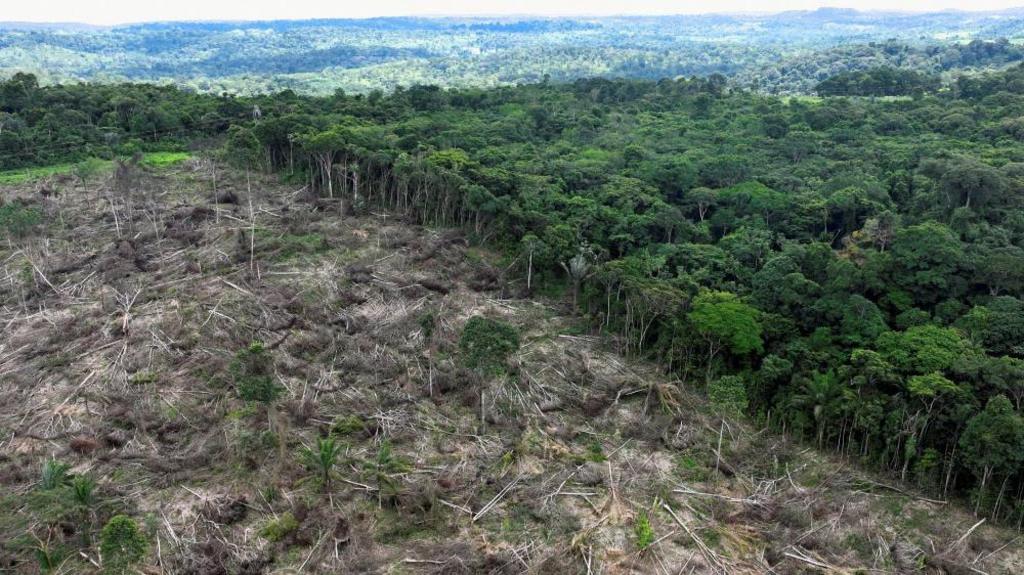
Highlighting the UK’s reliance on ecosystems that are “on a pathway to collapse,” such as the Amazon rainforest, the report warns of potential increases in food prices and the risk to UK food security.
In response, the government acknowledged the critical role of nature in underpinning the UK’s security and prosperity, stating that the report’s findings will inform future preparedness strategies.
Officially published by the Department for Environment, Food and Rural Affairs (Defra), the 14-page report is understood to have been compiled by the Joint Intelligence Committee, which oversees the nation’s security services, with contributions from across government.
The report leverages scientific research and expert analysis to assess a “reasonable worst-case scenario” concerning the potential impacts of nature loss on the UK’s security landscape.
It identifies six key ecosystem regions deemed “critical for UK national security,” based on the probability of their collapse and the anticipated severity of the consequences should such collapses occur.
These include the rainforests of the Amazon and Congo basins, the boreal forests of Russia and Canada, the coral reefs and mangroves of Southeast Asia, and the Himalayan region.
The report asserts that these ecosystems are on a “pathway to collapse” if current rates of environmental degradation persist. However, the precise timing and duration of such collapses remain uncertain.
The analysis draws attention to several potential impacts on UK security arising from ecosystem degradation and collapse, ranging from increased migration and geopolitical instability to heightened pandemic risks and economic vulnerability.
Notably, the report emphasizes the potential ramifications for the UK’s food supply.
The report states that ecosystem degradation or collapse “will challenge the UK’s food security,” citing the nation’s reliance on global markets for food and fertilizer.
The report suggests that widespread disruption to major food-producing regions could lead to scarcity of certain food items, driving up global prices and potentially limiting consumer choice.
The report cautions that the UK is currently “unable” to achieve food self-sufficiency based on current dietary patterns and prices, and that achieving full self-sufficiency would necessitate “very substantial price increases” for consumers.
However, the report suggests that advancements in technologies such as regenerative agriculture and lab-grown protein, supported by further research and investment, could offer potential solutions.
Gareth Redmond-King, head of international programme at the Energy and Climate Intelligence Unit, pointed out that extreme weather events exacerbated by climate change are already affecting food production in various regions globally.
“This is a cost-of-living crisis, driving up food prices on supermarket shelves for UK households,” he stated.
In response to the report, a Defra spokesperson stated: “The UK has a resilient food system and remains one of the most food-secure nations in the world.
“We have access through international trade to food products that cannot be produced here, which supplements domestic production and ensures that any disruption from risks such as adverse weather or disease do not affect the UK’s overall security of supply.”
The report, originally scheduled for publication in October, faced delays. The Times reported that No 10 had initially blocked its release due to concerns that it might be perceived as overly pessimistic. A government source did not dispute this interpretation when approached by BBC News.
The government has faced criticism from environmental groups alleging a retreat from commitments to nature protection.
At the COP30 climate summit in Brazil, the UK did not commit public funds to Brazil’s “Tropical Forests Forever Facility”, its flagship initiative for protecting these critical ecosystems.
The government cited economic pressures and expressed its intention to contribute to the fund in the future, while encouraging private sector investment.
Furthermore, in December, the government faced accusations of weakening environmental protections to stimulate house building.
However, the government highlights its investments in flood defenses and sustainable food production initiatives as evidence of its commitment to protecting the UK from the impacts of climate change and nature loss.
Despite ongoing conservation efforts, global biodiversity continues to decline rapidly, driven by habitat loss, climate change, invasive species, and other factors.
A landmark UN report in 2019 warned that the rate of change in nature worldwide since 1970 “is unprecedented in human history” and estimated that one million animal and plant species are threatened with extinction.
Sign up for our Future Earth newsletter to keep up with the latest climate and environment stories with the BBC’s Justin Rowlatt. Outside the UK? Sign up to our international newsletter here.
Debris is washing up on Sussex beaches after 11 containers went overboard from a ship in December.
Northern Ireland is one of the most nature-depleted areas in the world – what can be done to reverse the decline?
Residents take matters into their own hands to safeguard homes against forecasted severe weather.
The government has announced the details of its long-awaited Warm Homes Plan which promises to cut energy bills.
A developer warns that a development will not be built unless “unfair” transmission charges are overhauled.
“`