

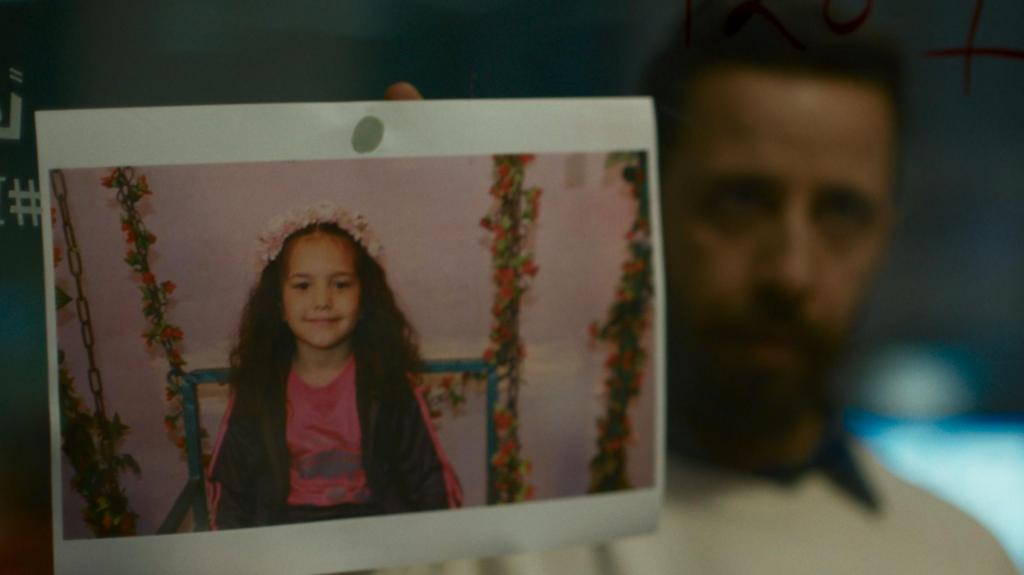
“They’re shooting at me. Please come get me. I’m scared.”
Upon hearing the distressing emergency call recording of Hind Rajab, a six-year-old Palestinian girl pleading for assistance while trapped in Gaza City in 2024, filmmaker Kaouther Ben Hania knew she had to act.
The Tunisian director, a two-time Oscar nominee, paused her current project and, with her producer, decided to focus on telling the story of Hind. The young girl was killed, likely by Israeli fire according to media investigations, along with family members and paramedics dispatched to rescue her.
“It haunted me,” Ben Hania told BBC News, referring to the audio recording that serves as the centerpiece of her Oscar-shortlisted docudrama, released in UK cinemas last Friday.
“I was really angry, I was sad, I felt helpless, and I hate it when I feel helpless.”
“I asked myself this basic question, what can I do? I’m a filmmaker, so I can do movies.”
She added: “We started working on The Voice of Hind Rajab that way to not feel helpless, to not accept, to bear witness.”
“Because not doing it, for me, was being complicit in a way.”
Hind Rajab’s vehicle was struck by suspected Israeli fire as she and her relatives attempted to escape the conflict in Gaza.
While several family members perished, Hind managed to answer a call from the Palestinian Red Crescent Society.
Tragically, the ambulance en route to her location was also shelled, resulting in the deaths of Hind, her family, and the ambulance crew.
Initially, the Israel Defence Force (IDF) stated that no troops were present in the area where Hind and the others were killed.
However, this claim was challenged by independent investigations conducted by Forensic Architecture, in collaboration with the NGO (Non-Governmental Organisation) Earshot, and journalists from Al Jazeera. These investigations concluded that the damage to both the car and the ambulance was consistent with Israeli tank fire.
The IDF later stated that it had “conducted raids on terror targets” with forces operating in neighborhoods in Gaza City, including Tel al Hawa, from where Hind had made her emergency call.
The UN cited her case in a commission of inquiry accusing Israel of war crimes, which it denies.
An IDF spokesperson told the BBC it is still being reviewed by Israel’s Fact-Finding Assessment Mechanism (FFAM).
Ben Hania’s film aims to narrate the events surrounding Hind and her family, as witnessed by Red Crescent volunteers at the Ramallah call center in the occupied West Bank, using both Arabic and English.
Ben Hania affirms that the film is “based on true events” and “anchored in truth.”
“At some point, with all this proof, I thought that we are done explaining,” she adds.
“Cinema can do something better, which is provoking empathy.”
The film blends the heart-wrenching audio of the girl’s actual calls with the Red Crescent with a dramatization featuring actors portraying the volunteers.
They attempt to keep her calm and conscious as it becomes evident that she is surrounded by the bodies of her deceased relatives.
Critics have acknowledged the emotional impact of the performances while also noting the challenges of combining documentary and drama.
Variety’s Guy Lodge observed that it was “impossible not to be moved” by the central recording, heard at an “agonising distance.”
However, he questioned “the ethics and execution of the concept.”
In a four-star review, The Telegraph’s Robbie Collin wrote that the feature “transcends shock value” and presents viewers with “an ethical dilemma.”
“I dreaded watching this film,” he admitted. “Yet having now seen it, I find my mind changed, thanks largely to the philosophical diligence of Ben Hania’s approach.”
The director, who obtained the blessing of Hind’s mother, Wesam, before proceeding with the film, stated that she endeavored to “respect the testimony” of the volunteers and their accounts of that day.
She did not seek input from the other side, explaining, “My movie is not an investigation.”
“The investigation was already done,” she added, citing the findings from the aforementioned organizations, as well as those from major news outlets including the Washington Post and Sky News.
Intense scenes unfold in the film between call center worker Omar, played by Motaz Malhees, and his supervisor Mahdi, played by Amer Hlehel.
Mahdi seeks a secure route approved by the Israeli army, through intermediaries, to enable paramedics to make the brief journey to attempt the rescue.
Omar grows frustrated with his boss’s insistence on negotiating with Israel.
Actresses Saja Kilani and Clara Khoury, portraying fellow call center workers Rana and Nisreen, complete the ensemble cast of Palestinian actors.
Viewers witness them hearing gunfire or explosions in the background before the phone connection is severed.
“Even the actors, at some point, stop acting,” the director said. “They weren’t performing.”
Malhees confirmed this, stating that he experienced panic attacks during filming and felt his heart was “going to explode” during a scene that felt “like a real conversation with a child.”
“It was a hard experience, but it’s worth everything to give.”
The director emphasized her desire to convey the emotions she experienced upon first hearing the girl’s plea for help. “I thought that she was almost talking to me, to save her.”
She told herself: “I need to go back to this moment when it was possible to save her,” before “the war, mainly, failed her.”
In another four-star review, the Guardian’s Peter Bradshaw described “a reckless, ruthless kind of provocative brilliance in what Ben Hania is doing.”
He wrote: “Is it in bad taste? Problematic? Well, in a world where directors busy themselves and us with made-up stories about made-up people, Ben Hania is at least grabbing one of the most relevant issues of our time with both hands and finding a way to thrust it under our noses.”
The director stated that her primary concern was “How to make the voice of this little girl echo?”
“Because the world don’t want to hear it. It’s not a comfortable thing to face.”
“And for me, it was important to honour her voice and to make it resonate beyond borders.”
Concerned that the film might be perceived as “niche,” the filmmakers enlisted the support of prominent Hollywood figures, including Brad Pitt, Joaquin Phoenix, and Rooney Mara, who joined as executive producers.
Phoenix and Mara attended the film’s world premiere at the Venice Film Festival, where it received a 23-minute standing ovation and won the grand jury prize.
“I was like, when will they will stop?” Ben Hania recalled of the “incredible reaction.”
“And actually they stopped because the theatre asked us to leave, because there was another movie!”
“There was a moment of solidarity for real,” Mahlees added. “You could feel that the people are there with you. You are not alone in this world.”
Two of Ben Hania’s previous films – 2024’s Four Daughters about teenage sisters who joined IS, and 2021’s The Man Who Sold His Skin, about a Syrian refugee who becomes a conceptual art object – were nominated for Academy Awards.
Her Golden Globe-nominated latest film is expected to receive an Oscar nomination on Thursday for best international feature. The director hopes this will help the world remember Hind Rajab as the process of trying to find a lasting piece in Gaza continues.
“We don’t have stars, it’s not a feel-good movie,” Ben Hania stated.
“I think it’s important to not look away, because this is not a story: this is history in the making.”
The Voice of Hind Rajab is out in UK cinemas now.
This year’s event will feature 68 UK premieres among a total of126 films, shown between 25 February and 8 March.
The 58-year-old has no inclination to step back from the physical demands of his work and says he’s “in for a penny, in for a pound”.
Neither the Kremlin nor the US president has confirmed whether Putin has accepted the offer.
John Sudworth says the sounds of heavy machinery can be heard echoing around the neighbourhood.
The Marvel star plays a detective with 90 minutes to prove to an AI judge he did not murder his wife.