

“`html
Donald Trump’s pursuit of Greenland will likely prove unsuccessful, according to a former senior advisor to the US president, speaking to the BBC.
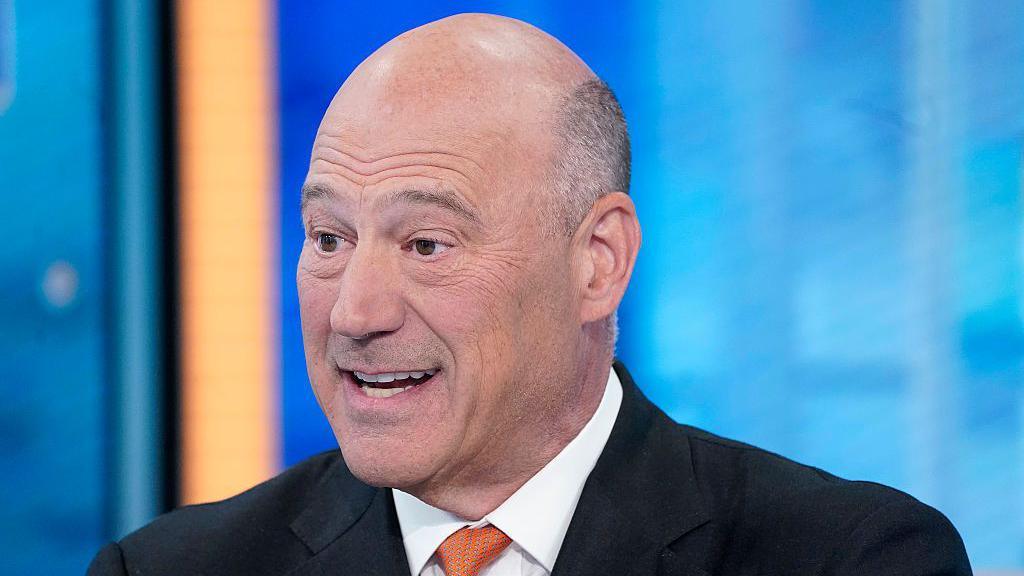
Gary Cohn, Vice Chairman of IBM and former economic advisor to Trump, stated, “Greenland will stay Greenland,” suggesting that Trump’s interest in the territory is linked to the strategic importance of accessing critical minerals.
Cohn, a prominent figure in the technology sector and a leader in AI and quantum computing development, served as Director of the White House National Economic Council during Trump’s administration.
Reflecting the gravity with which business leaders are viewing current geopolitical tensions, Cohn cautioned that “invading an independent country that is part of Nato” would be “over the edge.”
He also proposed that the president’s recent remarks regarding Greenland “may be part of a negotiation.”
“I just came from a US congressional delegation meeting, and I think there’s pretty uniform consensus with both Republicans and Democrats that Greenland will stay Greenland”, he said.
Greenland would welcome an increased US military presence on the island, he noted, given the escalating military significance of the North Atlantic and Arctic Ocean.
Cohn also suggested the US could pursue an “offtake” agreement to secure access to Greenland’s substantial, yet largely untapped, reserves of rare earth minerals.
“But I think, you know, invading a country that doesn’t want to be invaded – that’s part of a militaristic alliance, Nato – seems to me to be a little bit over the edge at this point”, he said.
Cohn implied that the president’s public stance might be an exaggeration employed as a negotiating tactic, a strategy he has reportedly used effectively in the past.
“You’ve got to give Donald Trump some credit for the successes he’s had and he’s many times tried to overreach to get something in a compromise situation,” he said.
“He has overreached in advertising something to end up getting what he actually wants. Maybe what he actually wants is a larger military presence and an offtake.”
The opening of this year’s World Economic Forum in Davos, Switzerland, has been notably influenced by the president’s increasingly assertive position on the Arctic territory, generating concern among political and business leaders regarding the potential geopolitical and economic repercussions. Trump is scheduled to address the forum on Wednesday.
While expressing reservations about certain actions, Cohn stated that the US administration had “various different motives” for its actions.
He suggested Trump’s intervention in Venezuela aimed to “disrupt the country’s relationship” with China, its largest oil market, as well as Russia and Cuba.
Cohn also believes that the president has become increasingly focused on the importance of rare earth minerals, noting that “Greenland has quite a supply” of the resources.
Those minerals are critical to the development of Artificial Intelligence (AI) and quantum computing – also a major talking point in Davos.
US Treasury Secretary Scott Bessent on Monday hit back at claims Trump has blamed his escalating threats over Greenland on the fact he was not awarded the Nobel Peace Prize.
In a message to Norway’s Prime Minister Jonas Gahr Støre, Trump blamed the country for not giving him the prize and said he no longer feels obliged to think only of peace.
Bessent said: “I don’t know anything about the president’s letter to Norway, and I think it’s complete canard that the President will be doing this because of the Nobel Prize.
“The president is looking at Greenland as a strategic asset for the United States. We are not going to outsource our hemispheric security to anyone else.”
Advances in quantum computing and AI are regarded as essential not only for the US economy and productivity but also for its strategic influence on the global stage.
“IBM is dead centre in what’s going on in quantum today. We have the largest amount of quantum computers in use today” Cohn said, highlighting that his company has put many of these computers into use across America in firms from the banking industry to medicine.
“AI is going to be the backbone for data that feeds into quantum to solve problems we’ve never been able to solve”, he added.
“Where we’re heading is AI is going to be part of everyone’s enterprise. AI and quantum are going to be working in the enterprise behind the scenes to make every company more efficient. And we’re just at the beginning of that sort of long road, and that’s going to take probably another three to five years to get there.”
Earlier this month, Google, also a US company, told the BBC it had the world’s best-performing quantum computer. The race to develop the technology is the other key talking point – apart from Greenland – at the World Economic Forum.
Executive orders, pardons, trips and Truth Social posts – the BBC’s Analysis Editor breaks down Donald Trump’s first year back in office, in numbers.
We asked six Americans what they make of the US economy one year after President Trump returned to the White House.
The BBC’s Russia editor Steve Rosenberg analyses why pro-Russian government papers are full of praise for Donald Trump’s desire to buy Greenland.
The prime minister is seeking to downplay how he intends to react to Trump’s threat of tariffs.
Europe is weighing up how to counter the US president’s move against some of America’s closest allies.
“`