

“`html
Less than a year into President Trump’s second term, European leaders are facing what feels like the most perilous turn yet in a turbulent relationship.
The U.S. President is threatening economic repercussions against nations supporting the territorial integrity of Denmark, an EU member.
An emergency EU summit is scheduled in the coming days to address the situation. Should the European Union respond with reciprocal measures, it risks escalating into a full-scale trade war with the United States.
Conversely, inaction could lead President Trump to perceive the 27-member bloc as weak, divided, and unwilling to counter his pursuit of Greenland, potentially through purchase or military force.
French President Emmanuel Macron advocates for deploying the EU’s “trade bazooka,” the Anti-Coercion Instrument (ACI), for the first time. This would enable Europe to retaliate with counter-tariffs, restrict Single Market access, and block bids for lucrative EU contracts.
Ironically, this instrument was initially conceived to counter coercive interference from hostile external powers.
The original intent was to address potential actions from China, not the United States.
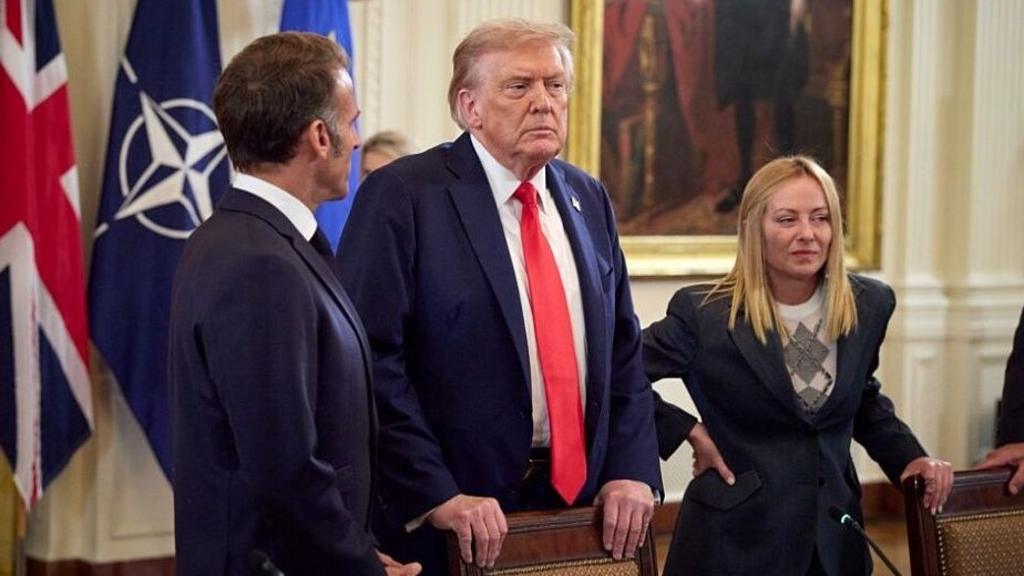
Currently, some EU leaders, including Italy’s Giorgia Meloni, who maintains a relatively positive rapport with President Trump, are hesitant about Macron’s approach.
Meloni has alluded to a “problem of understanding and communication” regarding the recent deployment of troops to Greenland by several European nations, including Denmark, without elaborating on the specific misunderstanding.
If the aim was to appease President Trump and affirm the necessity of enhanced Arctic security, the presence of these soldiers appears to have spurred his latest threat.
Meloni’s suggestion of a misinterpretation opens avenues for a more diplomatic resolution to this precarious EU-US crisis.
Sunday’s emergency meeting of EU ambassadors in Brussels was conducted discreetly, contrasting with high-profile summits characterized by traffic disruptions, road closures, and leaders addressing the media.
The next course of action remains uncertain, as does whether President Trump will de-escalate his threat or intensify it.
Swift and unanimous EU action on such a sensitive matter is unlikely.
Europe has generally sought to accommodate President Trump during his second term, a strategy described by some as prudent and by others as obsequious.
However, there is a growing sense that he is not only severing transatlantic diplomatic ties but also threatening to dismantle them entirely.
The BBC’s Russia editor Steve Rosenberg analyses why pro-Russian government papers are full of praise for Donald Trump’s desire to buy Greenland.
The prime minister is seeking to downplay how he intends to react to Trump’s threat of tariffs.
Europe is weighing up how to counter the US president’s move against some of America’s closest allies.
Trump’s volatile trade policy has thrown the world economy into chaos, and put some US prices up.
The US president’s repeated demands to control Greenland could threaten the Nato military alliance.
“`