

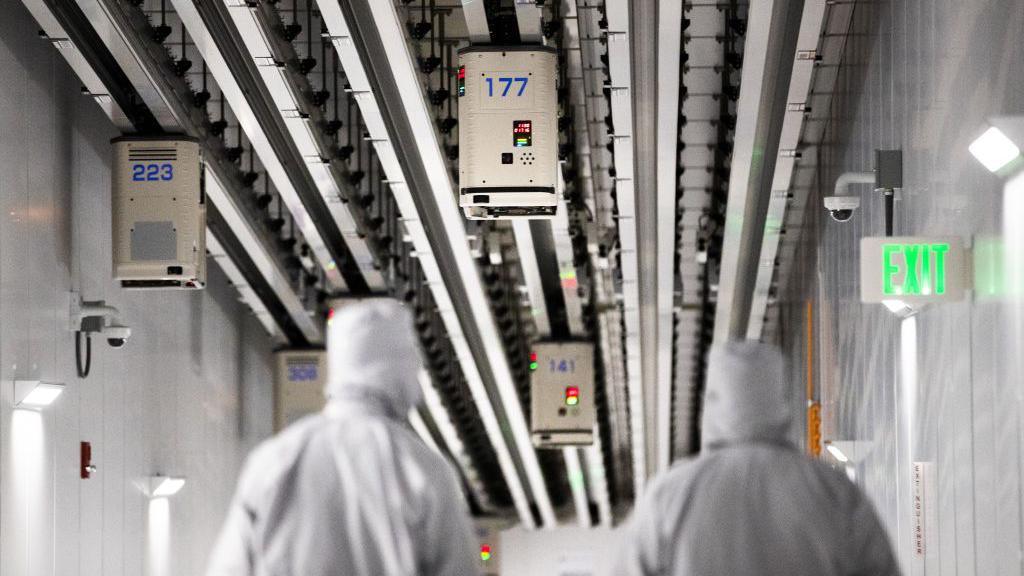
The United States has announced an agreement with Taiwan to reduce tariffs on Taiwanese goods to 15%. This concession is tied to commitments from Taiwanese semiconductor and technology companies to invest significantly in boosting domestic semiconductor production within the US.
According to the Commerce Department, semiconductor and technology firms from Taiwan have pledged “new, direct investments” totaling at least $250 billion (£187 billion) in the United States.
The agreement also includes tariff exemptions for Taiwanese semiconductor companies investing in US-based facilities.
Strengthening domestic production of semiconductor chips, essential components in a wide range of devices from automobiles to smartphones, has become a priority for the US government following supply chain vulnerabilities exposed during the Covid-19 pandemic.
In an interview with CNBC, Commerce Secretary Howard Lutnick stated that the agreement would contribute to the US achieving “self-sufficiency” in semiconductor manufacturing.
“We’re going to bring it all over,” he affirmed.
The US government has allocated substantial subsidies, amounting to hundreds of billions of dollars, to support the semiconductor industry in recent years. These incentives have facilitated and expanded investments from key players like TSMC, the Taiwanese manufacturing giant that dominates the sector.
In its recent earnings update, TSMC announced an acceleration of its US investments, including the expansion of its Arizona plant, which commenced operations in 2024.
The Arizona facility, which manufactures chips for major US technology companies like Nvidia, Apple, and AMD, was established with the support of $40 billion in US government subsidies approved during the Biden administration.
Secretary Lutnick indicated that the new trade agreement could incentivize further expansion by TSMC and promote the development of a broader semiconductor supply chain by attracting smaller businesses to relocate to the US.
In addition to direct corporate investments, the Taiwanese government will provide $250 billion in financing to support these initiatives, according to the Commerce Department.
Taiwan, a self-governing island claimed by China, had been actively pursuing an agreement with the US, starting with the Trump administration, to address the duties levied on its exports, which were set at 20% last year.
However, Taiwan has expressed caution regarding demands for the transfer of its technological expertise, viewing it as a critical safeguard against potential military action.
The new 15% tariff rate aligns with the rates currently applied by the US to goods from key trade partners such as Japan, South Korea, and the European Union.
These rates were established through agreements stemming from tariffs initially announced by the Trump administration last April, which were intended to address trade imbalances.
The Supreme Court is currently reviewing a request from US businesses and states to invalidate these duties, arguing that they represent an overreach of presidential authority.
The Trump administration had previously considered broader tariffs on the semiconductor industry, citing national security concerns.
However, this proposal was met with significant opposition from US companies reliant on semiconductor imports, including those within the sector, and has not been implemented.
This announcement coincides with challenges faced by American chip manufacturer Intel, a competitor of TSMC, in gaining traction in the production of advanced chips designed for artificial intelligence.
In a notable move last year, the US government acquired a 10% stake in Intel. Despite this investment, the company is planning further workforce reductions in the US, adding to previous cuts in recent years.
Overall, the semiconductor manufacturing sector experienced a net loss of over 17,000 jobs last year, according to the latest data, despite government initiatives aimed at bolstering the industry.
The US president also imposes a 25% tariff on countries that “do business” with Tehran, while Iran’s foreign minister says his country is “ready for war”.
Sergio Gor tells reporters in Delhi “real friends can disagree but will always resolve differences”.
Some farmers in Europe opposed the deal, but the EU Commission said it had listened to their concerns.
The levies are set to take effect on 1 January and will apply to goods like cars, clothing and appliances.
BBC editors explain what is at stake as Russian President Vladimir Putin starts a two-day visit to India.