

“`html
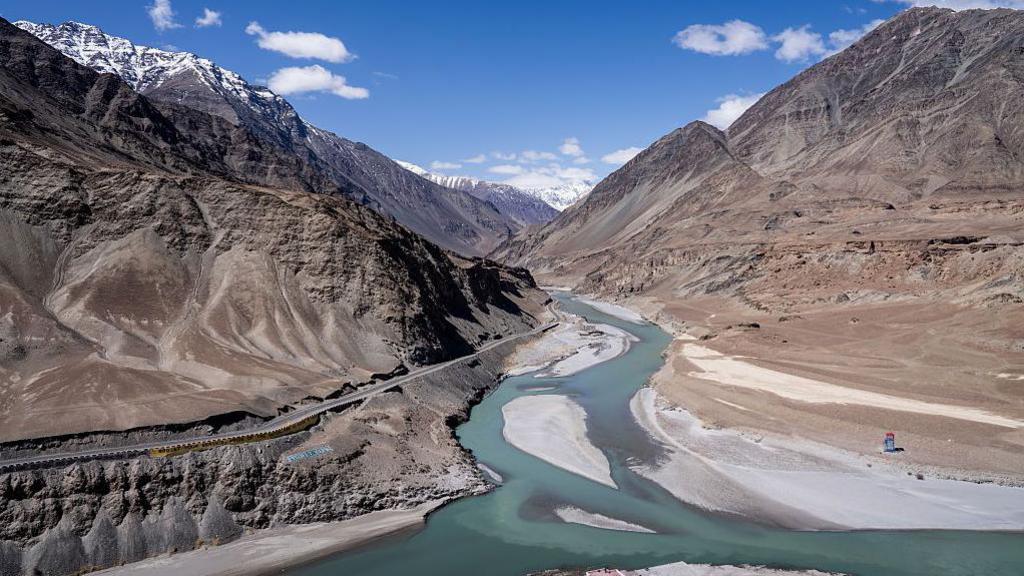
Meteorologists report a concerning trend of reduced winter snowfall in the Himalayas, leaving many areas bare and rocky during what should be their snow-covered season.
They indicate that snowfall in most winters over the past five years has been notably lower than the average recorded between 1980 and 2020.
Furthermore, rising temperatures are accelerating snowmelt, and some lower-elevation regions are experiencing increased rainfall and decreased snowfall. Experts, including the Intergovernmental Panel on Climate Change, attribute this phenomenon, at least in part, to global warming.
Studies have also identified the emergence of “snow drought” conditions in numerous Himalayan regions during the winter months.
The accelerated melting of glaciers, a consequence of global warming, has long posed a significant challenge for India’s Himalayan states and other nations in the region. Experts speaking with the BBC suggest that this decline in winter snowfall is exacerbating the existing crisis.
They emphasize that the diminished ice and snow cover will not only alter the landscape of the Himalayas but also profoundly impact the lives and livelihoods of hundreds of millions of people and the health of numerous regional ecosystems.
As temperatures rise in the spring, the accumulated winter snow melts, providing crucial runoff that feeds the region’s river systems. This snowmelt is a vital water source for drinking, irrigation, and hydropower generation.
Beyond water supply concerns, experts warn that reduced winter precipitation, encompassing rainfall in lower elevations and snowfall in the mountains, increases the risk of devastating forest fires due to drier conditions.
They further note that the disappearance of glaciers and decreasing snowfall destabilize the mountains, as they lose the binding effect of ice and snow. This destabilization is leading to an increase in disasters such as rockfalls, landslides, glacial lake outbursts, and destructive debris flows.
So, what is the magnitude of this decline in snowfall?
The Indian Meteorological Department reported a near absence of precipitation, including both rainfall and snowfall, across almost all of northern India in December.
The weather department forecasts a high likelihood that many parts of northwest India, including the states of Uttarakhand and Himachal Pradesh, as well as the federally administered territories of Jammu and Kashmir and Ladakh, will experience rainfall and snowfall totals that are 86% below the long period average (LPA) between January and March.
LPA is determined by averaging rainfall or snowfall data recorded over a region for a period of 30 to 50 years and using this average to categorize current weather conditions as normal, excessive, or deficient.
According to the weather department, the LPA rainfall for northern India between 1971 and 2020 was 184.3 millimeters.
Meteorologists emphasize that this sharp decline in precipitation is not an isolated event.
“There is now strong evidence across different datasets that winter precipitation in the Himalayas is indeed decreasing,” states Kieran Hunt, principal research fellow in tropical meteorology at the University of Reading in the UK.
A study co-authored by Hunt and published in 2025, incorporating four different datasets from 1980 to 2021, consistently shows a decrease in precipitation in the western and parts of the central Himalayas.
Using datasets from ERA-5 (European Centre for Medium-Range Weather Forecasts Reanalysis), Hemant Singh, a research fellow with the Indian Institute of Technology in Jammu, reports that snowfall in the northwestern Himalayas has decreased by 25% in the past five years compared to the 40-year long-term average (1980-2020).
Meteorologists indicate that Nepal, located within the central Himalayas, is also experiencing a significant reduction in winter precipitation.
“Nepal has seen zero rainfall since October, and it seems the rest of this winter will remain largely dry. This has been the case more or less in all the winters in the last five years,” says Binod Pokharel, associate professor of meteorology at Tribhuvan University in Kathmandu.
However, meteorologists also note that while there have been instances of heavy snowfall during some winters in recent years, these have been isolated, extreme events, rather than the consistent and evenly distributed precipitation patterns of past winters.
Another method scientists use to assess the decline in snowfall involves measuring the amount of snow accumulated on the mountains and how long it persists on the ground without melting, a factor known as snow persistence.
The 2024-2025 winter saw a 23-year record low of nearly 24% below-normal snow persistence, according to a report by the International Centre for Integrated Mountain Development (ICIMOD).
The report indicates that four of the past five winters between 2020 and 2025 have experienced below-normal snow persistence in the Hindu Kush Himalaya region.
“This is generally understood to be consistent with decreased winter precipitation anomalies and snowfall in a significant portion of the HKH (Hindu Kush Himalaya) region,” explained Sravan Shrestha, senior associate, remote sensing and geoinformation with ICIMOD.
A study co-authored by Singh with the IIT in Jammu and published in 2025 reveals that the Himalayan region is increasingly experiencing snow droughts, characterized by a significant scarcity of snow, particularly at elevations between 3,000 and 6,000m.
“With snowmelt contributing about a fourth of the total annual runoff of 12 major river basins in the region, on average, anomalies in seasonal snow persistence affect water security of nearly two billion people across these river basins,” the ICIMOD snow update report warns.
Experts caution that while melting Himalayan glaciers pose long-term water scarcity risks, reduced snowfall and accelerated snowmelt threaten near-term water supplies.
Most meteorologists attribute the weakening of westerly disturbances, which are low-pressure systems originating from the Mediterranean that carry cold air, as a primary factor contributing to reduced rainfall and infrequent snowfall during winter in northern India, Pakistan, and Nepal.
They explain that in the past, these westerly disturbances brought significant rain and snowfall during winter, benefiting crops and replenishing snow on the mountains.
However, studies present mixed findings, with some reporting changes in westerly disturbances, while others show no significant shift.
“However, we know that the change in winter precipitation must be related to westerly disturbances, since they are responsible for the majority of winter precipitation across the Himalayas,” notes Hunt.
“We think two things are happening here: westerly disturbances are becoming weaker, and with less certainty, tracking slightly further northward. Both of these inhibit their ability to pick up moisture from the Arabian Sea, resulting in weaker precipitation,” he adds.
The Indian weather department has characterized the westerly disturbance experienced by northern India so far this winter as “feeble” due to its limited capacity to generate substantial rainfall and snowfall.
Scientists may eventually determine the underlying causes of the decrease in winter precipitation.
However, it is becoming increasingly evident that the Himalayan region is facing a dual challenge.
Just as it is rapidly losing its glaciers and icefields, it is also experiencing reduced snowfall. Experts warn that this combination will have far-reaching and severe consequences.
Follow BBC News India on Instagram, YouTube, X and Facebook.
Sign up for our Future Earth newsletter to get exclusive insight on the latest climate and environment news from the BBC’s Climate Editor Justin Rowlatt, delivered to your inbox every week. Outside the UK? Sign up to our international newsletter here.
Sergio Gor tells reporters in Delhi “real friends can disagree but will always resolve differences”.
The brightly coloured murals in Gwalior in Madhya Pradesh state were part of a project to beautify the city.
Find out who is in each squad for the Men’s T20 World Cup which begins on 7 February.
Fixtures, results and scorecards from New Zealand’s limited-overs tour of India, featuring three ODIs and five Twenty20 internationals.
India said the US commerce secretary’s claims surrounding discussions with Trump were “not accurate”.
“`