

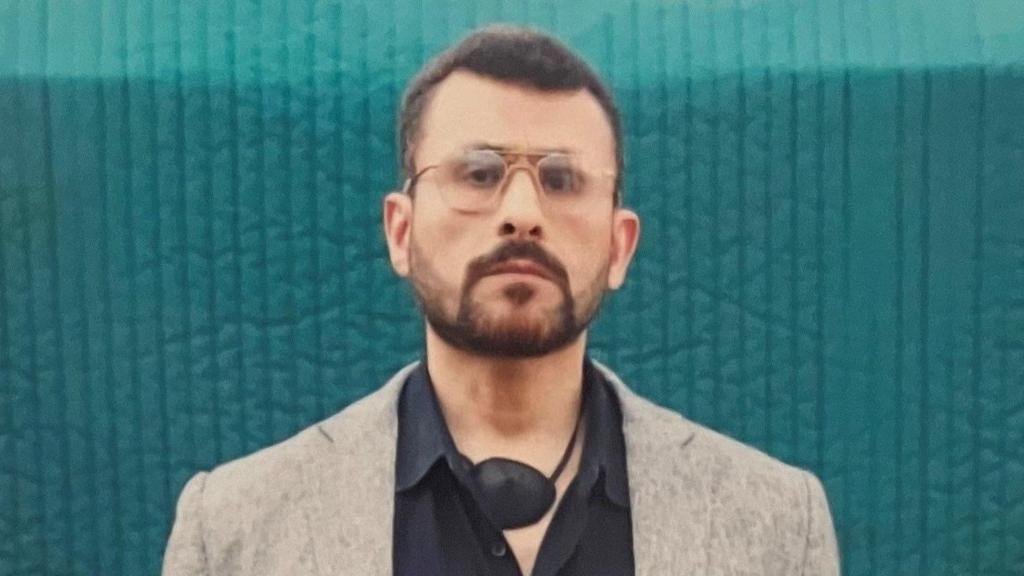
In a development first reported by the BBC, the UK government has provided “substantial” compensation to Abu Zubaydah, a man subjected to torture by the CIA who remains detained at Guantanamo Bay without trial after nearly two decades.
Zubaydah was the initial subject of the CIA’s “enhanced interrogation” techniques following the September 11, 2001, attacks. He was initially alleged to be a high-ranking member of al-Qaeda, an assertion the US government later retracted.
Reports indicate that MI5 and MI6 transmitted questions to the CIA for use during Zubaydah’s interrogations, even with awareness of the severe mistreatment he was enduring.
Zubaydah initiated legal action against the UK, claiming its intelligence services were “complicit” in his torture.
This legal challenge has now been resolved through a financial settlement.
Prof. Helen Duffy, Zubaydah’s international legal counsel, stated, “The compensation is important, it’s significant, but it’s insufficient.”
She called upon the UK and other governments that “share responsibility for his ongoing torture and unlawful detention” to take steps to ensure his release.
“These violations of his rights are not historic; they are ongoing,” she asserted.
Warning: The following section contains illustrations that some may find distressing
The Foreign Office, which oversees MI6, has declined to comment on intelligence matters.
While the precise sum of the settlement remains confidential due to legal restrictions, Duffy confirmed it was a “substantial amount of money” and that payment was in progress.
She also noted that Zubaydah is currently unable to directly access the funds.
Dominic Grieve, who presided over a parliamentary inquiry into Zubaydah’s case, described the financial settlement as “very unusual” but affirmed that Zubaydah’s treatment was “plainly” wrong.
Zubaydah, a Palestinian born in Saudi Arabia, has been held at the US military prison at Guantanamo Bay, Cuba, since 2006 without facing charges or a trial.
He is among 15 prisoners who remain at the facility despite numerous judgments and official reports detailing his mistreatment.
He has become widely known as a “forever prisoner.”
Zubaydah was initially apprehended by the US in Pakistan in 2002 and subsequently held for four years at various CIA “black sites” in six countries, including Lithuania and Poland.
“Black sites” were clandestine detention facilities established outside the US legal framework. Zubaydah was the first individual to be detained in one.
Upon taking custody of Zubaydah, CIA officers reportedly concluded that he should be isolated from the outside world indefinitely.
Internal MI6 communications indicate that the agency believed his treatment would have “broken” 98% of US special forces soldiers. Despite this assessment, British intelligence did not seek assurances regarding his treatment in detention for four years.
Zubaydah’s capture was initially heralded as a major success in the “war on terror.”
President George W. Bush publicly announced the capture, claiming Zubaydah was a senior al-Qaeda operative involved in “plotting and planning murder.” These claims were later retracted by the US government, which no longer maintains that he was a member of al-Qaeda.
He has been characterized as a “guinea pig” for the highly controversial interrogation techniques implemented by the CIA after 9/11.
According to a US Senate Select Committee on Intelligence report on the CIA detention and interrogation program, Zubaydah was routinely subjected to treatment that would be considered torture under UK standards, including being waterboarded 83 times (simulated drowning), confined to coffin-shaped boxes, and physically assaulted.
Duffy contends that UK intelligence services “created a market” for this torture by submitting specific questions to be posed to Zubaydah.
The Senate report was highly critical of Zubaydah’s treatment, as was a 2018 report by the UK Parliament’s Intelligence and Security Committee.
The parliamentary committee also raised concerns about the conduct of MI5 and MI6 regarding Khalid Sheikh Mohammed, the alleged mastermind of the 9/11 attacks, raising the possibility of a similar legal claim.
Neither the government nor Mohammed’s lawyers have commented on whether a case has been brought or settled when asked by the BBC.
Grieve stated that the UK possessed evidence that “Americans were behaving in a way that should have given us cause for real concern.”
He added, “We should have raised it with the United States and, if necessary, closed down cooperation, but we failed to do that for a considerable period of time.”
Duffy stated that Zubaydah is eager to secure his freedom and begin a new life.
“I am hopeful that the payment of the substantial sums will enable him to do that and to support himself when he’s in the outside world.”
However, she emphasized that this hinges on the US and its allies ensuring his release.
Days after the death of Renee Good, protests continue in Minneapolis and cities across the US.
Trump has been turning his attention to Cuba since US forces seized Venezuelan leader Nicolás Maduro.
Weir was a fixture in the psychedelic rock group and its various spin-offs over 60 years.
Rising electricity costs have emerged as a key cost-of-living concern, pushing families further into debt.
US President Donald Trump ordered the “large-scale strikes” on Saturday, US Central Command announced.